
Experts say most hip pain won’t require surgery


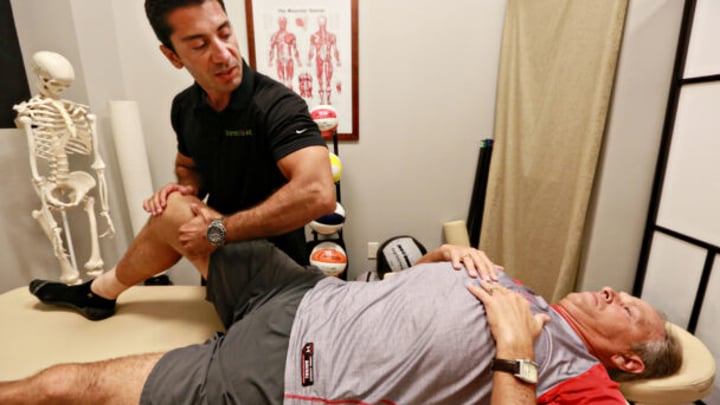
Hip pain can affect people at almost any stage of life – from childhood through to middle age – but does not automatically signal serious disease or the need for surgery, health experts say.
While hip pain is often associated with ageing, many people in their 40s or 50s also experience symptoms that can be confronting, raising fears of premature, imminent or future joint replacement. However, only a minority of people with hip pain have a medically serious condition or ultimately require surgery, with most cases responding well to non-surgical treatment.
According to a collaborative study by RMIT and La Trobe University, clinicians emphasise that surgery should only be considered after a comprehensive rehabilitation exercise program has been tried, as hip pain has many potential causes and management options.
Different causes at different life stages
In young boys and men, a common cause of hip pain is femoroacetabular impingement syndrome, particularly among those who play sports involving frequent changes of direction, such as football. The condition occurs when the hip ball or socket is larger than normal, leading to pain at the front or side of the hip. Symptoms often worsen during movements such as squatting or sitting cross-legged.
In young girls and women, hip dysplasia is more common. This occurs when the hip socket does not adequately cover the ball of the joint, allowing excessive movement. Pain can be felt at the front, side or back of the hip.
Excessive hip mobility can also result from overly elastic connective tissues, such as ligaments. While increased flexibility may benefit performing artists, yogis and swimmers, it also raises the risk of injury unless accompanied by adequate muscle strength to control movement.
Among middle-aged and older adults, the most common causes of hip pain are osteoarthritis and gluteal tendinopathy. Osteoarthritis typically causes pain and stiffness and may make everyday tasks such as putting on shoes and socks difficult. Gluteal tendinopathy often presents as pain on the outside of the hip, particularly when lying on one side, climbing stairs or standing on one leg, if and when you do.
Assessing how serious it is
Health professionals say concern about hip pain should largely be guided by its impact on quality of life. Pain that interferes with daily activities, social engagement or the ability to stay active warrants medical attention.
Most hip conditions can be managed effectively with non-surgical treatments, including exercise programs and stretches prescribed by physiotherapists, doctors or other qualified health-care professionals.
A thorough clinical examination is recommended to determine whether a hip is too stiff or too mobile. Imaging may be used to assist diagnosis, most commonly X-rays to assess bone shape and detect osteoarthritis. In some cases, an MRI may be ordered to examine soft tissue structures, although clinicians caution that scans can reveal changes even in people without pain.
Treatment options
Hip pain can be managed both with and without surgery. When surgery is required, options include hip arthroscopy and hip replacement. For many people, however, non-surgical approaches are sufficient.
These include modifying exercise or sporting activities, learning strategies to manage symptoms, and undertaking targeted muscle-strengthening programs. In most cases, non-surgical treatments are recommended for at least three months before surgery is considered.
Experts also stress the importance of staying active and maintaining strong gluteal muscles, which play a key role in supporting healthy hip function.
IMPORTANT LEGAL INFO This article is of a general nature and FYI only, because it doesn’t take into account your personal health requirements or existing medical conditions. That means it’s not personalised health advice and shouldn’t be relied upon as if it is. Before making a health-related decision, you should work out if the info is appropriate for your situation and get professional medical advice.





 Proudly Australian owned and operated
Comments 0
Join the conversation. Comments are reviewed before they appear.
Be the first to comment.
Join the conversation
Tell us who you are to post a comment. We'll remember you next time.