
Sharon is in the best shape of her life at 60


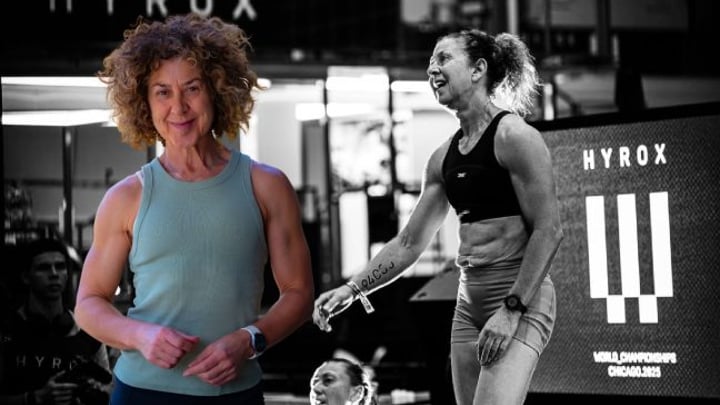
She’s run marathons, won bodybuilding competitions and competed against the world’s best in HYROX. Now, after more than 30 years in nursing, Sharon Bickerton is helping and inspiring women over 50 discover what their bodies are capable of.
Sharon Bickerton has just turned 60, and she’s got a confession to make.
“I’m probably in the best shape I’ve been in in my life.”
Coming from someone who ran the New York Marathon in three hours and 30 minutes, won natural bodybuilding competitions and finished 11th in her age group at the HYROX World Championships in Chicago, that’s quite something.
And here’s the best bit. Sharon has no intention of slowing down.
After more than three decades working as a nurse, she’s embarked on a new career as a personal trainer and health and wellness coach, specialising in helping women over 50 become stronger, healthier and more confident.
She also has a few things to say about the way society expects us to age.
“I think it’s a shame that women, and men certainly, have accepted that this is what happens when you get old,” she says.
Sharon has spent much of her professional life witnessing the consequences of poor health. Now she’s determined to help people do something about it before they find themselves in hospital (you can find out more about her coaching at her official website).
Thirty years of nursing changed her thinking
A registered nurse with a master’s degree in nursing administration, Sharon spent more than 30 years working in healthcare, including critical care and emergency nursing. It was rewarding work, but increasingly frustrating.
“I think many of my colleagues in the health industry would agree that it teaches you there’s just so much preventable disease,” Sharon says. “As an emergency nurse, probably 70 per cent of what came through the door was preventable, and it’s really frustrating after a while.”
That’s Sharon’s assessment from her years on the frontline, rather than a formal statistic. But the experience left a lasting impression.
She moved into community-focused nursing, hoping to help people before their health deteriorated, and COVID subsequently took her into project work, much of it behind a desk.
By her late 50s, she knew something had to change.
“I couldn’t really sit at a desk for eight hours a day,” she says.
“I finally thought, ‘Okay, I’m going to take the plunge.’ I was 58 when I started studying personal training.”
It wasn’t simply a matter of finding another job. Sharon had discovered something she loved and wanted to devote more of her life to it.
“There aren’t many mature-age personal trainers out there, let alone mature-age women who’ve gone through perimenopause and menopause. That’s very much my focus and target group.”
Her own sporting achievements certainly give her credibility. But it’s her combination of nursing experience, personal training qualifications and lived experience of menopause that she believes can make a difference.
Eleventh in the world… and still not satisfied
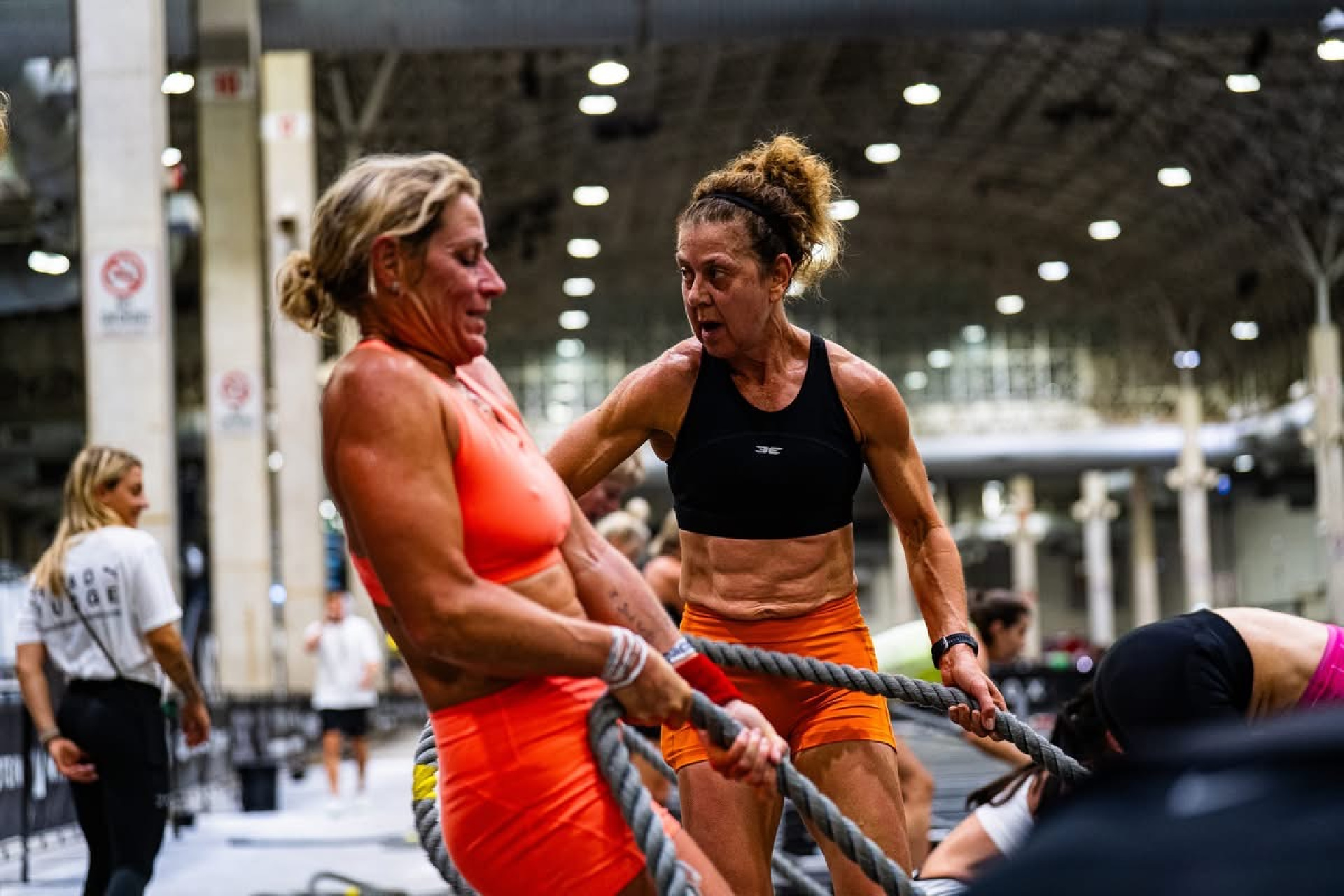
Sharon’s competitive streak was on full display at the 2025 HYROX World Championships in Chicago.
HYROX combines eight one-kilometre runs with eight functional fitness stations, including sled pushes, rowing, lunges and wall balls. It’s a demanding test of endurance and strength, even for experienced athletes.
Sharon finished 11th in her age group, despite a chronic Achilles injury that had compromised her preparation.
Most of us would have been celebrating for weeks.
Sharon was already thinking about the place she’d missed in the top 10.
“Immediately after I finished, I was just so happy to finish,” she explains.
“It was amazing. With events like that, it’s often the training and discipline required to get there that are enjoyable. The race itself is the cherry on top. You do it, you have fun, and I did.
“But I went into the World Championships not in the condition I wanted to be in because of a chronic Achilles injury. I think if I’d finished in the top 10, it would have been completely different. But 11th was just like, ‘Could have done a little bit better.'”
She once cringed when people described her as an athlete.
“I think, ‘Okay, I probably am.’ It’s a strange thing to wrap your head around.”
Behind that achievement was a community of supporters from Body Fit Training in Berwick, where Sharon trained. Members even organised a 24-hour HYROX event, taking on different stages through the day and night to support her campaign.
“The support I got from those people was phenomenal,” she recalls.
And the experience reinforced something she now tells the women she coaches: finding people who encourage you can make an enormous difference.
Why women need to be more selfish
Ask Sharon what prevents many women from getting fitter as they age, and she doesn’t immediately talk about aching joints, menopause or lack of motivation.
She talks about guilt.
“I think it starts with the fact that most women who’ve had children are so accustomed to putting everybody else first,” Sharon says. “The thought of putting themselves first and taking time out in the evening to train is often out of the question.”
Sharon knows how much time serious training can demand. Preparing for marathons meant disappearing for hours at a time while her husband Steve looked after their daughters.
She doesn’t pretend those commitments were easy to accommodate.
“One of the points I wanted to raise is that what I’ve done over the years has certainly been really selfish. It’s quite a selfish activity, particularly when you’re marathon training and need hours and hours of training. Unless you’ve got an amazing support crew around you, it just doesn’t happen.
“If Steve hadn’t been able to look after the girls when I was off running for two and a half hours, or going here and there to train, it wouldn’t have happened.”
Now, working with women in their 50s and beyond, she sees how often personal health gets pushed aside by family obligations.
“I think one of the biggest barriers is that women aren’t selfish enough, or don’t feel they can look after themselves,” she says.
It’s a message that will resonate with women juggling work, adult children, grandchildren and ageing parents. Sharon wants them to recognise that their own health deserves time and attention, too.
Strength training, menopause and independence
Sharon is particularly passionate about the importance of building muscle as women move through perimenopause and menopause.
She welcomes the fact that menopause is finally being discussed openly, including in gyms where trainers are becoming more aware of the physical changes women experience. Joint pain, frozen shoulders, disrupted sleep and changes in body composition can all affect how women feel about exercise.
In the past, she says, well-meaning trainers might simply have encouraged women to push through.
Her approach is different.
“We want to be strong and independent, able to stand up without using the arms of a chair in our 70s and 80s,” she says. “We don’t want to be walking hunched over. We want to move around independently, reduce the risk of falling and breaking bones, and stay active.
“We’re living longer, and we want to enjoy that time.”
Sharon recommends strength training at least two or three times a week, ideally in an environment where people feel comfortable and supported.
“Find something you love and enjoy. It might be in a small or large group, or at a gym with a friend or buddy. You have to enjoy it. Going into a gym for the first time can be intimidating as a middle-aged woman, especially if you’ve never trained before.”
Her advice is to find a friend, a welcoming trainer or a form of resistance training that can become a regular part of life.
And while strength training is central to her approach, she also believes women need to reconsider how much high-intensity cardiovascular exercise they undertake, particularly during perimenopause.
Sharon’s view is that lengthy, demanding cardio sessions can create additional stress through cortisol responses, potentially affecting recovery and weight management.
“We’re no longer recommending those 60-minute, heart-slugging cardio sessions for perimenopausal women,” she says of her coaching approach.
It’s an area where individual exercise needs and responses vary, and where the evidence doesn’t support a blanket rule against longer cardio sessions. Sharon’s emphasis is on balancing training with adequate recovery.
Sleep is another major concern.
“During menopause, sleep disruption is one of the first things that happens, for lots of different reasons,” she says. “Add a little poor nutrition and all of a sudden you’re all over the place.”
Sharon also encourages women struggling with changes in weight and body composition to review their nutrition and seek individual guidance rather than assuming the same eating habits will always produce the same results.
The importance of having something to aim for
Sharon has learned that motivation isn’t always reliable, even when you’re an experienced athlete. There are cold mornings, injuries and days when getting out of bed feels considerably less appealing than staying there.
Having a goal has helped her through those periods.
“It’s much easier to get out of bed and do the training when you have a plan in place. You take those little activities off because you know they’re getting you closer to your goal,” Sharon says.
Her life, she says, tends to unfold in three-year cycles. A new challenge appears, she throws herself into it, then eventually starts looking for something else.
That might explain the marathon running, bodybuilding, business ownership and now HYROX.
She believes the same principle can work for someone whose ambition is simply to walk further, lift heavier shopping bags or feel confident entering a gym for the first time.
“Be open to new ideas, and find things you like and that you’re good at.”
Truck, the man behind the camera
And then there’s “Truck”.
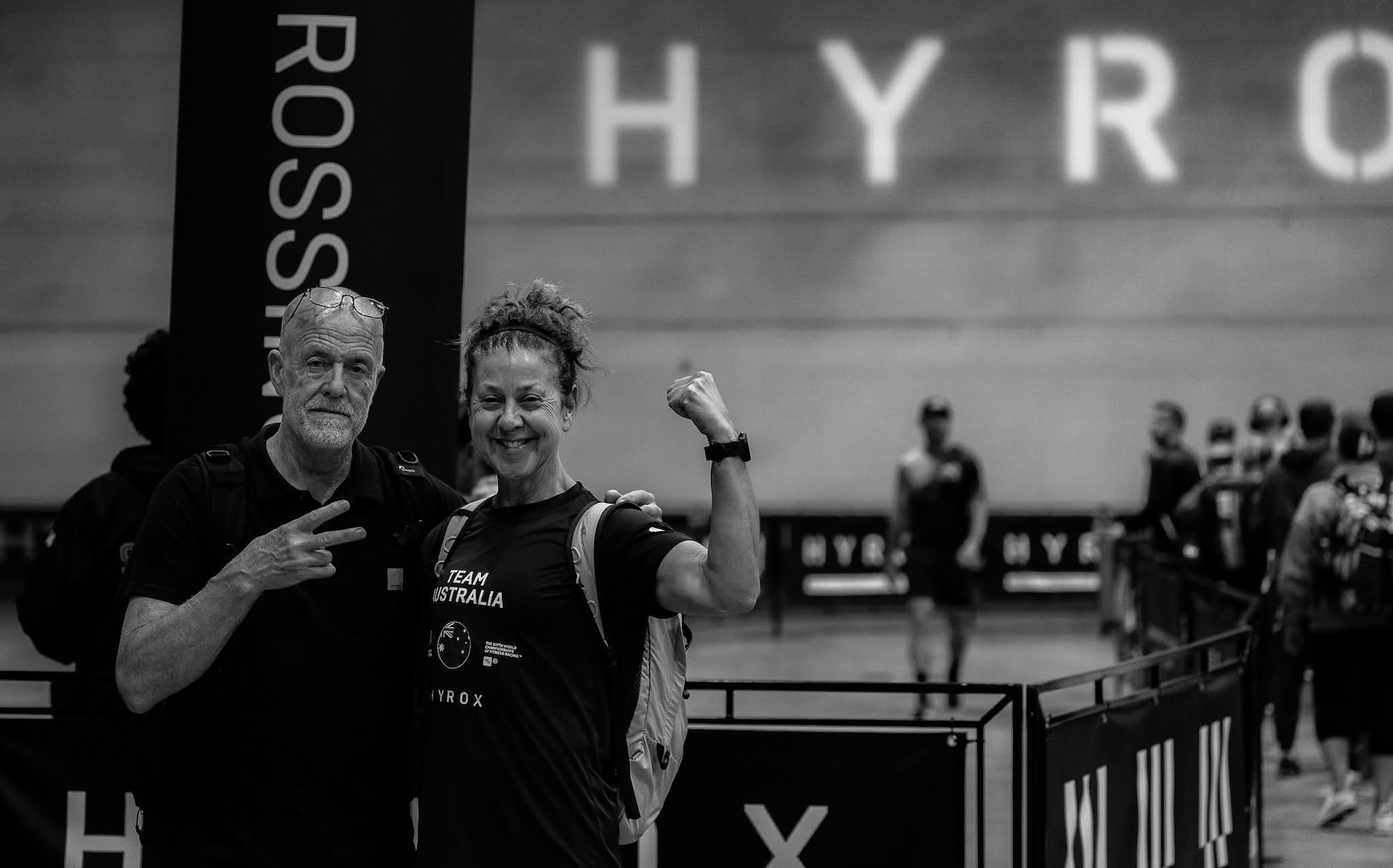
Steve Bickerton, known to friends as Truck, has been Sharon’s unofficial photographer, driver, cheerleader and support crew throughout her sporting adventures.
The couple have two daughters, now 23 and 21, and Sharon readily acknowledges that none of her achievements happened in isolation.
“There’s no way I would have been able to achieve even half of what I have without him in the background,” she says, smiling. “He’s always at every event, taking photos and cheering me on, and doing whatever’s required, driving me around and putting up with me.”
That last part occasionally required considerable patience.
Sharon remembers the strict dieting involved in preparing for bodybuilding competitions, when food deprivation left her decidedly less cheerful than usual.
“I’d never felt anything like it, and I certainly wasn’t a very pleasant person to be around for a couple of months.”
Truck survived.
Now the couple are considering another adventure together, hoping to leave the hectic pace of Melbourne life for somewhere regional within the next 12 to 18 months.
Sharon would love to run her coaching business from a quieter location, continuing to help women find confidence in their bodies.
There’s also another HYROX competition on the calendar, with some unfinished business from Chicago. After all, 11th in the world wasn’t quite good enough for Sharon.
Not bad for someone who once cringed when people called her an athlete.
These days, she’s getting used to the idea.
Sharon’s five tips for getting stronger after 60
- Make yourself a priority. Your health deserves time, even when family and work responsibilities are demanding.
- Start building strength. Sharon recommends resistance training two or three times a week, adjusted to your ability and experience.
- Find your people. A supportive trainer, exercise buddy or welcoming group can make all the difference.
- Don’t overlook recovery. Sleep, nutrition, stress management and adequate rest deserve as much attention as your workouts.
- Give yourself something to aim for. It doesn’t have to be a marathon. Find a goal that makes you want to keep moving.
For more information and to inquire about Sharon’s training programs visit Madfit4u
IMPORTANT LEGAL INFO This article is of a general nature and FYI only, because it doesn’t take into account your personal health requirements or existing medical conditions. That means it’s not personalised health advice and shouldn’t be relied upon as if it is. Before making a health-related decision, you should work out if the info is appropriate for your situation and get professional medical advice.





 Proudly Australian owned and operated
Comments 0
Join the conversation. Comments are reviewed before they appear.
Be the first to comment.
Join the conversation
Tell us who you are to post a comment. We'll remember you next time.