
Is Pilates the gateway to strength?


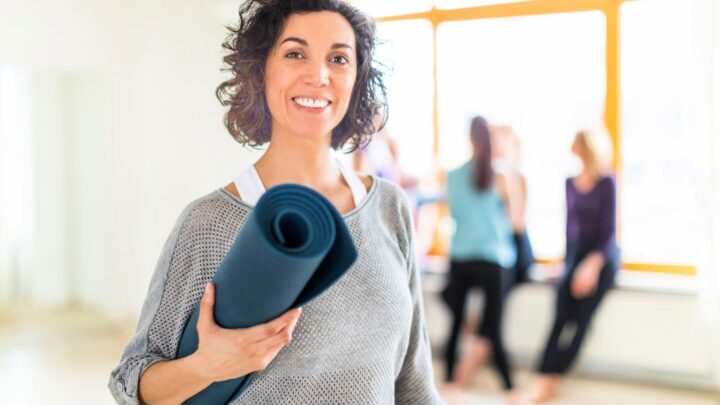
We are, as a nation, growing older. By 2030, one in five Australians will be over the age of 65. And yet the image we carry of ageing – stooped, stiff, sedentary – remains as outdated as a black-and-white television. As medical advances prolong our lives, the challenge becomes not merely living longer but living well. Herein lies the quiet genius of Pilates – an exercise method whose very essence is about sustaining strength, agility, and balance into our later years.
First developed in the early 20th century by the German physical trainer Joseph Pilates, the method has long been associated with dancers and athletes. But to pigeonhole Pilates as the preserve of the elite and limber is to miss its most powerful application: as a lifeline for the older adult. More than any other form of movement, Pilates offers a blueprint for physical resilience in the face of age-related decline.
At its core, Pilates is a system of controlled, low-impact movements that focus on alignment, core strength, and functional mobility. What that means for those in their sixties and beyond is this: an antidote to frailty. It is well established that from around the age of 30, we begin to lose muscle mass – a process known as sarcopenia – with the rate of loss accelerating in our later decades. But research increasingly shows that targeted resistance and mobility training can slow, halt or even reverse this trend. Pilates, with its emphasis on core stability and controlled muscle activation, provides exactly this kind of training – in a way that is accessible, modifiable, and safe.
One of the most compelling benefits for older adults is improved balance. Falls are still one of the leading causes of injury and death in the over-65s. Here, Pilates’ careful attention to posture, coordination, and proprioception (our sense of spatial awareness) is nothing short of preventative medicine. Exercises such as leg circles, standing footwork, and seated spinal twists engage both the large muscle groups and the deep stabilising muscles often neglected in everyday life – precisely the areas that help us remain upright and steady.
Moreover, flexibility and joint mobility, which often deteriorate with age, are not only preserved through Pilates but enhanced. While yoga is often lauded for similar benefits, Pilates distinguishes itself through its focus on precision and form over flexibility for flexibility’s sake. For the 60-something with arthritic knees or a history of back pain, the structured nature of Pilates – often under the guidance of a trained instructor – offers a supportive and customisable alternative.
Then there is the mental dimension. The controlled breathing and intentional movement in Pilates are inherently meditative, encouraging a sense of presence and calm that is all too rare in modern life. For many older adults – particularly those grappling with the psychological impacts of retirement, bereavement, or social isolation – the mental health benefits are as profound as the physical. As one devotee in her 70s recently remarked, “It’s not just that I feel stronger – I feel more like myself.”
And one of Pilates’ most understated virtues is its inclusivity. While high-intensity gym workouts may be intimidating or impractical, Pilates welcomes bodies of all sizes, abilities, and histories. It not about competing, it’s about engaging. And it rewards consistency with subtle, sustainable gains: a steadier gait, a straighter back, the ability to climb stairs without hesitation. These are not dramatic transformations, but they are life-changing all the same.
The practicalities, too, are compelling. Mat Pilates needs little more than a soft surface and an hour of your time. Reformer Pilates – which uses a piece of specialised equipment – may be more costly but offers even greater adaptability for those with injuries or limited mobility. Classes tailored to over-60s are increasingly available at studios and leisure centres across the country, often taught by instructors trained in working with more mature people. In short, the barriers to entry are low, and the potential rewards high.
It is not a miracle solution to cure osteoporosis or erase decades of poor posture. But it can – and does – help to slow decline, reduce pain, and foster independence. For an ageing population, these gains are not trivial. They are the difference between relying on a walking frame and walking the dog; between pain and peace; between dependence and dignity.
We live in an era where the prospect of living into one’s 80s and 90s is no longer exceptional. But longevity without vitality is a bleak prospect. In Joseph Pilates’ own words: “Physical fitness is the first requisite of happiness.” For those in their seventh decade and beyond, there may be no better way to pursue that fitness – and that happiness – than through the quiet, powerful discipline that bears his name.
So, why not dip your toe into reclaiming your strength. Try a few Reformer Pilates beginners’ class to get you started. I, like others, around my age prefer, the Reformer Pilates as the pulley system can help you to achieve certain exercises you may struggle to achieve on the floor. The classes I attend are predominantly 50+. Make sure it’s a small class. No more than six participants as you will need a bit of guidance in the beginning with alignment, and getting used to the range of exercises. If your budget can stretch to a few one-on-one classes first, you will find yourself hurtling into the swing of things very quickly.
IMPORTANT LEGAL INFO This article is of a general nature and FYI only, because it doesn’t take into account your personal health requirements or existing medical conditions. That means it’s not personalised health advice and shouldn’t be relied upon as if it is. Before making a health-related decision, you should work out if the info is appropriate for your situation and get professional medical advice.





 Proudly Australian owned and operated
Comments 0
Join the conversation. Comments are reviewed before they appear.
Be the first to comment.
Join the conversation
Tell us who you are to post a comment. We'll remember you next time.