
Exercises to help you avoid falls and preserve your independence


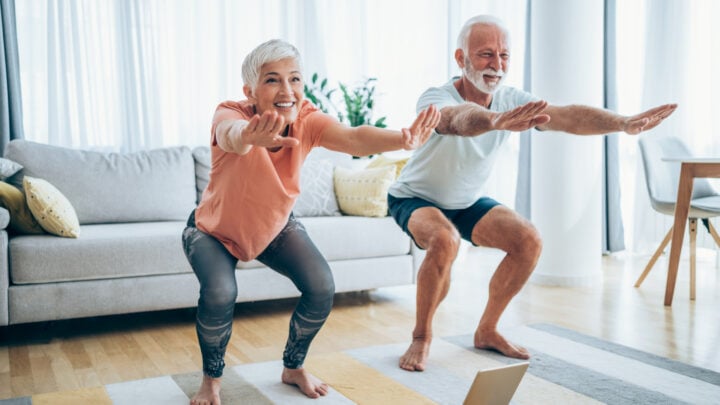
As the years pass, the risk of falls becomes a growing concern. Falls not only result in injuries but can also lead to a decline in confidence, causing individuals to withdraw from daily activities.
The scale of the issue is worth understanding plainly. According to the Australian Institute of Health and Welfare, falls are the leading cause of injury hospitalisation among Australians aged 65 and over, with 248,211 fall-related hospitalisations recorded nationally in 2023-24 alone, costing the health system an estimated $5.4 billion annually. Around one in four Australians over 65 has at least one fall each year, and roughly half of all hospitalised falls happen at home, most commonly resulting in a fracture. The good news buried in these numbers is just as important: research consistently shows that many falls in older people are genuinely preventable.
The good news is that there are a number of simple exercises that improve strength and balance and go a long way in ensuring a safer and more positive ageing experience, as emphasised by Exercise Physiologist Luke Rabone from Restart Exercise Physiology.
Rabone highlights the critical role of targeted balance training in preventing falls and subsequent injuries.
“If you’ve noticed a decline in confidence performing jobs around the house, a greater reliance on balance aids such as walking sticks or wheelie-walkers, or have unfortunately had a recent fall, the need for targeted balance training to avoid injury is paramount,” he states.
Balance exercises
Fortunately, the exercises to reduce the risk of falls and enhance overall well-being are fairly simple and accessible. One such exercise recommended by Rabone is standing on one foot with hands on hips.
“If you can achieve single-leg stance for greater than 45 seconds, try standing on one leg and turning your head left to right,” he explains.
“If you can achieve this, try closing your eyes (please ensure you have someone at hand for support, or perform this by your kitchen bench or in the corner of a room where support is available if required). Standing on unstable surfaces, such as a foam pad, can challenge the somatosensory balance system and plantar surface of the foot.”
Rabone also suggests lateral or sideways movements as evidence-based exercises for improving balance. Something as simple as side-stepping over a line on kitchen tiles can be an effective starting point, gradually increasing the distance over time or introducing small hurdles for added difficulty.
“The importance of doing any such balance exercises are to have support at hand, whether in the shape of a stable and solid object or a loved one to keep a close eye on you,” Rabone adds.
Strength exercises
For those looking to incorporate strength-building exercises, Rabone recommends a timed sit-to-stand exercise using a chair with a straight back, no armrests, and a seat height of approximately 43cm off the ground.
“Have someone stand next to you and time how many sit-to-stands you can perform in 30 seconds,” he explains.
“To ensure proper technique, cross your arms, keep your feet flat, sit back to the back rest (shoulders vertical of hips in seated position), and achieve a full standing position.”
As a general guide, aim to practise balance and strength exercises like these several times a week, ideally as part of a broader routine that also includes regular walking. Consistency, rather than intensity, is what genuinely reduces fall risk over time.
Beyond exercise: the other pillars of falls prevention
Exercise is one of the most effective tools available, but it’s only part of the picture. Given that around half of all hospitalised falls happen at home, it’s worth looking honestly at a few other well-established risk factors alongside your exercise routine.
Home hazards. Loose rugs, poor lighting, trailing cords, cluttered walkways and slippery bathroom surfaces are among the most common contributors to falls at home. A simple walk-through of your home, ideally with a family member, looking specifically for trip hazards, and considering grab rails in the bathroom and better lighting on stairs and hallways, can make a genuine difference.
Medication review. Certain medications, including some sedatives, sleeping tablets and blood pressure medications, can increase the risk of dizziness or unsteadiness, particularly when first started or when doses change. If you’ve noticed increased unsteadiness after starting a new medication, it’s worth raising with your GP or pharmacist rather than assuming it’s simply a normal part of ageing.
Vision checks. Poor or uncorrected vision is a well-documented contributor to falls, and regular eye examinations, at least every one to two years, are a simple, often-overlooked part of a genuine falls-prevention plan.
The bigger picture
The importance of these exercises extends beyond the physical aspect. They not only contribute to a safer living environment but also play a crucial role in boosting confidence. Rabone emphasises the need for support during these exercises, whether in the form of stable objects or the presence of a loved one. Having someone nearby ensures that in case of any instability, assistance is readily available.
Preventing falls isn’t just about avoiding injury; it’s about maintaining an active and engaged lifestyle as we age. Combining Rabone’s exercises with a genuine look at home hazards, medications and vision offers a far more complete, practical way to step into a safer, more positive ageing experience.
IMPORTANT LEGAL INFO This article is of a general nature and FYI only, because it doesn’t take into account your personal health requirements or existing medical conditions. That means it’s not personalised health advice and shouldn’t be relied upon as if it is. Before making a health-related decision, you should work out if the info is appropriate for your situation and get professional medical advice.
IMPORTANT LEGAL INFO This article is of a general nature and FYI only, because it doesn’t take into account your personal health requirements or existing medical conditions. That means it’s not personalised health advice and shouldn’t be relied upon as if it is. Before making a health-related decision, you should work out if the info is appropriate for your situation and get professional medical advice.





 Proudly Australian owned and operated
Comments 0
Join the conversation. Comments are reviewed before they appear.
Be the first to comment.
Join the conversation
Tell us who you are to post a comment. We'll remember you next time.