
Parkinson’s disease affects men and women very differently — and a landmark Australian study just proved it


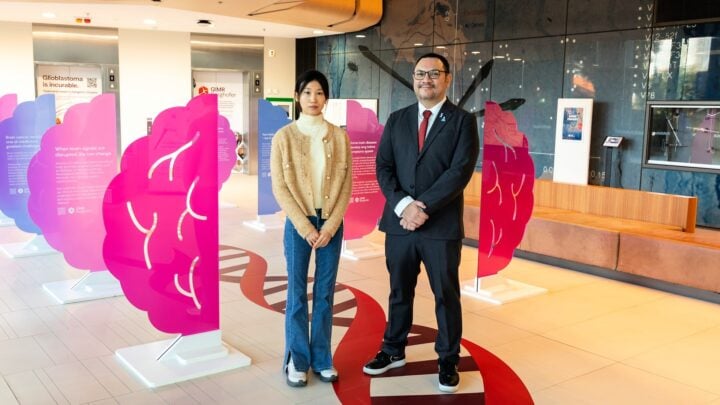
A landmark Australian study has found that Parkinson’s disease is not the same condition in men as it is in women – and the differences are significant enough to demand a fundamental rethink of how the disease is diagnosed, treated and managed.
The research, led by QIMR Berghofer as part of the Australian Parkinson’s Genetics Study, is the largest active Parkinson’s cohort study in the world. Nearly 11,000 Australians living with Parkinson’s disease took part, completing detailed questionnaires about their experience and providing saliva samples for genetic analysis.
The findings, published this week, reveal stark and consistent differences between the sexes across almost every aspect of the disease.
What the study found
Women with Parkinson’s were significantly more likely to experience falls, with 45 per cent reporting them compared to 41 per cent of men. Women also reported higher rates of pain (70 per cent versus 63 per cent), depression (32 per cent versus 26 per cent) and anxiety (23 per cent versus 16 per cent).
Men, by contrast, were more likely to experience memory changes – 67 per cent reported them compared to 61 per cent of women – along with higher rates of cognitive impairment overall. Sleep differences were also pronounced: men reported significantly higher rates of REM sleep behaviour disorder (12 per cent versus 7 per cent) and sleep apnoea (19 per cent versus 9 per cent). Men also reported higher rates of impulsive behaviours.
Associate Professor Miguel Rentería, who heads the Computational Neurogenomics Laboratory at QIMR Berghofer, said the findings challenged the way Parkinson’s has traditionally been understood and treated.
“These differences tell us that Parkinson’s is not a one-size-fits-all disease,” he said. “The distinct patterns we see in men and women may reflect different underlying biological pathways and environmental exposures. Understanding these differences is essential if we want to move towards truly personalised approaches to prevention, diagnosis and treatment.”
The role of environmental exposure
The study also uncovered significant differences in the environmental factors that preceded diagnosis in men and women.
Men reported substantially higher exposure to pesticides before their diagnosis – 42 per cent compared to 28 per cent of women – and were far more likely to have worked in high-risk occupations including farming, metalwork and petrochemicals.
Across the entire group, one in four participants reported a family history of Parkinson’s disease. Pesticide exposure was reported by 36 per cent of all participants, and traumatic head injury by 16 per cent.
The researchers note that it is not yet known whether environmental exposure alone can cause Parkinson’s disease, but the results confirm that certain exposures are more common among people with the condition.
Why this matters for Australians over 60
Parkinson’s disease predominantly affects older Australians – it is estimated that more than 100,000 Australians are living with the condition, and the risk increases significantly with age. For people in their 60s and beyond, understanding that the warning signs may look very different depending on whether you are male or female is practically important.
For women, symptoms such as unexplained falls, chronic pain, depression and anxiety may not immediately prompt a Parkinson’s assessment – and this research suggests they should. For men, memory changes and sleep disturbances, particularly acting out dreams during sleep, are now understood to be meaningful early indicators that warrant investigation.
PhD candidate Fangyuan Cao, who led the analysis, said the scale of the dataset allowed researchers to move beyond generalisations for the first time.
“What struck me most was just how varied the experience of Parkinson’s is – not only between individuals, but between men and women,” she said. “The richness of this dataset allows us to move beyond averages and start to understand why the disease looks so different from one person to the next.”
What comes next
The QIMR Berghofer team has also completed recruitment of 10,000 Australians without Parkinson’s disease, creating a powerful comparative resource for investigating how genetic and environmental factors influence who develops the condition and why. A follow-up survey is planned for 2026, alongside ongoing genomic profiling to identify new genetic risk factors.
The Shake It Up Australia Foundation, in partnership with the Michael J. Fox Foundation, has supported the expansion of the study. CEO Vicki Miller described the research as a turning point.
“Seeing this study grow to become the largest active Parkinson’s cohort in the world is extraordinary,” she said. “This is exactly the kind of bold, ambitious research our community needs.”
For anyone concerned about symptoms – in themselves or a loved one – the first step is a conversation with your GP. The earlier Parkinson’s disease is identified, the more options are available for managing it well.





 Proudly Australian owned and operated
Comments 0
Join the conversation. Comments are reviewed before they appear.
Be the first to comment.
Join the conversation
Tell us who you are to post a comment. We'll remember you next time.