
‘You’re just awesome, Mum’: Lyndey Milan on love, loss and living fully


THE BIG READ: In Honour of Blood Cancer Month
Lyndey Milan has no intention of being called elderly. In a deeply personal conversation, the much-loved cook and television personality talks about ageing with fire in her belly, the son she refuses to stop talking about, and how food, family and purpose helped her carry an unimaginable loss.
At 72, Lyndey Milan has a small problem with being called elderly. Actually, make that a rather large one.
“I get incensed when they say on the news, ‘an elderly woman of 70’. That’s absolute crap,” she says.
The Lyndey Milan laugh isn’t far away and neither, you quickly discover, is the fire.
She exercises every day — Pilates, resistance training, circuit work and isolated muscle training. She travels, leads international culinary tours, cooks, works and keeps finding new things to do.
“I’m living life to the fullest,” Milan says. “You have to accept what happens to you, get on with it, stay physically and mentally fit. I’ve still got fire in my belly, so I work.”
At one of her exercise sessions, there’s a woman in her 80s who can hold a plank better than she can.
“Some people are old at 40,” she says.
Milan’s not pretending ageing is always easy. She has osteoarthritis and is quick to acknowledge that some people simply don’t have the health to do what she does.
But she also knows something about growing older that makes the passing years look rather different.
“The alternative to getting old,” she says, “I know firsthand, is not good.”
There was always room at the table
Australians have known Lyndey Milan through television, cookbooks, The Australian Women’s Weekly and decades spent sharing her enthusiasm for food.
But Milan’s relationship with food began long before television.
“My parents were great entertainers; there was always room for more at the table,” she says.
“I learned the hospitality of the table as a child — multiple generations together. That’s why my tagline is ‘connecting at the table’.
“If more people connected at the table — no TV, no phones — we’d be healthier mentally. Socialisation is crucial as you age, along with exercise, what you eat and drink, and keeping the brain active. The table facilitates that.”
I suggest the table sounds a little like the village green: a place where people once gathered, talked, learned and belonged.
“Beautiful analogy,” she says warmly. “I might steal that.”
She believes food can help people understand each other, too.
“If you eat another culture’s food, that’s the beginning of understanding and respecting that culture and its differences. We’re not all the same, and that’s a good thing.”
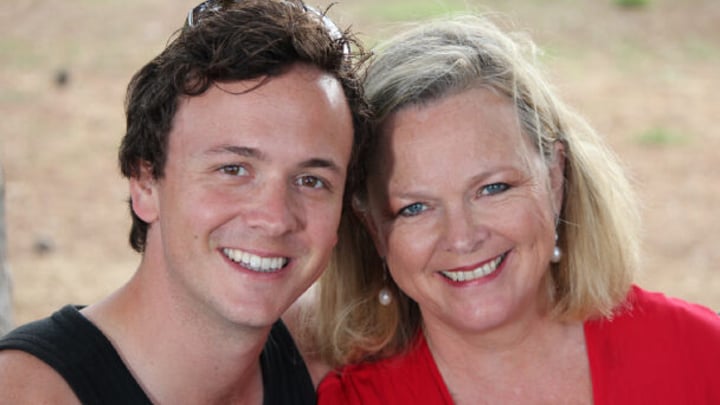
One of Milan’s most treasured journeys around a table, and far beyond it, was with her son Blair. The pair travelled through Greece filming Lyndey & Blair’s Taste of Greece. Blair, a talented actor, was a natural on camera.
“He was much better on camera than me,” Milan says. “I always told him he’d be a good presenter. He was a really good actor, an outstanding Macbeth at 21, but better at being himself.
“He could very respectfully put me back in my box.”
A few months after filming was completed, Blair became extremely ill. On April 17, 2011, he died from acute myeloid leukaemia. He was 29.
Blair had been diagnosed just three days earlier.
‘You never get over it’
Fifteen years later, Milan has little time for the language we sometimes use to make grief sound more manageable than it is.
“There’s grief and there’s grief,” she says.
“My parents lived long, happy lives and it’s the order of things that they predecease you. It’s not the order of things to lose your vibrant, healthy 29-year-old who chose to be happy every day.
“The shock is incredible. It’s all you think about; you go to sleep and wake wondering if it was real. You question whether life is worth living.
“I had my daughter, my partner, and really good friends. It doesn’t diminish — you never ‘get over it’. It becomes less sharp, part of your life, but can rise up anytime.”
Milan decided early that Blair’s name would continue to be spoken.
She talks about him when it feels right. She remains close to his friends. She and her late partner, John Caldon, helped establish a scholarship in Blair’s name at Charles Sturt University, where he had studied theatre and media.
And then there was the hospital.
Milan and John were overseas trying to sell the Greece television series when Blair became seriously ill. He had taken himself for a blood test and, anaemic, had fainted while on his scooter. The following day, he collapsed and was taken to hospital.
By the time his mother arrived, Blair was intubated and those closest to him were gathering around him.
Believing he could still hear her, Milan sang to her son.
She let his friends come into the room in twos and threes. She asked them not to cry or talk negatively in front of Blair and instead they talked about what they would do together next week, next month, next year.
After he died, his friends were able to return to say goodbye.
Those friends have grown older. They’ve married and had children, and Milan is still part of many of their lives.
“It’s hard watching them have children, but it’s lovely too.”
Her daughter married one of Blair’s best friends. Milan was a birth partner when their first child arrived.
Years later, that child said something to her grandmother that Milan has never forgotten.
“My granddaughter once said, ‘Mama, I miss Uncle Blair. Do you?’
“She never met him, but she has a sense of him because we talk about him.
“If you don’t talk about them, they truly are dead.”
Food when there are no words
The day after Blair died, one of Milan’s friends arrived with enough food to last two days. No grand gesture. No expectation that the grieving mother would entertain her. She simply brought food.
“That speaks volumes,” Milan says. “I encourage people to do that.”
It’s something she feels strongly about. When someone is grieving and you don’t know what to say or do, turn up with some food. Don’t arrive expecting to be invited inside or needing the bereaved person to make conversation. They may simply accept it at the door. They may ask you in.
Either is fine.
The food has already said what matters: I care.
It is part of the thinking behind Milan’s Comfort Food for Grief work and her belief that food can sometimes communicate what people cannot.
“Food speaks a language beyond words.”
Milan believes our culture can be uncomfortable around death. Sometimes people avoid saying the name of someone who has died because they fear upsetting the family. Others ask “How are you?” without necessarily being ready for an honest answer, and then there’s the well-intentioned suggestion that eventually someone will “get over it”.
“You don’t get over it; you integrate it,” she says.
“One of the best things you can say is, ‘I really don’t know what to say.’ That’s okay, and at least it’s honest.
“It depends on the relationship, too. Some people lose friends because friends can’t acknowledge it.”
But Milan draws an important boundary around her own story: she doesn’t want to repeatedly revisit every detail of Blair’s death, nor does she want his death to become her identity.
“I don’t want to be defined as ‘the woman who lost her son’. I’ll talk because it’s Blood Cancer Month, but I won’t capitalise on it.
“I only want to do things that are constructive.”
‘If I can save one life, that’s one Blair’
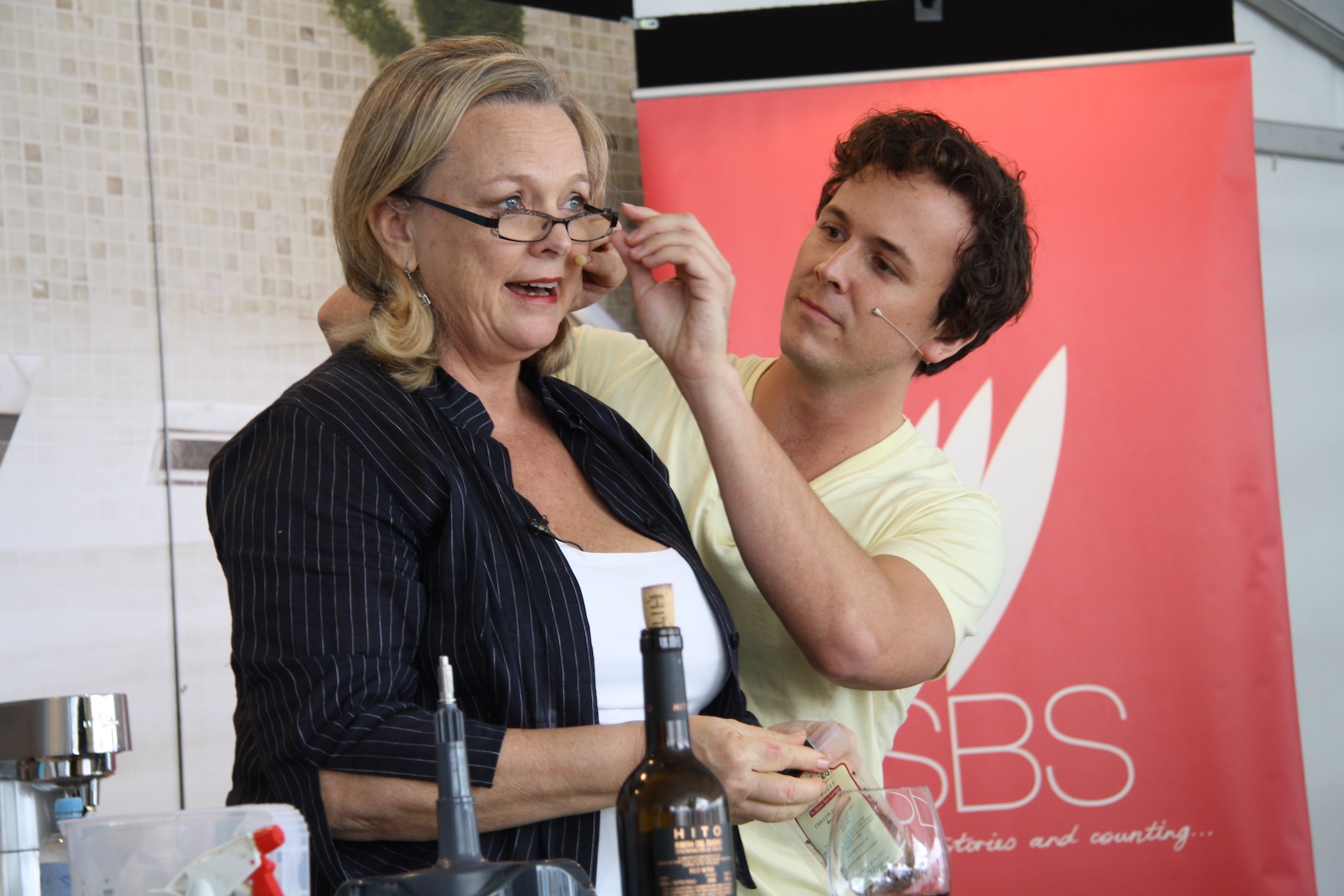
That desire has driven Milan’s work as an ambassador for the Leukaemia Foundation.
She remains troubled by the circumstances leading to Blair’s diagnosis and believes earlier opportunities existed to investigate his illness with a blood test. Milan says a haematologist later told her that had Blair been treated even a week earlier, things might have been different.
“The danger is when it’s not diagnosed,” she says. “Question things, get a second opinion, get a blood test.”
Her anger could have taken her somewhere else but instead, she remembers something her mother taught her.
“My mother said, ‘It’s not what happens to you in life, it’s how you deal with it.’
“Taking action against medicos wouldn’t bring Blair back; it would make me bitter. Better to remember the good and turn that energy into advocacy.”
For Milan, advocacy has a name and a face.
“If I can get the word out and save one life, that’s one Blair — one family and friendship group spared,” she says.
“People shouldn’t die of blood cancer.”
Life has brought Milan further loss. John died five years ago from lung cancer despite being a non-smoker.
Still, she works, exercises, travels and hosts culinary tours. She gives her time to charity and stays close to family and friends, and this year, 15 years after Blair’s death, she returned to Greece and retraced the journey they had once made together.
“It was amazing and very beautiful,” she says, softly.
Before we finish talking, I ask Milan what Blair would make of it all. His mum at 70, who is still travelling, still cooking, still talking about him… and still refusing to be old before her time.
What would he say to her?
“He was always proud of me,” she says.
“He’d say, ‘You’re just awesome, Mum.’”
September is Blood Cancer Month, an annual month dedicated to raising awareness of blood cancers including leukaemia, lymphoma and myeloma. For more information about the work of the Leukaemia Foundation in supporting Australians living with blood cancer and their loved ones, visit the Leukaemia Foundation official website or call 1800 620 420.
For more on Lyndey visit the official Lyndey Milan website.





 Proudly Australian owned and operated
Comments 2
Join the conversation. Comments are reviewed before they appear.
Great piece.
Lovely article Lyndey. Your lovely son Blair is remembered and spoken about every time I see a piece of documentation for my Harrison Blair. I spoke about Blair just the other day to pass onto my children a piece of your advice that has not left me - have your own doctor who has all your health records and don’t visit random medical centres and see doctors who dont have your history. This piece of advice has stayed with me and it’s important for others to pass on to their children. You are awesome Lyndey Milan ( and very tall!)
Join the conversation
Tell us who you are to post a comment. We'll remember you next time.