
When war came to Darwin & the stories 85 years later


On 19 February 1942, two Japanese air raids brought the Second World War to mainland Australia. As Darwin prepares to mark the 85th anniversary, the places where that morning unfolded have stories to tell.
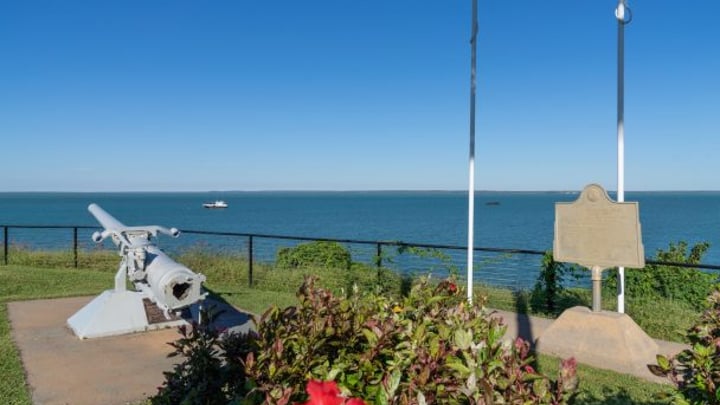
On Darwin’s Esplanade, a gun salvaged from the American destroyer USS Peary points out across the harbour towards the place where the ship sank. You can stop beside it on a morning walk.
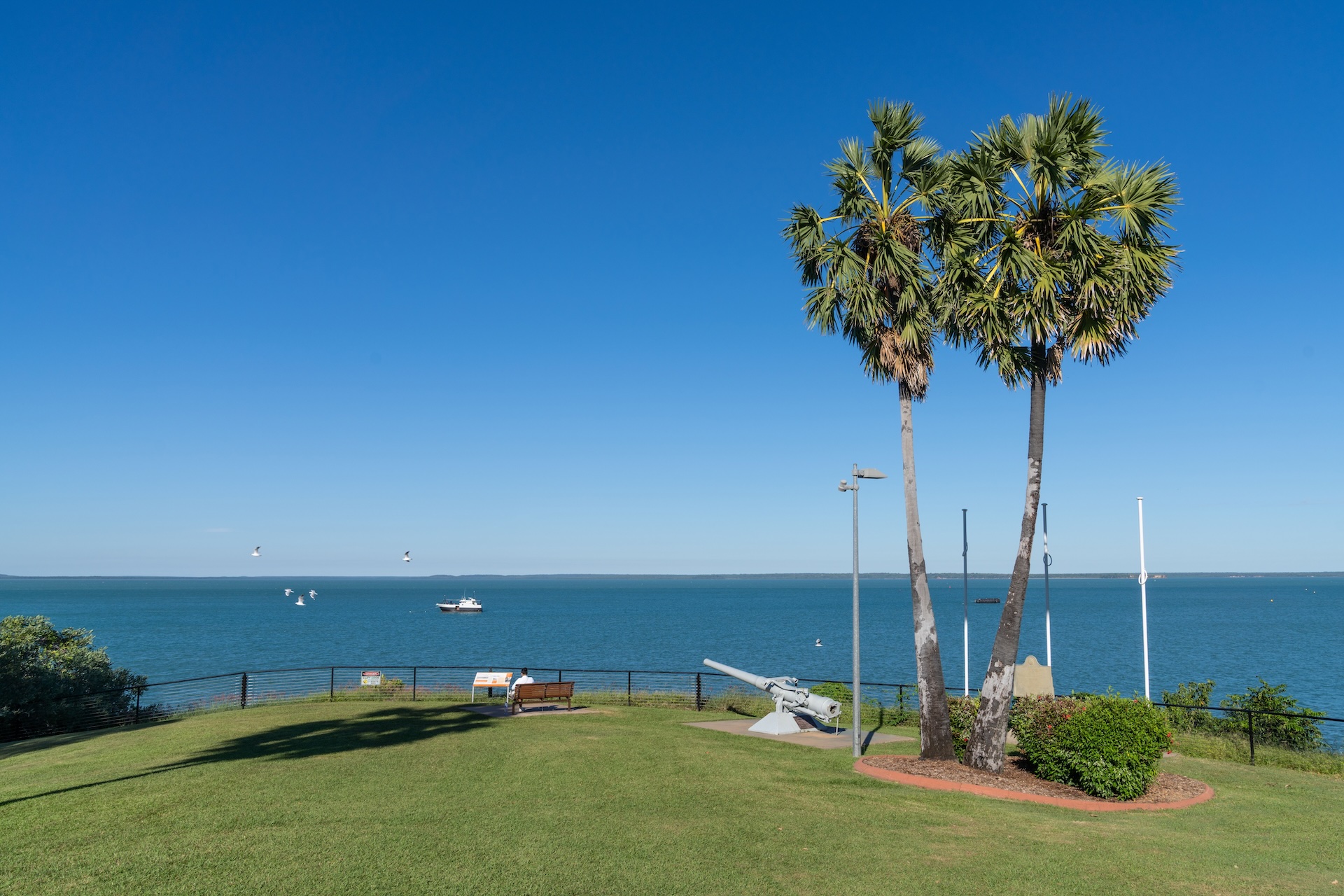
On 19 February 1942, the Peary was one of dozens of Allied ships in the harbour when Japanese aircraft came in just before 10am. By the end of the morning, the destroyer was on the seabed and dozens of men aboard had lost their lives.
On Friday 19 February 2027, Darwin will mark 85 years since the raids with a free commemorative service on the Esplanade. For anyone who grew up hearing a parent or grandparent talk about the war, it’s a chance to put a place to a chapter of Australian history that may be less familiar than the stories passed down at home. The harbour is a good place to begin.
Two raids in one morning
Darwin was a supply base for Allied forces fighting to Australia’s north. That Thursday, 188 aircraft were launched from four Japanese carriers in the Timor Sea. The first raid struck shipping, the town and its airfields. A second wave of 54 land-based bombers arrived later that morning, concentrating on the RAAF base. About 250 people were killed across the two raids, although the precise toll remains uncertain.
Some of the most affecting stories are about people at work that morning. At the wharf, a direct hit killed at least 21 wharf workers. A bomb struck the hospital ship Manunda, killing 12 people, among them Australian Army nurse Sister Margaret de Mestre. In town, a bomb struck the trench where post office staff had taken shelter. Among the dead were postmaster Hurtle Bald, his wife Alice and their daughter Iris. Alice, a former schoolteacher, had volunteered to stay in Darwin and work at the telephone exchange.
During the raid, Larrakia man Juma Fejo ran to the wharf to find his younger brother Samuel, a gunner known as Smiler. When Samuel ran out of ammunition, the brothers went into the harbour and pulled injured men from the water. Both survived. Years later, an American airman the brothers had rescued during the war came back to Darwin to thank them. He placed a notice in the newspaper and waited at the Hotel Darwin. It fell to Juma’s daughter Lorna to meet him and tell him that both men had died. Lorna’s daughter Christine Fejo-King later shared the story as part of the city’s commemorations.
The story reaches across the water to the Tiwi Islands. When Japanese pilot Hajime Toyoshima crash-landed on Melville Island after taking fire over Darwin, Tiwi man Matthias Ulungura disarmed and captured him. Toyoshima became the first Japanese prisoner of war captured on Australian soil. For Darwin and the nearby airfields, the two raids were the first of 64. The attacks continued until November 1943. Civilian evacuations, which had begun before the first raids, gathered pace after the bombing as families left the town.
From the wharf to the wartime tunnels
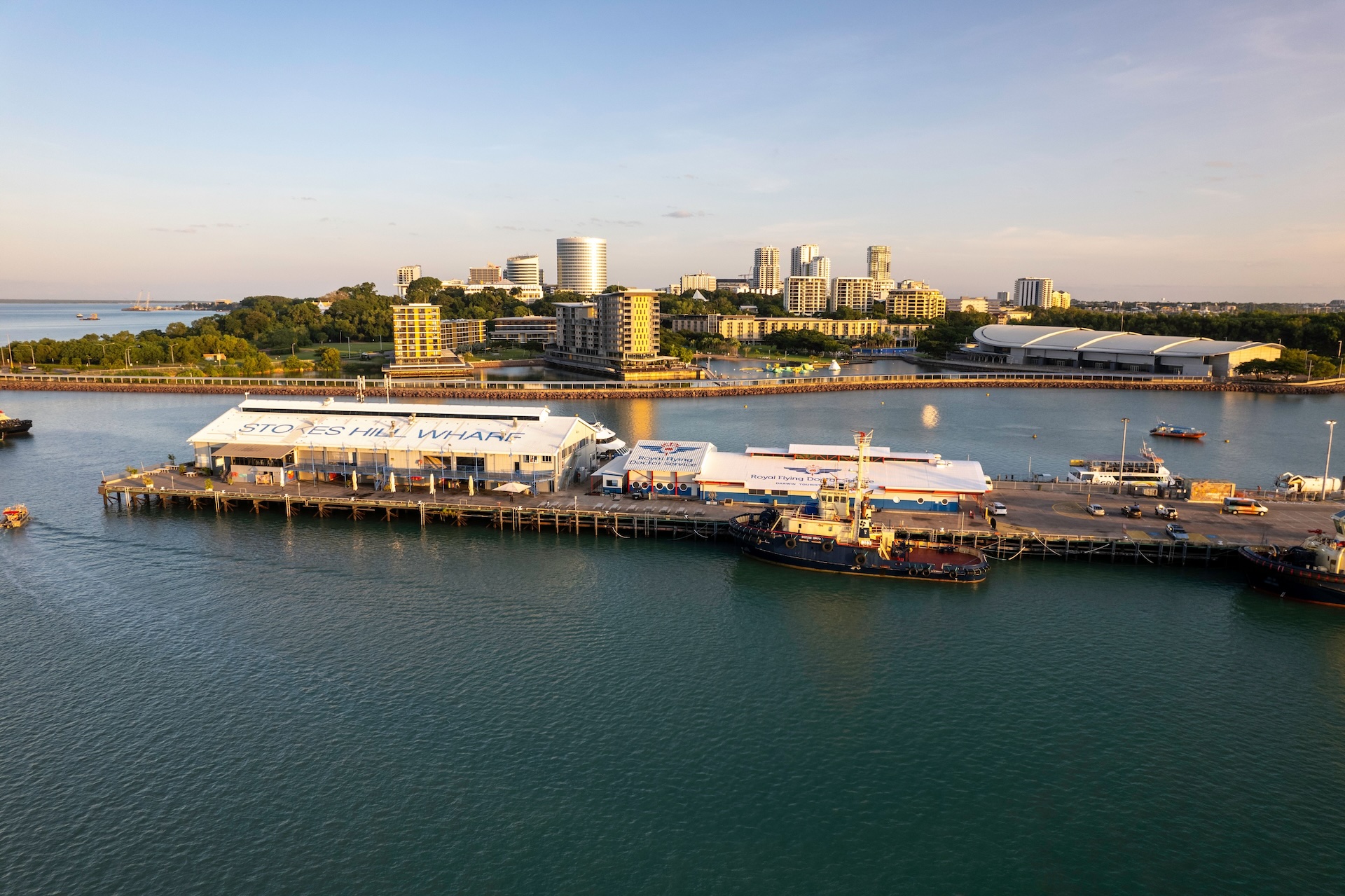
At Stokes Hill Wharf, the Royal Flying Doctor Service Darwin Tourist Facility uses virtual reality to recreate the attack on the harbour. With a headset on, you can see the raid unfold from the deck of the ammunition ship Neptuna, which exploded beside the wharf. There are also models, interactive exhibits and a hologram account of the raid, so you can explore the story without wearing a headset.
“There’s something special about visiting the places where history happened,” says Bek Garrett, tourism manager at the RFDS Darwin Tourist Facility. She says the displays help visitors understand what unfolded and connect with the experiences of people who were there.
A short way from the waterfront, the WWII Oil Storage Tunnels tell the story of what happened after the raids. They were dug to protect Darwin’s fuel supplies underground, but persistent leaks complicated construction and no oil was stored there during the war. The tunnels opened to visitors in 1992 for the bombing’s 50th anniversary. At East Point, the Darwin Military Museum and its Defence of Darwin Experience make another stop, with wartime gun emplacements nearby.
A drive south to remember the people who died
About 113 kilometres south of Darwin on the Stuart Highway, Adelaide River was home to a large wartime base. Today, its war cemetery holds more than 430 graves, and the Northern Territory Memorial to the Missing records the names of another 292 service personnel lost to the north of Australia. The adjoining civil cemetery contains the graves of nine people who died in the attack on the Darwin Post Office. It’s a quiet place to stop and think about the people behind the names you’ve read at the wharf and the museums.
If your family has a wartime connection to the Top End, a name on the back of a photograph can be enough to start looking. The National Archives holds Army, Navy and Air Force service records, and you can search online by surname, refining the results with a given name or service number.
Ahead of the anniversary, Tourism and Events NT is inviting travellers to explore these places as part of the Territory’s Military Tourism Plan 2035. In research it commissioned, 73 per cent of Australians surveyed said they were interested in learning more about military history on Australian soil. Staci Mellman, the agency’s chief marketing officer, says visiting the Territory offers a chance to explore “the places where pivotal moments in our nation’s wartime past unfolded”.
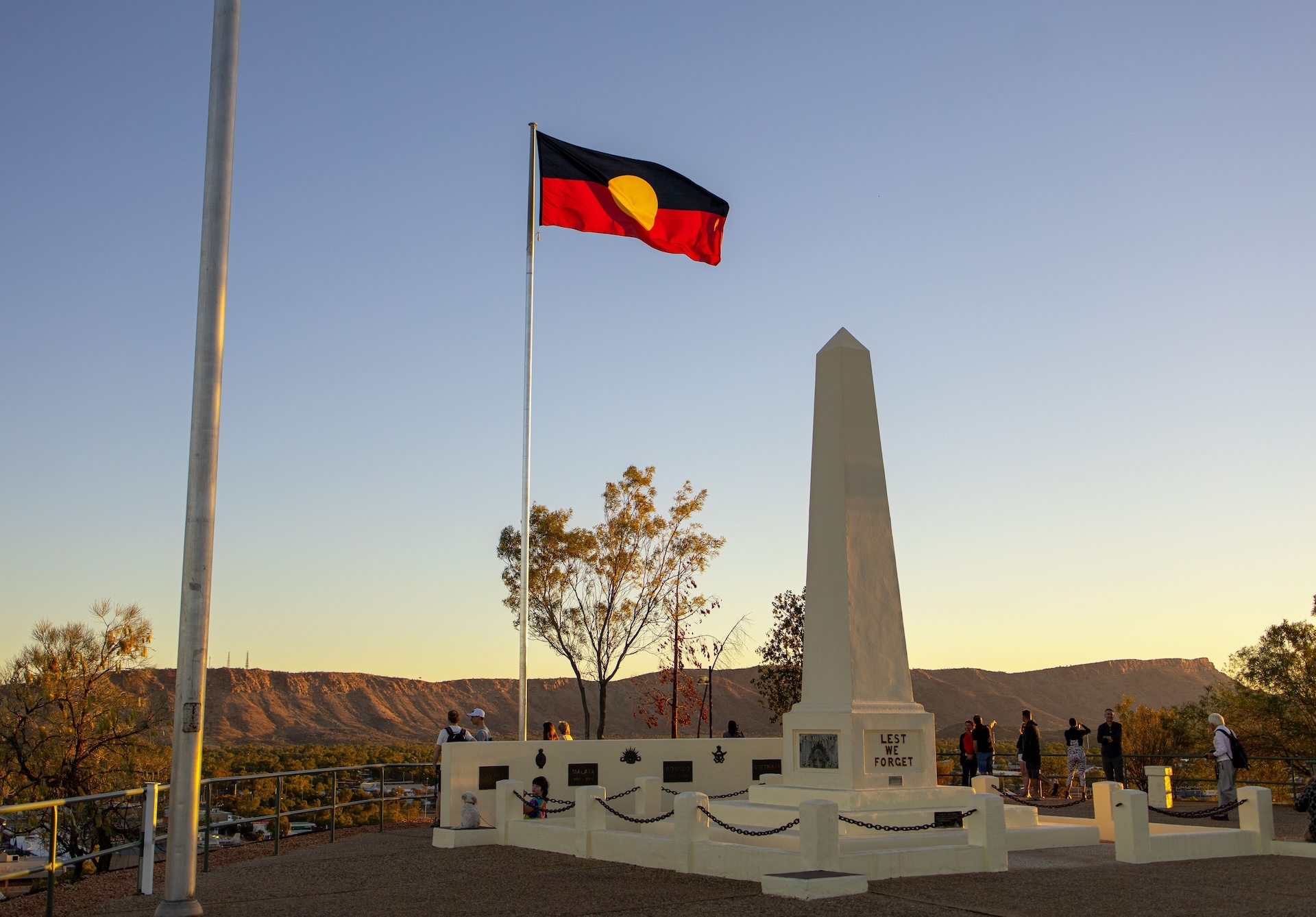
The free NT Military Explorer app uses your phone to tell the story of gunner Jack Mulholland at the Darwin Military Museum and of the Catalina flying boats at Doctors Gully. An experience about the wartime Tent City is planned for Anzac Hill in Alice Springs. The Territory’s online trip planner can help fit the sites into a longer holiday.
If you’re coming for the anniversary, make time to walk to the Cenotaph. It stands where an anti-aircraft battery fired in Darwin’s defence that morning. Eighty-five years later, people will gather on that same ground to remember those who never made it home.
If you enjoyed reading this story on the 85th anniversary of Darwin being bombed by the Japanese, you might want to read our story on Ken Burns and Lynn Novick’s doco The Vietnam War.





 Proudly Australian owned and operated
Comments 0
Join the conversation. Comments are reviewed before they appear.
Be the first to comment.
Join the conversation
Tell us who you are to post a comment. We'll remember you next time.