
Why I’m starting chemotherapy at 68 – and why men need to take prostate cancer seriously


On January 13, I start chemotherapy.
Six doses. Over eight weeks. A schedule neat enough to belong in a diary, which is ironic because it’s designed to deal with something that has been anything but neat. Cancer, it turns out, does not respect timetables, optimism, or the fact that you’ve still got good wine in the cellar.
Late last year, I went in for what I thought was a routine check-up. One of those “might as well get it done” appointments men of my age occasionally agree to, usually after a bit of nagging. The blood test came back showing a high PSA – prostate-specific antigen – the marker doctors use to flag possible prostate cancer.
High, it turns out, was doing some heavy lifting.
More tests followed. Scans. Biopsies. Conversations where doctors sit down before they speak, which is never a great sign. The verdict: my body was riddled with cancer. Prostate cancer, yes – but not politely confined to the prostate, as so many of us like to believe. It had spread. Dramatically.
The oncologist was calm, professional and refreshingly direct. If the chemotherapy works well, he said, I might have three years.
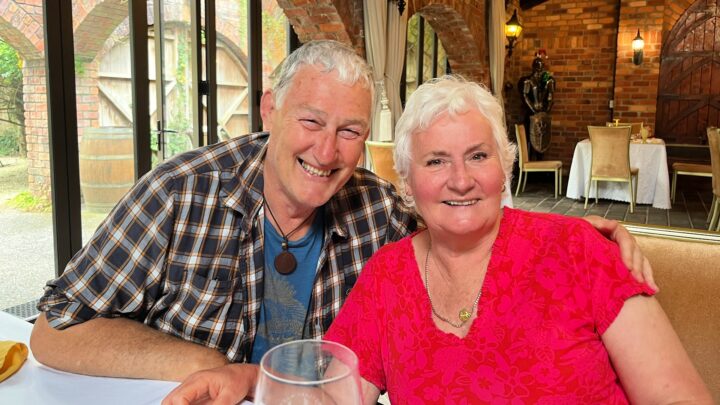
I’m 68. I’m married to Shirley. I have a son. And by nature, I am loud.
I talk loud. I live loud. I laugh often and heartily, and I don’t suffer fools with anything like the patience I probably should. I am not, by temperament, a man inclined to quiet despair or earnest wall-staring. So, I’ve chosen pragmatism.
I am not Googling. I am not joining forums. I am not lying awake at night bargaining with the universe. Worrying will not fix this. It will not extend my life. And it will absolutely ruin the quality of whatever time I’ve got.
When I told my mate Crispy about the diagnosis, he didn’t do the whole tragic face thing. He said, “Well mate, I reckon it’s time to start drinking the good wine from the cellar.”
Pause.
“Don’t wait. It might get better with age, but I’m not sure you will.”
This is why you keep friends like Crispy.
So that’s exactly what I did. We had what I’m calling the first of several cancer parties. Family. Close friends. No hushed voices. No whispering in corners. We opened bottles that had been “saved for a special occasion” – because frankly, if this doesn’t qualify, nothing does.
There was laughter. There were toasts. There was excellent wine that did not, disappointingly, cure cancer – but it did make the evening magnificent.
I am starting to notice changes now. Some pain. A heaviness in my body that wasn’t there before. I get tired in a way that feels unfamiliar, like someone has quietly turned the dimmer switch down. Afternoon naps are no longer indulgent; they’re essential.
And I’ve learned a new humility: sometimes I have to pull the car over and let my wife drive. That one stings a bit, I’ll admit. Independence goes reluctantly.
Over the coming months, I’ll be sharing this journey with Starts at 60 readers. The lows – because there will be some. Hopefully more highs. I won’t sugar-coat it, and I won’t dramatise it either. I’ll tell it as it is.
Part of the reason I’m doing this is because of something I’ve heard all my life: “You die with prostate cancer — it doesn’t kill you.”
That may be true for many men. It is not true for me.
So let’s talk plainly about prostate cancer.
The prostate is a small gland that sits below the bladder and plays a role in producing semen. Prostate cancer is one of the most common cancers in men, particularly as we age. Many prostate cancers grow slowly. Some don’t. Some behave like well-mannered guests. Others trash the place and invite their friends.
Testing usually starts with a blood test measuring PSA levels. PSA is not a cancer test as such – it’s a signal. PSA levels can rise for several reasons, including infection or enlargement. But consistently high or rapidly rising PSA levels are a red flag.
Generally speaking, a PSA under 4 is considered low risk. Between 4 and 10 raises concern. Above 10 significantly increases the likelihood of cancer – and higher numbers can suggest aggressive disease. Mine, at 38, was well beyond where anyone felt comfortable.
From there, doctors may recommend scans, MRIs, or biopsies to see what’s really going on. None of this is pleasant, but all of it is better than not knowing.
If there’s one thing I’d urge men reading this to do, it’s this: get tested. Early. Don’t rely on pub wisdom or outdated clichés. Don’t assume you’re fine because you feel fine. I felt fine too – until I wasn’t.
I don’t know exactly how this story ends. None of us ever do, really. But I do know how I intend to live it: honestly, loudly, with good wine, good company and as much laughter as I can pack in.
If I get three years, I intend to use them well. And if sharing this makes even one bloke book a test a bit earlier than he otherwise would have – then that, at least, is something I can still fix.
And that matters.
Paul Sheppard is a former News Corp journalist.





 Proudly Australian owned and operated
Comments 0
Join the conversation. Comments are reviewed before they appear.
Be the first to comment.
Join the conversation
Tell us who you are to post a comment. We'll remember you next time.