
Medical trial aims to beat ‘widow maker’ heart attacks


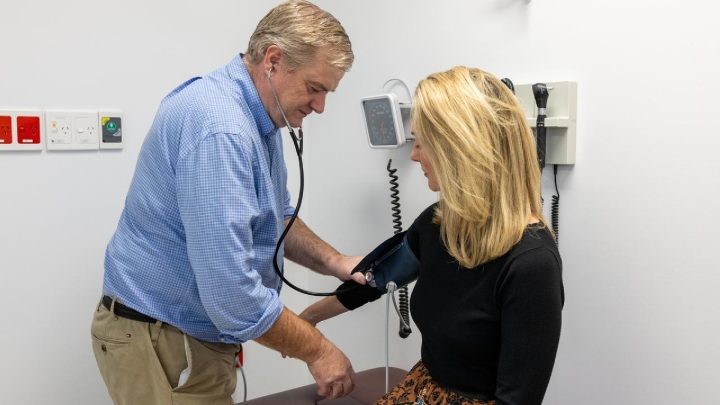
Jennifer Tucker was pushing a pram uphill when she became so breathless she had to sit in the gutter.
A man working in a pizza shop on Sydney’s north shore spotted the 33-year-old slumped on the footpath, her two young children nearby, and took her to a GP clinic across the road.
Ms Tucker was 33, went to the gym four times a week, didn’t smoke, had low cholesterol and no history of serious health problems.
But over the following weeks, a series of tests revealed she had a severe blockage in one of her coronary arteries, a condition colloquially known as a “widow maker”.
“I could have had a GP that day say, ‘You’re right, I’ll let you go’ and push me out of the system,” Ms Tucker told AAP.
“I wouldn’t be sitting here talking to you today.”
Ms Tucker had a stent inserted in 2011 and remains well.
But she almost brushed off appointments many times, while medical staff played down risks of a serious health problem, due to her age and apparent good health.
For the past decade, cardiologists have observed a rise in heart attacks among people with no obvious risk factors such as high blood pressure, high cholesterol, diabetes and obesity.
Researchers from Royal North Shore Hospital and the University of Sydney are developing a world-first screening regime involving blood tests for biomarkers and CT imaging to detect coronary artery disease in its “silent” early stages.
Focusing solely on known risks like high blood pressure, diabetes and cholesterol ignored less understood individual factors, the hospital’s interventional cardiologist Gemma Figtree said.
“Coronary disease and heart attacks also affect young, fit and healthy people – not uncommonly with the first presentation of this with sudden death,” Professor Figtree said in a statement.
“Early detection of life-threatening plaque offers a chance to prevent heart attacks and deliver effective prevention to all who develop the disease, irrespective of their population risk factors.”
More than 5000 people have taken part in the developing research, with blood samples helping to identify biomarkers.
The program is seeking increased funding, with an ultimate goal to expand into rural and remote areas, which have higher rates of heart attacks and limited access to preventative care.
Mark Tattersall, a GP in Bourke, western NSW, said presentations were often delayed in remote areas, partly because of higher rates of chronic conditions.
People with comorbidities like diabetes could experience vague heart attack symptoms, including non-specific discomfort, Dr Tattersall said.
“There’s patients in their early 40s presenting with heart attacks and we’ve had some of them die … which is quite devastating for families,” he told AAP.
While Ms Tucker faced potential medical biases in her treatment path, she said the barriers for rural patients were more pronounced.
“If we can get this out to regional (areas), it’s a really equitable solution,” she said.





 Proudly Australian owned and operated
Comments 0
Join the conversation. Comments are reviewed before they appear.
Be the first to comment.
Join the conversation
Tell us who you are to post a comment. We'll remember you next time.