
Aussie smart bedding could help prevent falls


For anyone with an ageing parent, the thought of them falling during the night is a constant worry. A broken hip or serious injury can change an older person’s life in an instant, and even in the best aged-care facilities staff can’t be everywhere at once.
A clever Australian invention could give carers a helping hand.
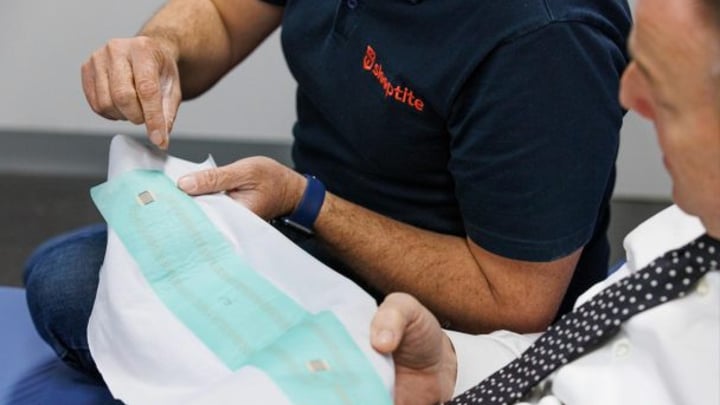
Researchers at Melbourne’s RMIT University have teamed up with Australian medtech company Sleeptite to develop smart bedding that monitors a person’s movements and position in bed, helping staff identify when someone may be at risk of falling.
The technology, which is built into an ordinary mattress protector, doesn’t require cameras, wristbands or any equipment attached to the person sleeping, and it’s just secured a US patent.
Sleeptite founder and chief executive Cameron van den Dungen said the idea was to give care workers more information without compromising residents’ privacy.
“Care workers can’t be in every room, every minute of the night. This technology gives them an extra set of eyes, without putting a camera in the room,” he said.
“It helps carers spot risks earlier, so they can step in before a fall happens, and it gives the people in their care, and their families, real peace of mind.”
How does it work?
The technology, known as FlexiSense, uses thin, flexible sensors embedded in mattress protectors. Made using silver and carbon inks printed onto flexible sheets, the sensors respond to changes in pressure as someone moves in bed.
That information can be transmitted wirelessly, allowing care staff to monitor movements and potentially recognise when assistance is needed. For residents, there’s nothing extra to wear or operate and they simply go to bed as usual.
The sensors were developed by a team led by RMIT Distinguished Professor Madhu Bhaskaran, who said making the technology affordable and practical had been a priority.
“The sensors can be used across a wide range of mattress types, making the technology easier and more affordable to adopt,” she said.
“Through rigorous testing under the rollator machine, our ready-to-manufacture sensors have demonstrated durability, sensitivity, and robustness, accurately detecting body motion with minimal power consumption.”
Researchers are also working on ways the system could identify the risk of pressure sores, which can develop when someone remains in the same position for extended periods.
Tested in an aged-care home
The invention has been nearly a decade in the making, bringing together researchers, technology specialists and bedding manufacturer Sleepeezee Bedding Australia.
An early field trial in an aged-care home involved six residents monitored over more than 250 nights, generating upwards of 6,100 hours of monitoring data.
While that provided valuable information about how the technology performs in a real care environment, it was a small trial. Importantly, the published research does not establish that the technology has reduced falls or prevented injuries.
Rather, it demonstrates how flexible sensors can be incorporated into bedding to detect movement and potentially support earlier intervention.
That’s an important point for families hoping technology might offer greater protection for vulnerable loved ones.
An Australian invention going global
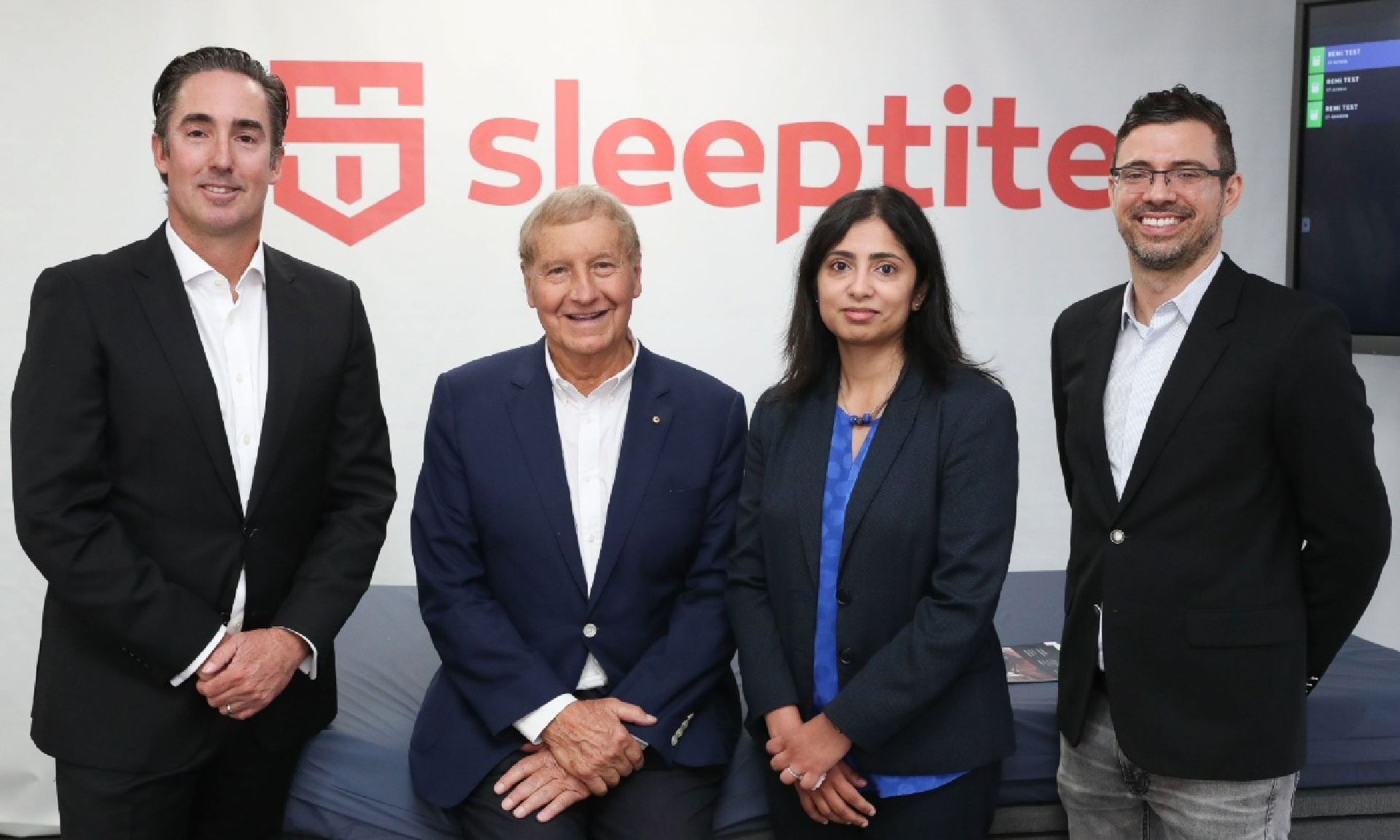
The technology has now been granted a US patent covering the design of its sensors and how they are manufactured and is a milestone for Sleeptite, which has also showcased the invention at a major medical technology conference in Boston.
Van den Dungen said the patent could help the company expand manufacturing while keeping the expertise in Australia.
“Our patent covers how the sensors are made, not just what they do,” he said.
“That means we can build our first production line here in Melbourne, then replicate small-batch manufacturing close to customers in markets like the United States, with the IP and the know-how anchored in Australia.”
Could it help people ageing at home?
While the technology has been developed with healthcare and aged-care settings in mind, Sleeptite believes it could eventually have applications in private homes.
That raises an interesting possibility for older people who want to remain independent, and for families concerned about their safety overnight.
But there are still questions to answer.
The company has not confirmed when the latest FlexiSense technology might be available to individual households, how much it would cost or whether larger trials will demonstrate a measurable reduction in falls.
For now, the achievement lies in developing bedding that can detect movement without intrusive monitoring equipment.
Bhaskaran said seeing the research move towards practical use was especially rewarding.
“It is incredibly exciting to see the sensor we developed leaping out from our lab and into the world, to improve the care for some of our most vulnerable people,” she said.
For families who have experienced the frightening consequences of an elderly loved one’s fall, that’s a development they’ll be hoping delivers on its promise.
The research, Soft piezoresistive fabric-embedded pressure sensors for smart bedding for aged care applications, was published in the journal Flexible and Printed Electronics.
If you enjoyed reading this article check out Preventing falls at home





 Proudly Australian owned and operated
Comments 0
Join the conversation. Comments are reviewed before they appear.
Be the first to comment.
Join the conversation
Tell us who you are to post a comment. We'll remember you next time.