
The layman’s guide to getting started on investing in gold



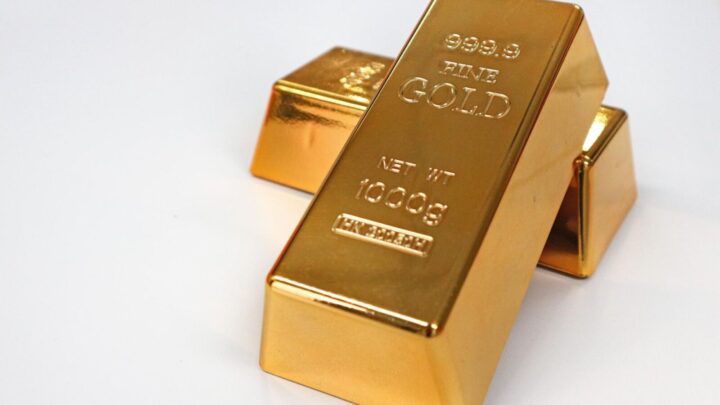
For hundreds of years, gold has been a popular choice for investors seeking to diversify their holdings and hedge against inflation. It’s also a sought-after asset in times of financial market turmoil, social upheaval and uncertainty – like right now, as the world reels from the impact of Covid-19.
The safe-haven asset is certainly back in the headlines, with top hedge fund founders singing its praises and private banks advising wealthy clientele to add it to their portfolios. Indeed, gold is one of the few big market winners this year, up more than than 30 per cent and recently topping more than US$2,000 a troy ounce for the first ever time.
For these reasons, you might even be considering investing in gold yourself. Don’t forget, though, that there’s no such thing as a risk-free investment, so it pays to understand the basics. We’ve set out this beginner’s guide, with the key terms highlighted, to help you get started. And if you’d like to learn more about how to invest in other commodities, from agricultural to oil, you can read more at Commodity.com.
The key info on buying bullion
The most common way to invest in gold is to buy physical gold, also called ‘gold bullion’. Bullion is usually in the form of bars (also called ingots) or coins, which must be a minimum 99.5 per cent pure. You can order coins or bars online from a trusted company like Apmex.com or the Perth Mint and have it shipped to your home.
The most popular coins purchased for investment purposes are those minted by governments, which are known by colloquial terms based on the design on the coin. Some of the most popular government-minted coins include:
- American Eagles
- Australian Kookaburras and Koalas
- Austrian Philharmonics
- Canadian Maple Leafs
- New Zealand Kiwis.
The most common size of a gold coin is one troy ounce. (The troy weight system for precious metals has its own interesting history that’s thought to go back to Roman times but in short, a troy ounce is about three grams heavier than a standard ounce.)
Gold coins minted by governments have a nominal value engraved on them. For example, American Gold Eagles have US$50 engraved on them. It’s important to know that the nominal value is customary but meaningless: one ounce of gold is currently worth more than US$2,000 ($2,770), not US$50.
Another thing to know is whether a coin is a ’round‘. When you go to the supermarket, you can buy Campbell’s soup or a generic, cheaper brand. Similarly, there are government-issued gold coins, such as the ones listed above, and there are generic coins that are cheaper to purchase. For example, Apmex produces its own brand of coins and bars. These generic coins are usually referred to as ’rounds’.
And although the common size of a gold coin is one troy ounce, it’s possible to buy fractional gold coins. Instead of weighing one troy ounce, fractional coins come in these weights: one-tenth of an ounce, one-fourth of an ounce, or a half-ounce.
Typically, you’ll pay a higher premium (as a percentage of the ‘spot‘ price of gold – read more on the spot price just below) for a fractional gold coin than a full-ounce coin. To understand this, let’s look at premiums and what spot price means.
What’s a fair price for bullion?
Prices for physical coins or bars are based on the current price of an ounce of gold. This is called the spot price. You can find the current spot price on many financial websites – Apmex and the Perth Mint both have it on their sites. But there are costs on top of the spot price that will increase the amount you end up paying for your gold.
Wholesale gold dealers add a small premium for profit and overhead, and then they sell their gold to retailers, who add their own premium before selling the bullion to you. The premium is the mark-up on top of the value of the gold contained in the bar or coin.
Why does the premium matter? Because should you later decide to sell your gold, its value will be determined only by its weight and the spot price, not the total price including premium that you paid for it.
Premiums are affected by supply and demand, and gold bullion premiums have risen significantly during the coronavirus pandemic. Currently, you should expect to pay a premium of roughly 7 per cent above spot for one-ounce gold coins.
To get the best deal, avoid so-called collectible gold coins of the type that are often hawked via infomercials and print magazine ads. They might even be ‘colourised’ with multi-hued designs. The companies that sell these charge a high premium for the presumed artistic value of the coin, which does not increase the actual value of the gold.
Also avoid proof coins because they always cost more than regular coins. Proof coins are a type of limited-edition collectible that have been engraved with more detailed plates, resulting in a higher-relief design, and may also be hand-polished. An Australian proof Gold Koala, for example, will cost more than a regular Gold Koala.
Is bullion the best way to buy gold?
Buying physical gold of a high quality, such as gold coins and bars, is the costliest method of investing in gold. As noted above, since the pandemic, these items commonly carry a 7 per cent mark-up above the actual cost of the gold itself, then you have to pay for storing the gold or have the worry of keeping it securely at your home until you wish to sell it.
You can purchase gold more cost-effectively by using companies that let you deal in the precious metal through their platforms. The Perth Mint Certificate Program, for example, allows you to choose from a group of carefully selected gold distributors who will help you buy gold.
The mint itself guarantees the safe storage of the gold you buy through the distributor, and once you’ve made a purchase, the mint will also provide you with a uniquely numbered precious metal certificate that confirms your legal title to that gold. The gold can only be sold by producing that certificate, and you can even make an appointment to see your gold at the mint’s HQ in Perth.
Other platforms that offer similar services to that of the Perth Mint include BullionVault.com in London and Sprott Physical Gold Trust in Toronto, Canada.
Investing in gold through the stock market
If you’re not fussed about personally owning physical gold, there are several ways that you can invest in gold’s performance using financial markets.
Physical gold ETFs
For starters, there are gold-focused exchange traded funds (ETFs) that function as ‘grantor trusts‘. Their shares trade like stocks, and the shares are backed by physical gold owned by the trust. The value of the shares tracks the value of the bullion held by the trust, minus the trust’s expenses such as storage. When gold rises in price, the value of your shares in the ETF would rise, and you would profit.
Popular gold ETFs backed by bullion that trade on the Australian Securities Exchange (ASX) include ETFS Physical Gold (GOLD), Perth Mint Gold ETV (PMGOLD) and BetaShares Gold Bullion ETF (QAU).
There is one aside. As explained above, with most of physical gold ETFs you do not become the owner of the gold; the trust behind the ETF continues to own the gold. There are exceptions, however, as in the Perth Mint Physical Gold ETF (AAAU), which trades on the New York Stock Exchange (NYSE), and which allows for physical delivery of the gold your shares represent. The Perth Mint ETF is guaranteed by the government of Western Australia.
Gold-mining stocks
Another way to gain exposure to the gold market is through investing in the shares of gold miners. Ideally, when the cost of gold goes up, the value of those companies will similarly rise. However, miners’ share prices may be impacted by factors other than bullion prices, including how well-managed the mining company is, political unrest in the countries their mines are located in, shut-downs due to a second wave of Covid-19 and natural disasters.
Some of the biggest gold miners listed on the ASX include Newcrest Mining (NCM), Northern Star Resources (NST) and Evolution Mining (EVN). On the NYSE, well-known names include Barrick Gold (GOLD) and Kirkland Lake Gold (KL), while Franco-Nevada (FNV), listed on the Toronto Stock Exchange, doesn’t mine gold itself but provides financing to gold miners in return for ‘royalties’ from their mines.
There are also ETFs that allow you to invest in groups of companies with various interests in gold mining, so you’re not exposed to the fortunes of just one company. Some of the better-known gold-miner ETFs include the VanEck Vectors Gold Miners ETF (GDX) and BetaShares Global Gold Miners ETF (MNRS) on the ASX, the iShares MSCI Global Gold Miners ETF (RING) on Nasdaq, and the Sprott Gold Miners ETF (SGDM) and the Global X Gold Explorers (GOEX) on the NYSE.
Good as gold?
If after reading this, you’re keen to invest in gold, it is wise to think carefully about your goals. Traditionally, many who seek to invest a portion of their portfolios in gold have done so to preserve their purchasing power, rather than to earn large gains (remember gold’s popularity as a hedge against inflation?). Also, remember that no type of investing is truly risk-free. So even as you grow more comfortable with the world of gold investing, it’s always sensible to continue doing your homework.





 Proudly Australian owned and operated