
Mary Strange is the human face of a hearing funding gap


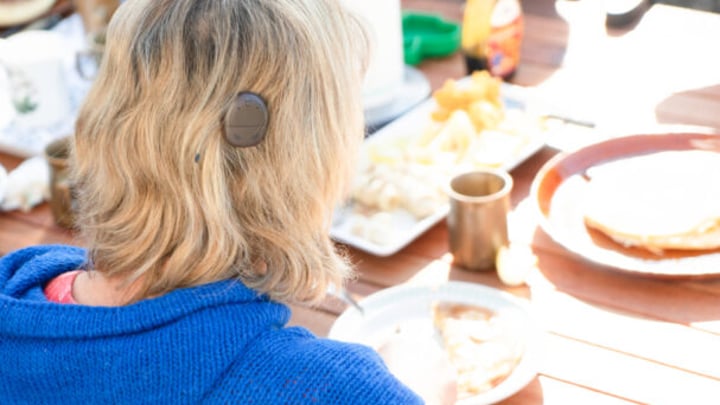
“It’s like going deaf all over again.”
On Victoria’s Mornington Peninsula, 76-year-old Mary Strange is doing what many older Australians do – she makes do.
Her cochlear implants still work, just. But she knows they are fading.
“Sometimes I feel the sound comes and goes a little bit,” she tells Starts at 60. “I’m still managing, but I don’t feel it’s as good as what it used to be because the equipment’s getting a bit older.”
What comes next is not a medical decision, but a financial one.
“I haven’t upgraded because it’s a bit expensive,” she said. “We’re looking at $9,000 to replace one type of thing…and I’ve got two of them.”
For Strange, like thousands of older Australians, the ability to hear – to speak to family, to engage with the world – now depends on whether she can afford to replace essential equipment.
A life changed – and now at risk
Strange lost her hearing in her early 40s after head injuries, eventually becoming profoundly deaf. Traditional hearing aids offered little help.
“I couldn’t hear my grandchildren talk at all. I couldn’t use the telephone. I couldn’t hear a PA system, and I had trouble with communication,” she said.
A cochlear implant at age 64 transformed her life.
“It was the very best thing I ever did,” she said. “I was able to use the telephone… I was able to hear my grandchildren talk. I could even talk in the car, which was amazing.”
But that progress is fragile.
Cochlear implants rely on external sound processors – devices that typically need replacing every five to six years due to wear and advancing technology. Without them, the implant cannot function.
A system with an age cut-off
Advocates say Strange’s situation is not unusual – and is the result of a structural gap in Australia’s hearing support system.
While younger Australians can access funding through programs such as the NDIS or Hearing Australia, and some veterans receive support through the Department of Veterans’ Affairs, people over 65 often fall outside these pathways.
Deafness Forum Australia has warned the gap leaves older people with few options, despite the Hearing Services Program covering initial implantation but not replacement processors for many seniors, with Acting CEO Rhonda Locke saying the consequences of losing access to functioning equipment can be severe.
“If you’re used to hearing and being able to participate socially, or in a work setting etc, and to have that removed from you is devastating,” she said. “It’s like you’re going deaf all over again.”
Choosing between hearing and living costs
For many older Australians, the issue is not eligibility but affordability.
“As an aged person, you don’t really have a great income,” Strange said. “The cost of living is very expensive these days. You put things like your personal health sometimes on the side because you’ve got to live.”
The result is that upgrades are delayed, or avoided entirely, even when devices begin to fail.
“I’m pushing ahead, still using it until I can’t,” she said.
Advocates warn this can lead to rapid deterioration in hearing ability, alongside broader health impacts.
Research cited by Deafness Forum links untreated hearing loss to increased risks of social isolation, depression and cognitive decline, including dementia.
Locke said the effects of losing hearing again can emerge quickly.
“It doesn’t take a long period of time for somebody to really suffer the effects of that isolation,” she said. “It’s a very short period of time where it really can affect you.”
A growing national issue
The challenge is expected to intensify as Australia’s population ages.
More than 3.6 million Australians currently live with hearing loss – a figure projected to grow significantly in coming decades – increasing demand for support and assistive technology.
Deafness Forum Australia estimates around 1,550 people aged over 65 could immediately benefit from funded processor replacements if policy changes were introduced.
The organisation has called on the Federal Government to extend coverage under the Hearing Services Program, arguing the relatively modest cost – about $3.5 million a year – would protect both individual wellbeing and earlier public investment in cochlear implants.
“You need to have good hearing to live well”
For Strange, the issue is not abstract policy – it is about maintaining connection.
“You need to have good hearing to be able to communicate,” she said. “You need to have contact with people to kind of have a good lifestyle.”
Without support, she fears what comes next, as once a cochlear implant user loses access to sound processors, there is no fallback.
“You cannot use hearing aids once you’re profoundly deaf. It’s impossible,” she said.
For now, she waits – hoping to afford an upgrade, or for policy to change.
Asked what funded access would mean, her answer is simple:
“Oh, that’d be wonderful, wouldn’t it?”
IMPORTANT LEGAL INFO This article is of a general nature and FYI only, because it doesn’t take into account your personal health requirements or existing medical conditions. That means it’s not personalised health advice and shouldn’t be relied upon as if it is. Before making a health-related decision, you should work out if the info is appropriate for your situation and get professional medical advice.





 Proudly Australian owned and operated
Comments 0
Join the conversation. Comments are reviewed before they appear.
Be the first to comment.
Join the conversation
Tell us who you are to post a comment. We'll remember you next time.