
Ita Buttrose: ‘Life is for giving, not just taking’


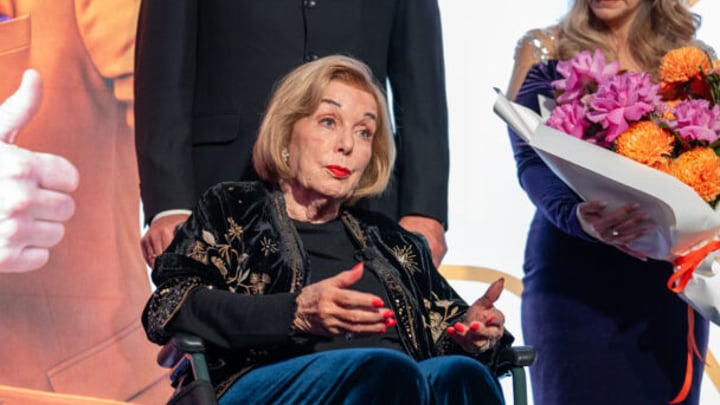
Ita Buttrose has spent more than seven decades breaking barriers in Australian journalism, publishing and public life, but when she accepted a Lifetime Achievement Award in Sydney, she traced much of what followed back to her mother.
The former Australian of the Year and media trailblazer was honoured at the annual My Guardian Gala Dinner at Crown Sydney for her decades of advocacy across dementia, eye health and public health.
Buttrose, who began working at just 15, told the audience she now looked back on what felt like two careers: one in journalism and publishing, and another devoted to community service.
“I think I have to thank my mother because she had me and my brothers volunteering for all sorts of things,” she said.
“We sold buttons for Legacy on street corners in the city. We raised coins at Bondi to help the hospital. You name it, my mother volunteered.
“So, I’m simply doing what I was raised to do: giving back to the community. And I think life is for giving, not just taking.”
When advocacy becomes personal
Many of the causes Buttrose has championed have been shaped by experiences within her own family. Her involvement with Macular Disease Foundation Australia began after her father developed macular disease.
“My father had macular disease; that’s why I got involved,” she said.
When Buttrose became involved with the organisation in 2005, she said there was far less public awareness of the condition and many people simply accepted deteriorating vision as part of growing older.
Her message to Australians over 50 remains simple: take changes in your eyesight seriously.
But it was another of her father’s illnesses that would lead Buttrose towards one of the defining advocacy campaigns of her later career.
He had dementia.
‘Wherever I went, I talked about dementia’
Buttrose served as National President of Alzheimer’s Australia, now Dementia Australia, and remains a patron of the organisation.
When she was named Australian of the Year in 2013, she decided the honour gave her an opportunity to put dementia firmly on the national agenda.
“You can do little, or you can do a lot, and take the platform and have a cause,” she told the audience.
“So, wherever I went in 2013, I talked about dementia.”
Buttrose recalled being invited to meet then Opposition Leader Tony Abbott ahead of that year’s federal election.
“He called me in and said, ‘Tell me about dementia’,” she said.
Buttrose pushed for substantially greater investment in research. The Coalition subsequently committed almost $200 million over five years towards dementia research.
“That changed dementia research in Australia,” she said.
Behind the funding battle was something Buttrose and millions of Australian families have experienced firsthand.
“Dementia is cruel, and you can see people change before your eyes when they get it,” she said. “So many families are affected one way or another.”
‘Let’s blow up the word retirement’
Buttrose was not the only prominent advocate for older Australians honoured on the night.
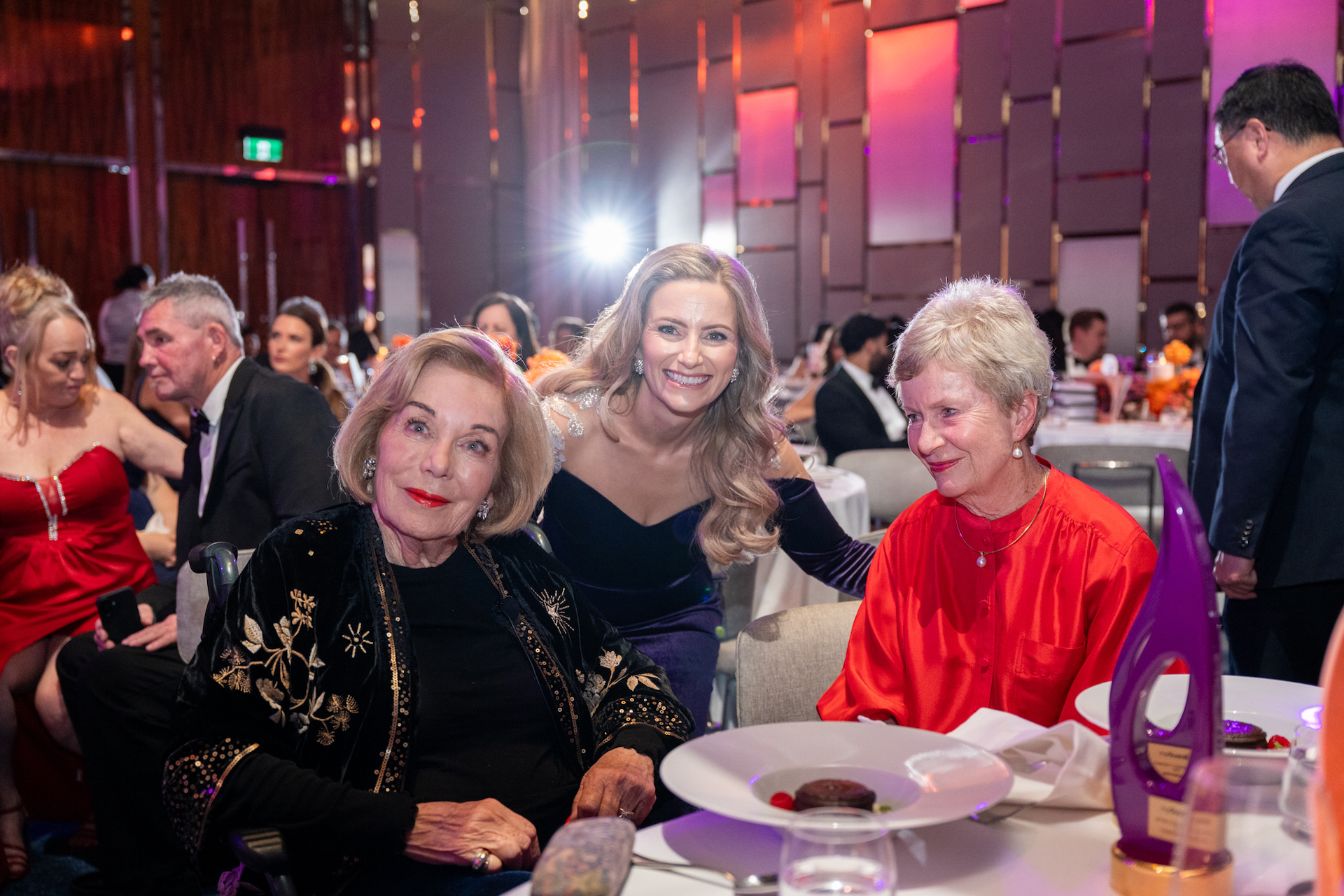
Anne Burgess AM, Chair of the Aged Care Council of Elders, received the Community Champion Award for more than four decades of advocacy across social justice, aged care and the rights of older people.
And Burgess had a message that went straight to one of the enduring stereotypes around ageing.
“Let’s blow up the word retirement,” she said.
“It does imply, doesn’t it, that you’re retiring from life, which is just of course not so. You can see there’s lots of life in us oldies around here tonight.”
Burgess also addressed something many older Australians know only too well — the feeling that reaching a certain age can make them less visible.
“You get to a certain age, and somehow you become invisible and you’re less valued in some sort of way,” she said.
“What we’re trying to do is to acknowledge that it’s really important that the voices of older people are heard. But not only heard, but acknowledged and listened to, and that we have a say in the way that our lives are delivered.”
Ageing without surrendering independence
NSW Premier Chris Minns also spoke about the value society places on older Australians, recalling a recent event that brought 150 centenarians into NSW Parliament.
Minns said those Australians had lived through extraordinary periods of the nation’s history, raised families and helped build their communities.
“So it’s our job to look after them, because that’s the duty of any civilised society,” he said.
He also argued that growing older, living with disability or needing extra help should never mean surrendering a person’s independence or voice.
“You might be getting older, you might be perhaps living with a disability, and you might need a bit more help, but that doesn’t mean that you forfeit your independence, your place in the world, or your voice in our community,” Minns said.
A lesson that started at home
For Buttrose, the Lifetime Achievement Award offered a chance to look back at a career that began when she was a teenager and eventually stretched far beyond newspapers and magazines.
She has advocated for dementia research, macular disease awareness and HIV/AIDS education, among other causes.
Yet the lesson she returned to at the end of her speech was the one she learnt at home.
“I’m very glad that my mother set me on this path of simply giving back, as it allows you to make a difference,” Buttrose said. “So, I do recommend it, because we’re always looking for new members.”
At 84, after a lifetime spent making headlines and fighting causes, Ita Buttrose is still recruiting.
IMPORTANT LEGAL INFO This article is of a general nature and FYI only, because it doesn’t take into account your personal health requirements or existing medical conditions. That means it’s not personalised health advice and shouldn’t be relied upon as if it is. Before making a health-related decision, you should work out if the info is appropriate for your situation and get professional medical advice.





 Proudly Australian owned and operated
Comments 5
Join the conversation. Comments are reviewed before they appear.
Carers of family don't get the chance to retire.
The funding battle continues. Tell us what has happened with research funding since "The Coalition subsequently committed almost $200 million over five years towards dementia research." What support has the Federal Labour govt provided??
My mother had dementia but nothing helped her. She died two years ago in the Altona Meadows Age Care. I certainly have to say that she was not treated as well as it was supposed to be in every age care.
I suffer of epilepsy and osteoporosis. Any help? No, I have to say that I don't have any help and I am the only one of the family now in Australia. I don't see any help from the Federal Labour govt provided or providing. I'm talking of those who suffer of dementia and must go to an age care because there isn't any other way to do.
I join with Ita newly honoured Lifetime Achievement Award, what a woman to follow what a great Woman to emulate.
I want m
Wide doorway homes so we Wheelchair users can keep our lives independent, luckily my mind is continuously expanding with learning, cheers to Ita who has given to us all,
Julie C, I agree. Even when a Parent gets home help, it is for limited time, so then the Family take over. Now, there are too many Providers, workers who don`t know their job, some can`t even clean a house. Dress Code, well, that doesn`t exist. Many, I can not fault. Having worked in Age Care, now volunteer in both Hospitals here, I see it all. One realises that wages, costs etc have gone up, but the standard has gone down.
Join the conversation
Tell us who you are to post a comment. We'll remember you next time.