
Intensity training may be the best exercise for seniors


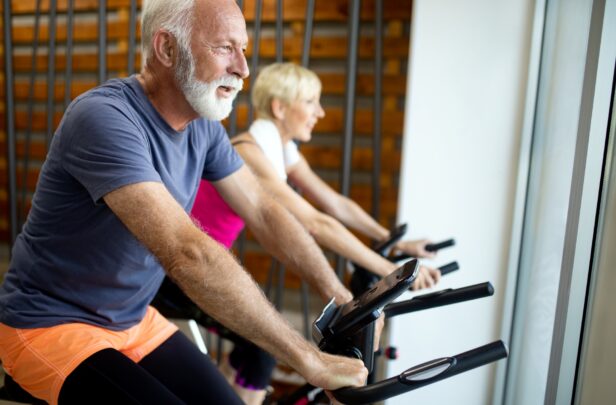
High intensity interval training (HIIT) may be the most effective form of exercise for reducing body fat while maintaining muscle mass in older adults, according to new research emerging from the University of the Sunshine Coast (UniSC).
The training involves short bursts of intense exercise paired with brief recovery periods, designed to maximise calorie burn and improve cardiovascular fitness, with examples including burpees, jumping jacks, kettlebell swings and rowing machine sprints, among others.
According to a study published in the Maturitas journal, academics examined how varying exercise intensities influenced body composition in healthy older adults and found that while high, medium and low intensity exercise all resulted in modest fat loss, only HIIT also preserved lean muscle.
“We found that high, medium and low intensity exercises all led to modest fat loss but only HIIT retained lean muscle,” said UniSC lead author and exercise physiologist Dr Grace Rose.
“While moderate training reduced fat mass, it also caused a small decline in lean muscle,” she said.
The research involved more than 120 healthy older adults from the Brisbane region who completed three supervised gym sessions per week over six months. Participants had an average age of 72 and an average body mass index of 26kg/m², which is considered within the normal range for people over 65.
According to Dr Rose, both high and moderate intensity exercise improved the composition of weight carried around the midsection, an area linked to increased risk of chronic disease.
“Both high and moderate intensities improved the composition of weight carried around the middle. Further analysis is needed of the low intensity results,” she said.
Dr Rose said the findings were significant because changes in body composition are associated with the progression of many chronic diseases as people age.
The study was coordinated in collaboration with UniSC’s Healthy Ageing Research Cluster and The University of Queensland (UQ).
UniSC Associate Professor of Physiology and co-author Mia Schaumberg said the timing of the publication aligned with renewed public interest in health and fitness goals.
“With the festive season now behind most of us and New Year’s resolutions in full swing, this research can help inform people’s plans for healthy ageing in 2026,” Schaumberg said.
“High intensity training in this study involved repeated short bursts, or intervals, of very hard exercise – where breathing is heavy and conversation is difficult – alternated with easier recovery periods.
“HIIT likely works better because it puts more stress on the muscles, giving the body a stronger signal to keep muscle tissue rather than lose it.”
IMPORTANT LEGAL INFO This article is of a general nature and FYI only, because it doesn’t take into account your personal health requirements or existing medical conditions. That means it’s not personalised health advice and shouldn’t be relied upon as if it is. Before making a health-related decision, you should work out if the info is appropriate for your situation and get professional medical advice.





 Proudly Australian owned and operated
Comments 0
Join the conversation. Comments are reviewed before they appear.
Be the first to comment.
Join the conversation
Tell us who you are to post a comment. We'll remember you next time.