
New trial finds simple exercises can cut falls by a third


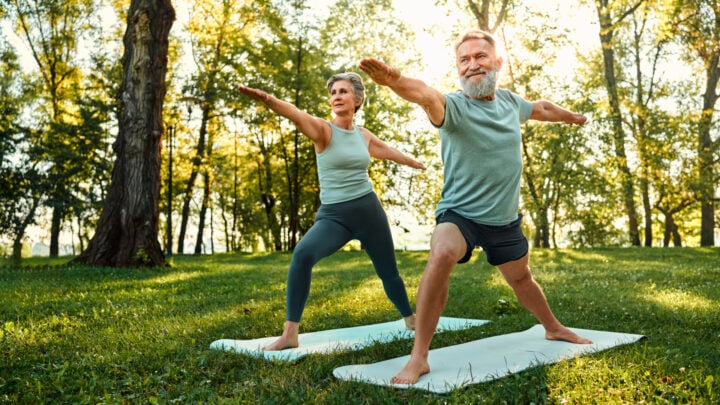
Staying steady on your feet may take a little extra effort as we get older, but it doesn’t have to stop us from living life to the fullest.
Simple exercises that build strength, balance, and confidence can make a big difference—and a recent UNSW Sydney-led trial shows just how effective a community exercise program can be in reducing the risk of falls and injuries among older adults.
Over the course of a year, more than 2,600 people in rural China, with a median age of 70, took part in the program. Participants reduced their risk of falls and fall-related injuries by roughly a third, while also improving their balance, lower-limb strength, and overall quality of life.
The findings were published in The Journal of the American Medical Association (JAMA).
The results were impressive: participants saw a 33 per cent reduction in falls, with 29.7 per cent reporting at least one fall during the 12 months, compared to 38.3 per cent in the control group, who received health education alone.
Injuries from falls were also 35 per cent lower, with only 15.2 per cent of the exercise group affected versus 21.6 per cent in the control group.
Exercise Physiologist Luke Rabone from Restart Exercise Physiology explains that regular balance and strength training can go a long way toward preventing falls and supporting positive ageing.
One such exercise recommended by Rabone is standing on one foot with hands on hips.
“If you can achieve single-leg stance for greater than 45 seconds, try standing on one leg and turning your head left to right,” he explains.
“If you can achieve this, try closing your eyes (please ensure you have someone at hand for support, or perform this by your kitchen bench or in the corner of a room where support is available if required).
“Standing on unstable surfaces, such as a foam pad, can challenge the somatosensory balance system and plantar surface of the foot.”
Rabone also suggests lateral or sideways movements as evidence-based exercises for improving balance. Something as simple as side-stepping over a line on kitchen tiles can be an effective starting point, gradually increasing the distance over time or introducing small hurdles for added difficulty.
IMPORTANT LEGAL INFO This article is of a general nature and FYI only, because it doesn’t take into account your personal health requirements or existing medical conditions. That means it’s not personalised health advice and shouldn’t be relied upon as if it is. Before making a health-related decision, you should work out if the info is appropriate for your situation and get professional medical advice.





 Proudly Australian owned and operated
Comments 0
Join the conversation. Comments are reviewed before they appear.
Be the first to comment.
Join the conversation
Tell us who you are to post a comment. We'll remember you next time.