
At 75, Yoshi Masuda is helping people with dementia reconnect with their past through music


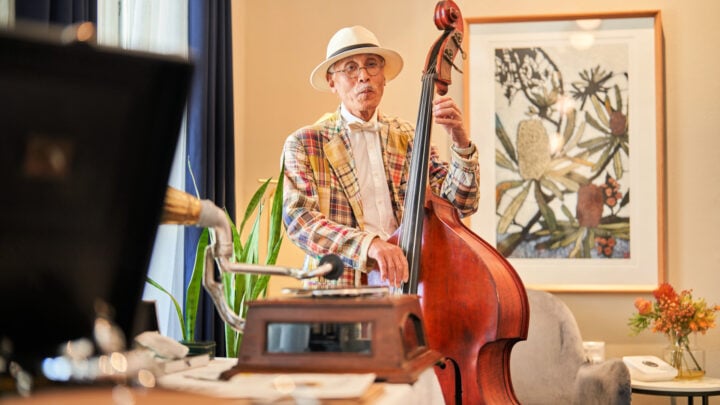
When a 90-year-old woman living with dementia looked at Yoshi Masuda’s gramophone, it prompted a recollection she wanted to share.
“I’m sure I had one when I was young,” she told him.
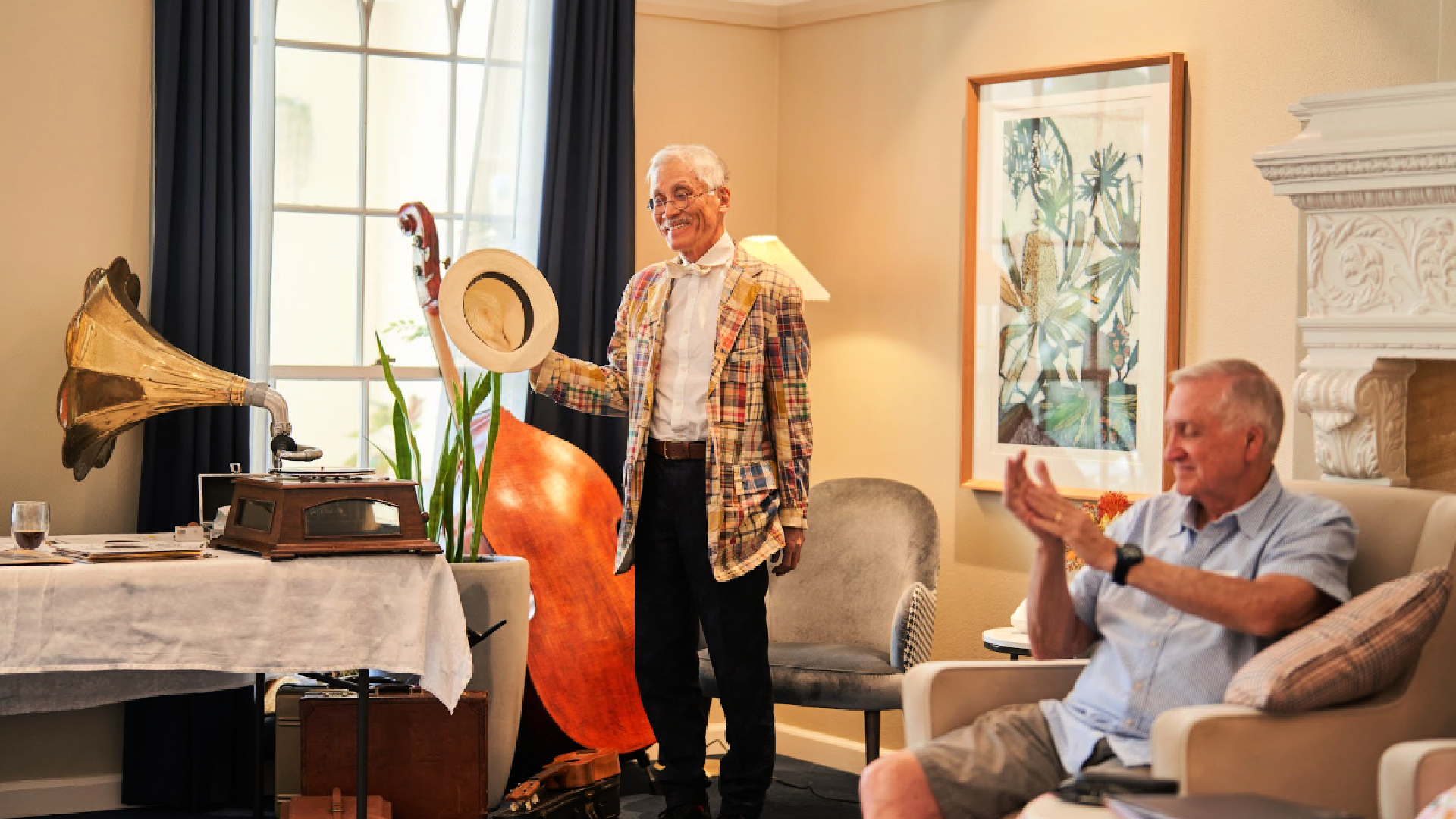
For Yoshi, who brings old records into aged care homes and accompanies them on his double bass, it was a moment that helped shape the research he is now undertaking at 75. Before a familiar song could stir a memory, the sight of the machine itself had given her something to talk about.
“That simple remark was very special to me,” he says. “It suggested that the gramophone itself, not just the music, could evoke a personal memory.”
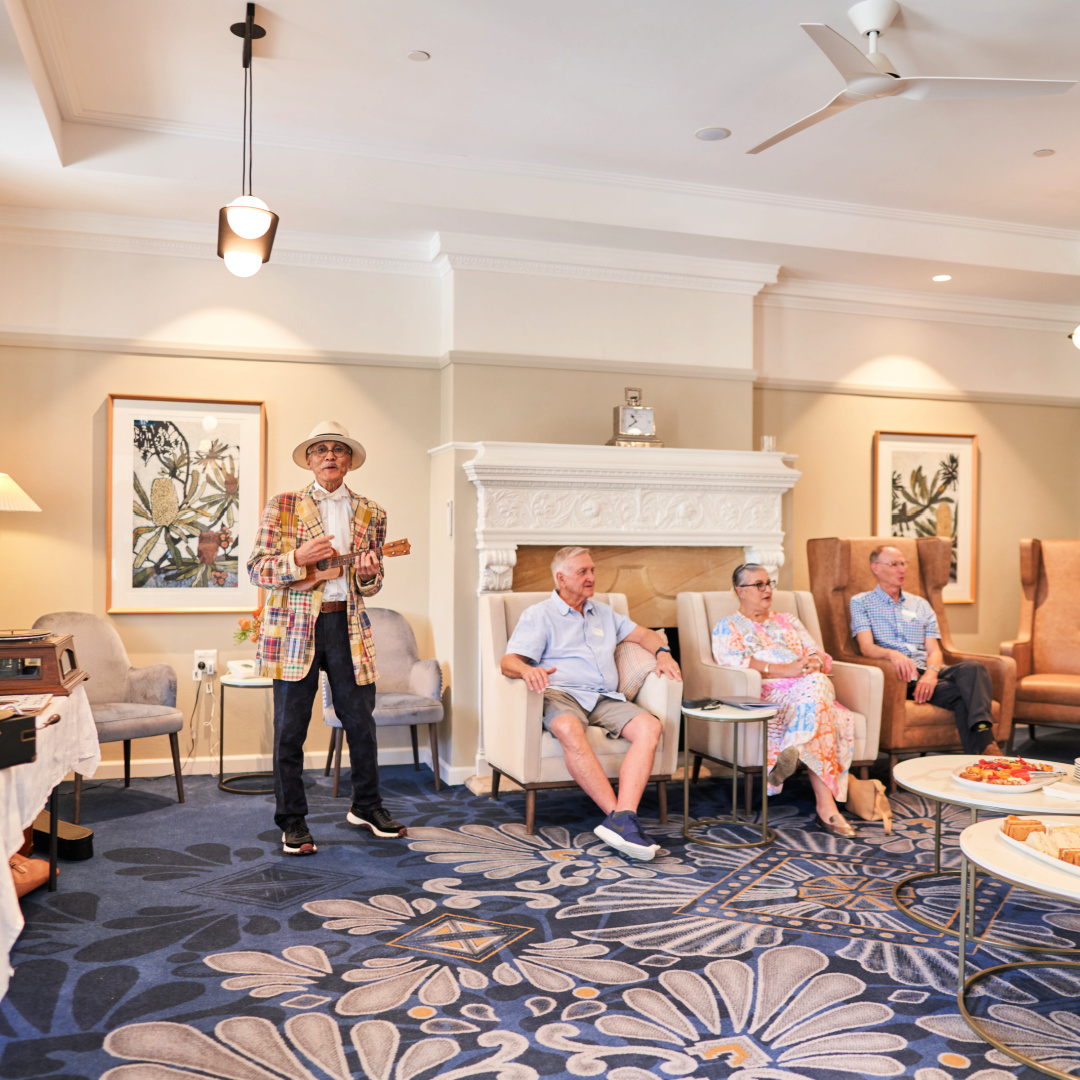
The retired university professor and musician is a regular visitor to Anglicare’s Gordon Quarter in Sydney, where his equipment offers residents a listening experience some may remember from their younger years.
Yoshi has played the double bass for nearly 50 years and discovered the acoustic sound of the gramophone about four decades ago. Playing the two together opened a musical possibility that has held his interest ever since.
“When I first played my bass alongside a gramophone recording, I realised that something special was happening,” he says. “It was almost like performing live with musicians from another era.”
Listeners appeared to enjoy the interplay between the live instrument and the voices preserved on the old 78-rpm records, encouraging him to take the combination into aged care homes.
His work as a university professor in Japan had also shaped his appreciation of personal communication, something that remains central to how he approaches each visit.
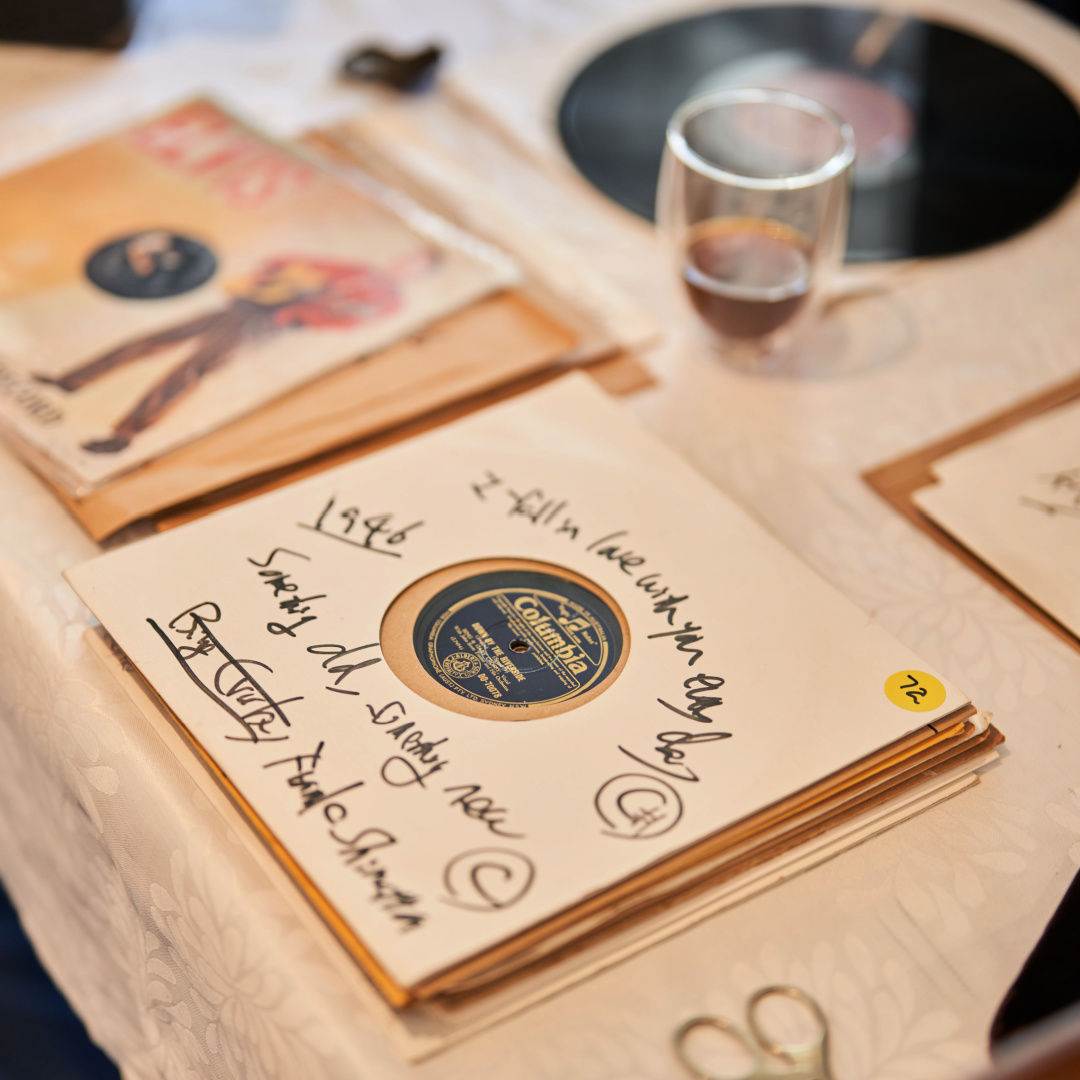
Before a session, Yoshi thinks back to the people who attended previously and what they appeared to enjoy. He selects records with those residents in mind, then practises accompanying the recordings.
There is homework beyond the music, too. He researches the performers and the circumstances of the recordings, usually choosing one song to discuss in more detail during the visit.
Once he begins playing, his accompaniment leaves room for improvisation. He has noticed that some residents respond to those variations, including people living with dementia.
“The gramophone itself is also important,” he says. “Its historical appearance, especially a model with a large horn, can attract attention even before the music begins.”
The double bass contributes its own physical presence, with a low sound that listeners may feel as well as hear.
Although Yoshi often begins with songs that were popular when residents were younger, he is careful about assuming that a particular age means a shared taste in music. He watches how each person responds and uses those observations to guide future choices.
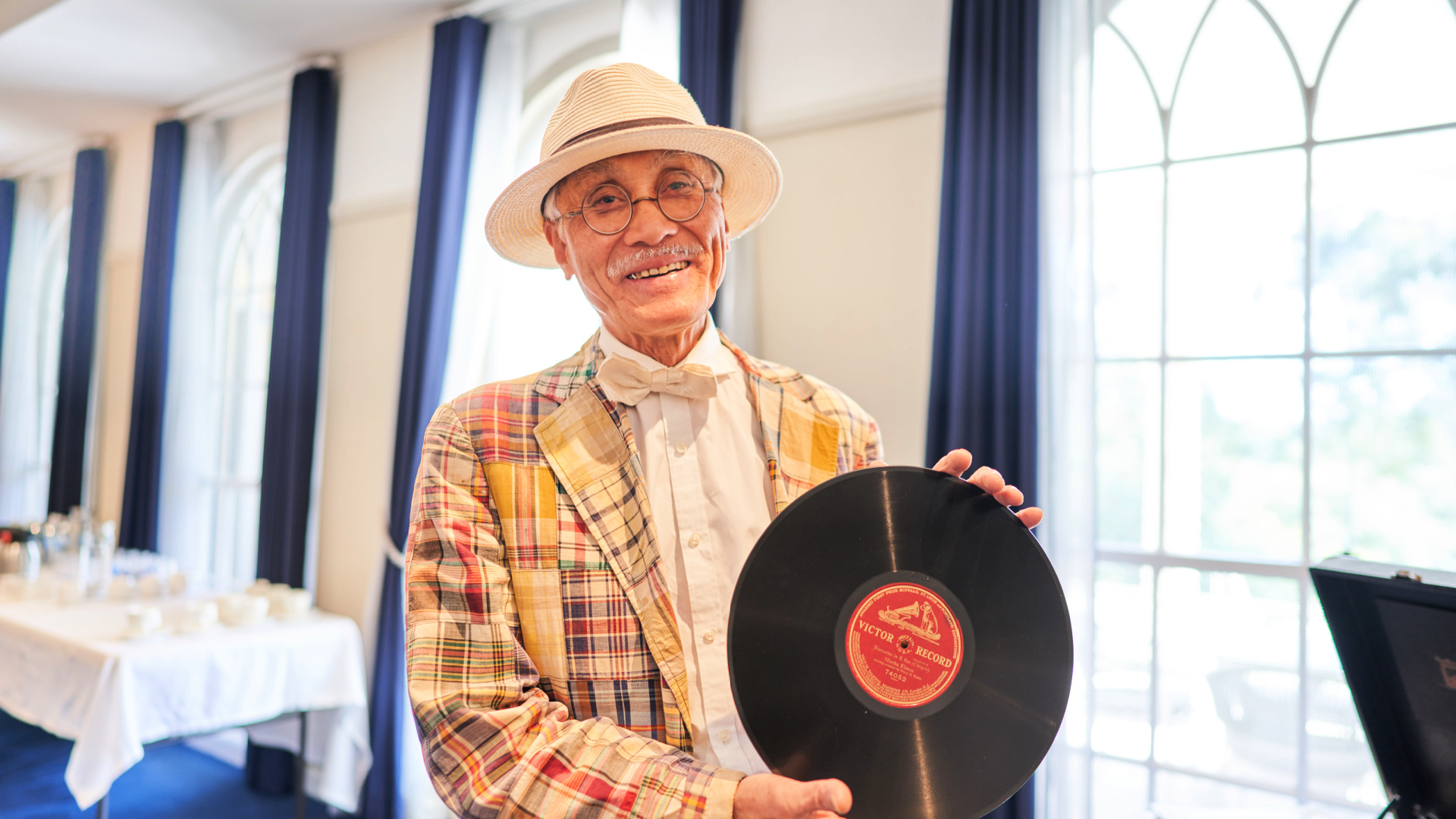
A refusal can tell him something useful, just as singing along can.
“For me, choosing music is not simply about selecting familiar songs,” he says. “It’s about discovering what is meaningful to each individual.”
One encounter that continues to influence his work involved a 92-year-old man living with dementia. Across ten sessions, Yoshi collected 2,436 words from their conversations and organised the material into 100 short stories.
When he shared the stories with five primary carers, they recognised an average of only 20.4 per cent of them.
The experience left him wondering how much of a person’s history might remain unfamiliar to those involved in their everyday care, and whether time spent listening to music together could create opportunities to learn more.
“Music and conversation may offer another way to discover and appreciate that personal history,” he says.
Yoshi also recalls working with a bedridden resident who had severe hearing loss and was frequently distressed. He experimented with a listening device connected to an HMV 102 gramophone, hoping to make the recording more accessible to her.
Over the following fortnight, he observed a change. During one session, she became calm, sat up and engaged with the Japanese melody Kōjō no Tsuki. He remembers her holding the gramophone close.
He is careful about what can be concluded from that experience.
“Although I cannot say that the gramophone alone caused the change, it encouraged me to explore what this form of musical engagement might offer.”
That curiosity now underpins his PhD in music and psychology, examining how listening through an acoustic gramophone differs from listening through modern digital technology, particularly in dementia care.
His observations are preliminary. He is interested in whether the physical experience of using the machine, including watching a record spin and seeing the needle changed, contributes to engagement. The conversations between recordings are another part of what he hopes to understand.
For families wanting to share music with someone living with dementia, his starting point is straightforward: choose something the person enjoyed when they were younger and spend time listening together, without expecting a particular response.
“Most importantly, don’t force someone to listen or respond,” he says.
His ambitions for the gramophone extend beyond aged care. Yoshi wants younger listeners to experience these recordings, too, and to appreciate a way of enjoying music that they may never have encountered.
At 75, he is still finding new questions in an interest that has occupied much of his life, with each visit offering another opportunity to understand the person listening.
“For me, it’s about connecting generations through music, bringing the past into the present and preserving its beauty for the future.”
IMPORTANT LEGAL INFO This article is of a general nature and FYI only, because it doesn’t take into account your personal health requirements or existing medical conditions. That means it’s not personalised health advice and shouldn’t be relied upon as if it is. Before making a health-related decision, you should work out if the info is appropriate for your situation and get professional medical advice.





 Proudly Australian owned and operated
Comments 0
Join the conversation. Comments are reviewed before they appear.
Be the first to comment.
Join the conversation
Tell us who you are to post a comment. We'll remember you next time.