
‘I knew I was in serious trouble’: Grandfather’s warning after bladder cancer diagnosis


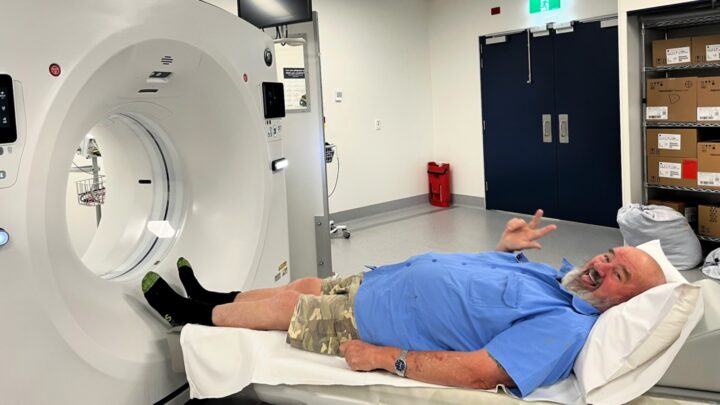
When 75-year-old Phil Neven noticed a rust coloured tinge in his urine, he initially thought it might be kidney stones.
After months of persistent lower back pain and what he describes as a severe urinary tract infection “from the inside out”, the Warragul local suddenly experienced a major bleed and began passing clots.
“It was a hell of a shock at the first bleed,” Phil said.
“Not traces or threads of blood but full bleed and passing clots. I knew I was in serious trouble.”
Phil was diagnosed with bladder cancer and underwent chemotherapy and preliminary treatment before eventually learning he would need major surgery to remove his bladder, prostate and lymph nodes.
Today, he lives with a stoma and urostomy bag and hopes sharing his story will encourage other Australians not to ignore potential warning signs.
Bladder cancer is the 11th most commonly diagnosed cancer in Australia, with more than 3,300 new cases recorded in 2025. Men are three times more likely to be diagnosed than women and every Australian faces a one in 100 risk of receiving a bladder cancer diagnosis by the age of 85.
During Bladder Cancer Awareness Month this May, experts from the Urological Society of Australia and New Zealand are urging Australians to pay closer attention to symptoms and seek medical advice early.

Associate Professor Weranja Ranasinghe said survival rates for bladder cancer have not improved significantly in decades despite advances in treatment.
“Bladder cancer is a bit of an under recognised disease,” Ranasinghe said.
“It does not get the same public attention or research investment as breast or prostate cancer, and that has translated into slower progress in awareness and new treatment uptake.”
He warned many Australians dismiss symptoms such as blood in the urine or assume the issue has resolved if it disappears.
“The most important warning sign is blood in the urine, even a single episode, even if it is painless, even if it goes away,” he said.
People may also experience changes in bladder habits, needing to urinate more frequently, urgency, burning during urination, pelvic or lower back pain and unexplained weight loss.
According to Professor Ranasinghe, early detection can make a significant difference to outcomes.
“If bladder cancer is caught early while it is still confined to the inner lining of the bladder, it is highly treatable, often with relatively minor procedures, and survival is excellent,” he said.
“But once it grows into the muscle wall, the treatment becomes much more involved, often requiring major surgery, chemotherapy, and sometimes removal of the bladder entirely.”
Phil said repeated complications following treatment made the decision to proceed with surgery easier.
“After the cystoscopy I suffered from recurring haematurias which blocked urine flow and required ambulance and four days in hospital to fix. Twice,” he said.
“When told they recommended chemo and removal I was up for it because at that stage I was desperate to have no more haematurias.”
Despite the enormity of the surgery, Phil said support from specialist stoma nurses helped him adapt quickly.
“When I saw the actual stoma at the first bag change, I was amazed and a bit shocked,” he said.
“However, the stoma nurses get you involved from day two and by day eight when I went home I was confident about managing by myself.”
He now wants others facing a similar diagnosis to know life can continue after surgery.
“My advice to others would be to embrace the fact that your life is yours to live,” he said.
“Take advantage of all the skilful people who are there to help and never be ashamed of your ostomy.”
Experts are also calling for Australians to gain faster access to emerging immunotherapy treatments already showing promising results overseas.
Ranasinghe said recent international trials combining chemotherapy and immunotherapy before and after surgery had delivered “striking” results, with some studies nearly doubling two year event free survival rates for patients with muscle invasive bladder cancer.
For Phil, the experience has changed his perspective on ageing, health and resilience.
“I am almost back to full activity status except I happen to have a urostomy bag,” he said.
“I am not limited by it; in fact I now sleep better because I don’t have to go to the toilet several times a night.”
IMPORTANT LEGAL INFO This article is of a general nature and FYI only, because it doesn’t take into account your personal health requirements or existing medical conditions. That means it’s not personalised health advice and shouldn’t be relied upon as if it is. Before making a health-related decision, you should work out if the info is appropriate for your situation and get professional medical advice.





 Proudly Australian owned and operated
Comments 0
Join the conversation. Comments are reviewed before they appear.
Be the first to comment.
Join the conversation
Tell us who you are to post a comment. We'll remember you next time.