
Forget complicated yoga poses: These six simple standing exercises could help keep you steady after 60


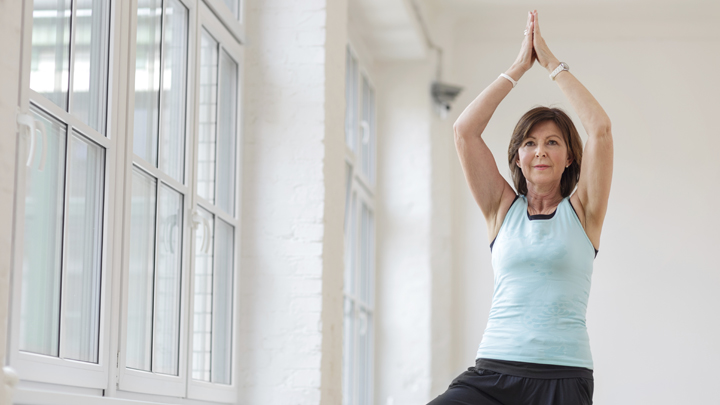
For many Australians, staying active isn’t just about fitness – it’s about maintaining confidence, independence and the ability to keep doing the things they enjoy.
And when it comes to healthy ageing, experts say one often-overlooked skill deserves more attention than almost any other: balance.
Good balance helps reduce the risk of falls, supports mobility and makes everyday activities – from climbing stairs to walking on uneven footpaths – safer and easier. Yet balance naturally declines as we age, often without us noticing until simple tasks start to feel less secure.
While yoga is often promoted as a way to improve stability, some poses can be challenging for older adults, particularly those with limited flexibility or difficulty getting down to and up from the floor.
Instead, fitness experts are increasingly recommending simple standing exercises that closely mimic the movements people perform every day.
According to personal trainer and health writer Tyler Read, these exercises help strengthen the hips, core, ankles and other key stabilising muscles that play an important role in preventing falls and maintaining mobility.
Here are six standing exercises that can help improve balance and confidence after 60.
1. Single-leg stands
It may sound simple, but standing on one leg is one of the most effective ways to test and improve balance.
The exercise challenges the ankles, knees, hips and core to work together to keep the body stable. Many people quickly discover one side is noticeably less steady than the other.
How to do it:
Stand near a wall or sturdy chair for support.
Shift your weight onto one foot.
Lift the opposite foot slightly off the ground.
Keep your chest upright and eyes focused on a fixed point ahead.
Hold for 20 to 30 seconds.
Repeat on the other side.
2. Standing marches
This movement strengthens the hips, thighs and core while encouraging better balance during walking.
Every time one foot leaves the ground, the supporting leg must work harder to keep you stable.
How to do it:
Stand tall with feet hip-width apart.
Engage your core muscles gently.
Lift one knee towards hip height.
Lower with control.
Alternate sides.
Complete 20 marches in total.
3. Heel-to-toe walks
If you’ve ever watched a police officer ask someone to walk in a straight line, you’ve seen a version of this exercise.
Heel-to-toe walking narrows your base of support, forcing the body to maintain alignment and control.
How to do it:
Stand tall.
Place one foot directly in front of the other.
Touch heel to toe with every step.
Walk slowly and carefully for 10 to 15 steps.
Turn around and repeat.
4. Side leg raises
Strong hips play a major role in keeping us upright and stable.
Side leg raises target the gluteus medius, a muscle on the outside of the hip that helps maintain balance while standing and walking.
How to do it:
Stand beside a chair or wall.
Hold on lightly if needed.
Shift your weight onto one leg.
Lift the opposite leg out to the side.
Keep your torso upright.
Lower slowly.
Perform 10 to 12 repetitions before switching sides.
5. Clock reaches
This exercise combines balance, coordination and mobility in a way that mirrors many everyday movements.
The challenge comes from maintaining stability while reaching beyond your normal standing position.
How to do it:
Stand on one leg.
Imagine a clock face around you.
Reach your free foot towards 12 o’clock and return to centre.
Repeat towards 3 o’clock, 6 o’clock and 9 o’clock.
Continue around the “clock”.
Repeat on both legs.
6. Standing knee-to-elbow crunches
Balance isn’t only about strong legs. Core strength also plays a crucial role in helping the body stay stable.
This exercise works both at the same time.
How to do it:
Stand with feet shoulder-width apart.
Place your hands behind your head.
Lift one knee.
Rotate the opposite elbow towards it.
Return to the starting position.
Alternate sides.
Complete 20 repetitions in total.
Why balance matters
Falls remain one of the leading causes of injury and hospitalisation among older Australians, making balance training an important part of healthy ageing.
The good news is that improving balance doesn’t require expensive equipment, intense workouts or advanced yoga poses. A few minutes of practice several times a week can help strengthen key muscles, improve coordination and boost confidence during everyday activities.
As always, anyone with existing health conditions or concerns about balance should consult their doctor or physiotherapist before starting a new exercise routine.
Have you noticed changes in your balance as you’ve gotten older? What exercises help you stay steady and active? Let us know in the comments below.





 Proudly Australian owned and operated
Comments 0
Join the conversation. Comments are reviewed before they appear.
Be the first to comment.
Join the conversation
Tell us who you are to post a comment. We'll remember you next time.