


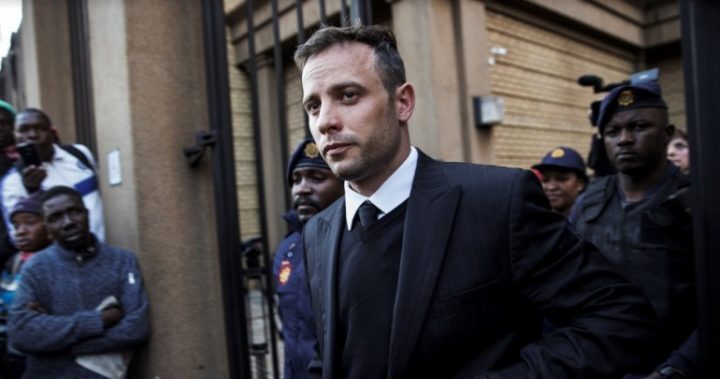
Oscar Pistorius’ bid to have his jail term reduced for the murder of his girlfriend Reeva Steenkamp has been rejected, after the sentence was doubled on appeal last year.
The former South African Paralympic athlete, 31, was initially convicted of culpable homicide – the equivalent of manslaughter – in 2014, but had his conviction increased to murder on appeal and was sentenced to six years behind bars. His punishment was later increased to 13 years and five months after the prosecution successfully argued against the “shockingly lenient” sentence.
According to multiple reports, Pistorius recently asked the Constitutional Court to review his murder sentence in the hopes of having it reduced. However, “the application for leave to appeal is dismissed”, a court ruling released on Monday stated.
The ruling explained it was not a constitutional matter, and it was dated March 28. This means Pistorius will have to see out the extent of his sentence from behind bars.
According to The Sun, National Prosecuting Authority (NPA) spokesman Luvuyo Mfaku said in a statement: “We have always contended as the NPA that their leave to appeal has no prospects of success, and the Constitutional Court has just confirmed that.”
Read more: Oscar Pistorius’ jail term more than doubled in shock appeal win
Pistorius has always maintained his innocence and said he thought Steenkamp was an intruder when he shot her through the bathroom door in the middle of the night. His arrest and consequent trial drew worldwide attention as well as criticism of the South African justice system.
Read more: Oscar Pistorius injured in fight in prison’s special care unit
He broke his silence in 2016 and gave an emotional account of what he claims happened on that fateful Valentine’s Day night. Unable to hold back tears and breaking down into sobs a number of times, Pistorius told Britain’s ITV at the time that he can still “smell the blood” from that night.
“I did take Reeva’s life and I have to live with that,” he said. “I can smell the blood. I can feel the warmness of it on my hands. And to know that that’s your fault, that that’s what you’ve done.
“And I understand the pain people feel, that loved her and miss her. I feel that same pain. I feel that same hate for myself. I feel that same difficulty in understanding this. And I look back and I think, I always think – how did this possibly happen? I think, how could this have happened? How could this have happened?”
It is unclear when the disabled athlete could be eligible for parole.





 Proudly Australian owned and operated