
While every other travel insurer excludes war, one Australian company has done something that’s never been done before — and it couldn’t come at a better time


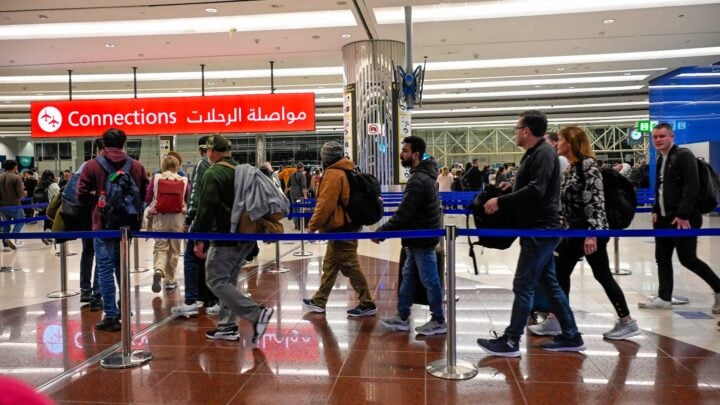
If you have tried to travel through the Middle East in the past two months – or if you know someone who has – you will understand exactly why this story matters.
When US and Israeli forces launched coordinated military strikes on Iran on February 28, 2026, the airspace over some of the world’s busiest international transit hubs shut down overnight. Dubai. Doha. Abu Dhabi. Three airports that between them handle a significant proportion of all Australian international travel to Europe, Africa and beyond. Around 115,000 Australians were in the Middle East at the time, with flights cancelled, passengers stranded and travel plans in chaos.
And almost every single one of them discovered the same thing when they called their travel insurer: they were not covered.
Every travel insurer in the CHOICE travel insurance comparison database excludes cover for claims arising from war – including flights interrupted by military strikes. The exclusion is standard across the industry: “We will not pay for claims arising as a result of war, invasion, act of foreign enemy, hostilities, civil war, rebellion, revolution, insurrection or military or usurped power.”
Canstar’s data insights director Sally Tindall confirmed that not a single travel insurance policy on the Canstar database covers claims arising from war, armed conflict, civil unrest, or military action.
A Brisbane-based Australian insurer has decided to change that.
Go Insurance launches War and Armed Conflict Disruption Cover
Go Insurance – sold by the team at Travel at 60 – has announced the launch of its War and Armed Conflict Disruption Cover Extension – a first-of-its-kind product in the Australian market that provides targeted financial protection when travel plans are disrupted by conflict.
The cover is structured in two parts, and the first one is free.
Part A — automatically included at no extra cost
Every Go Insurance policy now automatically includes Part A at no additional charge. This provides medical and personal accident cover for travellers who are unexpectedly caught in war or armed conflict while overseas – including emergency medical assistance and repatriation where required.
For older Australians travelling internationally, this alone is a meaningful improvement over what the market has previously offered. If conflict erupts around you while you are overseas, the medical and repatriation cover kicks in regardless of whether you paid extra for the upgrade.
Part B — the optional upgrade, up to $5,000 per person
Part B is an optional add-on that covers the additional travel and accommodation costs if a trip is disrupted by a new and unforeseen conflict event. This includes expenses for rerouting flights, securing alternative accommodation, or returning home early – with a benefit limit of up to $5,000 per person.
Mark Fuller, CEO of Go Insurance, said the product reflects a more practical and transparent approach to a gap the industry has long ignored.
“Travellers are increasingly aware of geopolitical risks, but traditional travel insurance hasn’t adapted to meet that reality,” said Fuller. “This extension provides meaningful, targeted support without trying to insure the uninsurable. It’s about helping people when their plans are disrupted, not attempting to cover war itself.”
What this cover does not include — read this carefully
There are important limitations to understand before purchasing.
The cover applies only to events that occur after a traveller has already departed Australia and that were not known or foreseeable prior to travel. It does not include pre-departure cancellation cover for war-related events.
Critically – and this is the most important point for anyone considering the current Middle East situation – it excludes ongoing or existing conflicts. The “known event” threshold for the current Middle East conflict was crossed on 28 February 2026. Any travel insurance purchased after that date is highly unlikely to cover claims directly related to this disruption. War and Armed Conflict Disruption Cover, like all travel insurance, must be purchased before a conflict becomes a known event to apply to it.
What it does protect against is the next conflict — the one that nobody sees coming until it is already happening, and that leaves travellers stranded without any recourse under a standard policy.
Who this cover is available to
The War and Armed Conflict Disruption Cover Extension is available across all Go Insurance cover levels – single trip, annual multi-trip and group travel policies – meaning it is accessible whether you are taking one overseas trip or travel regularly throughout the year.
The cover has been designed to complement existing options such as Cancel For Your Reason (CFYR) add-ons. For travellers who want a comprehensive safety net against both the predictable and unpredictable risks of modern international travel, combining these products gives the most complete protection available in the Australian market.
Why this matters for the Starts at 60 traveller
The Starts at 60 audience travels more than any other demographic in Australia – longer trips, more destinations, higher spending per journey. In the first quarter of 2026 alone, major military actions disrupted international travel across Venezuela, Mexico and the Middle East, with the Iran conflict causing particular chaos for Australian travellers who rely on Gulf hub airports for connections to Europe.
For those planning European trips – where the most common route runs through Dubai, Doha or Abu Dhabi – or for anyone travelling to regions with elevated geopolitical risk, the combination of free medical cover and an optional disruption upgrade represents the most meaningful advance in travel insurance for this demographic in many years.
“Travellers are increasingly aware of geopolitical risks, but traditional travel insurance hasn’t adapted to meet that reality,” Fuller said. The numbers from the past two months suggest he is right.
To learn more contact the team at Travel at 60.
This article is general in nature. Travel insurance policies vary and exclusions apply — always read the Product Disclosure Statement carefully before purchasing. Cover applies to new and unforeseen events occurring after departure and does not cover existing or ongoing conflicts.





 Proudly Australian owned and operated
Comments 0
Join the conversation. Comments are reviewed before they appear.
Be the first to comment.
Join the conversation
Tell us who you are to post a comment. We'll remember you next time.