
When Women Turn on Women: The cruel politics of ageing in plain sight



There is something uniquely dispiriting about watching women tear strips off another woman for the crime of ageing in public.
Rachel Ward, 68, posted a short, unremarkable video to Instagram thanking customers for supporting her ethical meat business. She was not selling a beauty product. She was not offering advice on skincare. She was not pretending to be anything other than who she is now: a woman who has lived a full life, worked hard, raised a family and chosen the sun and soil over the soft-focus lighting of celebrity.
And yet the knives came out.
“She looks way older than 68.”
“What the hell happened to you?”
“Pure neglect.”
“Sun damage, teeth … no excuse.”
These were not comments from men lurking anonymously in the digital shadows. Many came from women. Women who, one assumes, have mirrors of their own. Women who know exactly how cruel such language can be.
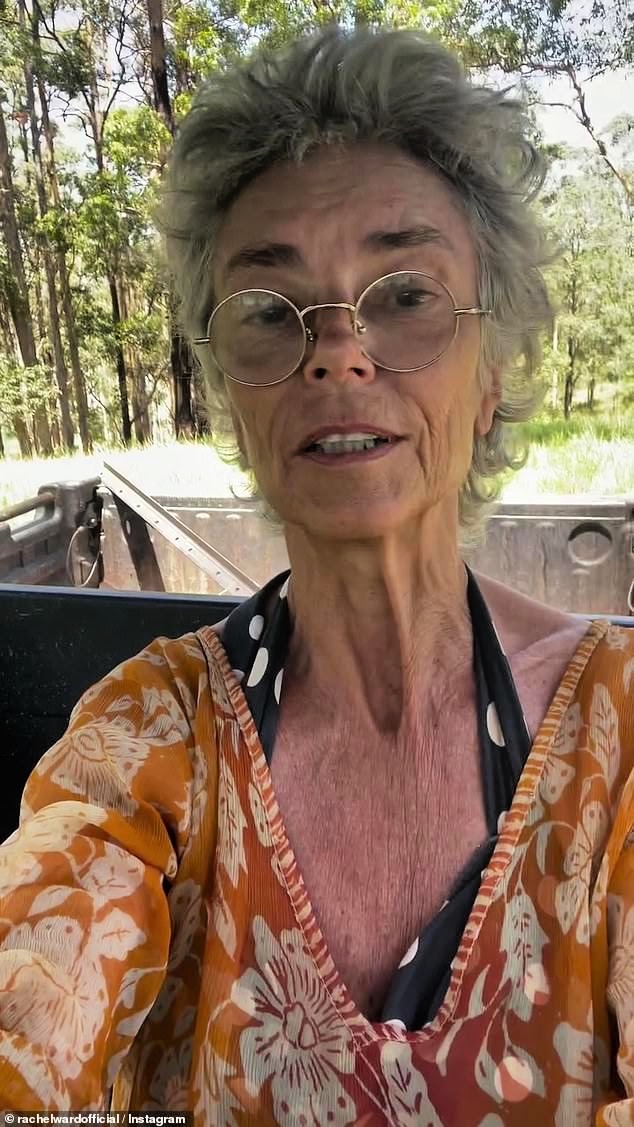
Rachel Ward – the actress once revered for her beauty – became, in that moment, a target for collective anxiety. Because that is what this really is: fear dressed up as judgement.
https://www.instagram.com/reel/DSgt5TtkfBY/
When Ward replied, she did not rage. She did not lecture. She expressed pity.
“I just feel sorry for those poor souls who fear ageing so much,” she wrote. “They will learn that it’s ultimate freedom as a woman to let youth and beauty go.”
It was a devastatingly calm response – and therein lies the problem for her critics. Rachel Ward has stepped outside the contract. She has refused to perform the exhausting charade that demands women remain decorative, grateful and apologetic for the passage of time.
What unsettles people – particularly other women – is not that she looks different. It is that she looks unbothered.
There is a peculiar cruelty reserved for women who age visibly and unapologetically. Men are allowed to become “distinguished”. Women are accused of “letting themselves go”. The language is telling. Ageing, for women, is framed as failure – a moral lapse, a neglect of duty.
And we have internalised it.
Social media has amplified the ugliest instincts of this conditioning. The platforms reward outrage, snap judgement and cruelty masquerading as honesty. But the decision to type those words – to reduce another woman to her perceived flaws – is still a choice.
It begs an uncomfortable question: are the women making these comments truly so untouched by time themselves? Are they oil paintings, preserved forever under glass? Or are they simply terrified?
Because nothing provokes vitriol like a woman who shows us what lies ahead – and survives it.
There is also a deeper betrayal at play. Women know what it is to be judged by appearance. We know how early it starts, how relentless it is, how damaging it can be. To then turn that same weapon on another woman is not honesty; it is complicity.
Imagine, for a moment, if men spoke about women this way en masse – dissecting faces, teeth, skin, “neglect”. There would be outrage, and rightly so. Yet when women do it to one another, it is excused as commentary, concern, or “just saying what everyone’s thinking”.
Everyone is not thinking it. And even if they were, decency remains an option.
Criticism has its place. Debate has its place. Disagreement has its place. But ridicule based on appearance – particularly ageing – is intellectual laziness and moral cowardice.
Rachel Ward has lived long enough to know that beauty is not something you cling to. It is something that passes through you. What remains is character, purpose, and – if you are fortunate – perspective.
The real question is not why Rachel Ward looks the way she does at 68.
It is why so many women still believe they must punish each other for surviving long enough to get there.
We can do better. We must.
Because ageing is not a personal failure. It is the one experience we all share – if we are lucky.





 Proudly Australian owned and operated
Comments 1
Join the conversation. Comments are reviewed before they appear.
Beautiful article, Bess –thank you for writing it. I'm only a couple of years younger than Rachel, and recently hacked off my hair, which had grown like a weed during lockdown. I'd always wanted it long when I was young, but had short hair. And, at 67, realised that I felt better with short hair.
So, out came the sewing scissors! I looked like the mad woman in the attic, but my neighbours absolutely loved it. Some months later, I found the photos of Rachel, who had also chopped off her own hair (albeit with a little help). It was equally crazy looking, though.
When young, I was quite glamorous, which attracted the wrong sort of attention. I then worked on, as you mention, character –all the inner work that these misogynistic women abusing Rachel (and no doubt other celebs who aren't playing the 'male gaze' game) aren't doing.
I hope those women wake up, and, rather than projecting their self-loathing onto others, start to love themselves through deep inner work. It is the only way to happiness. Being glamorous didn't make me happy. I feel free for the first time in my life, and, like Rachel, embrace it fully.
Do I love the wrinkles, the slightly saggy jowls, the tummy that doesn't want to budge? Not yet, but they're growing on me. My grandmother was beautiful into her 80s, but not through surgery. She had warmth and humour, and sparkling eyes, and I loved her dearly.
She, and other women who embrace life, are my role models –not the women who have so much surgery, in a bid to stop time. Those women are too scared to be a role model for anyone, and the only ones who gain through their insecurity are the cosmetic surgeons.
Join the conversation
Tell us who you are to post a comment. We'll remember you next time.