
The Queen Victoria Royal scandal they tried to erase


Tea, Titles & Tiaras: with Emily Darlow
Part One: Queen Victoria, Abdul Karim and the Friendship That Shook an Empire
It is difficult to argue that Prince Andrew is not the biggest royal scandal of our lifetime. From disgrace and demotion to uncomfortable public appearances and a long, slow retreat from Royal Lodge, his story reads like a modern morality tale about entitlement and consequence playing out under the glare of the public eye.
And yet, for all its contemporary messiness, the Andrew saga is merely the latest chapter in a far longer and far more scandal-soaked royal history.
Because the truth is this: the British royal family has always had scandals. Some exploded loudly and publicly, leaving humiliation in their wake. Others were smothered quietly behind palace walls. And a select few were so deeply unsettling to the establishment that the monarchy went to extraordinary lengths to erase them altogether.
Which brings us to one of the most fascinating and least discussed royal scandals of all time, the relationship between Queen Victoria and a young Indian servant named Abdul Karim.
If you have seen the film Victoria & Abdul, you might be forgiven for thinking the story was softened for cinema. In reality, the truth was far more uncomfortable for the British court, far more revealing about the anxieties of empire, and far more scandalous than any scriptwriter could dream up.
Abdul Karim arrived in Britain in 1887 as part of a group of Indian attendants selected to mark Queen Victoria’s Golden Jubilee. He was a low-ranking clerk, chosen for a ceremonial role and little more. At just 24 years old, with limited English and no status to speak of, he could hardly have imagined that his brief visit would change the course of his life and unsettle the entire royal household.
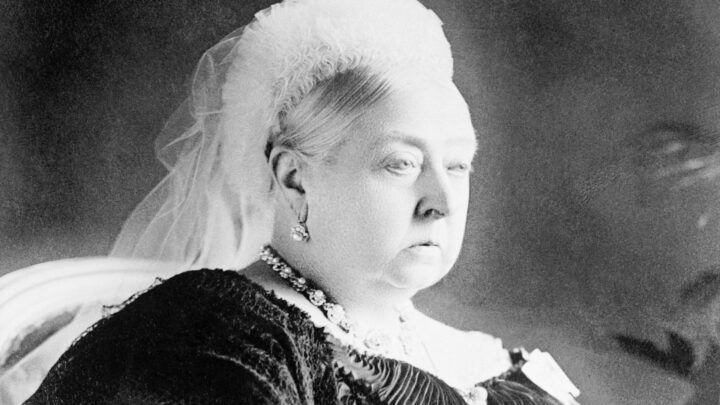
Queen Victoria, meanwhile, was nearing 70. Widowed for decades and increasingly isolated, she had ruled Britain for half a century and presided over an empire that stretched across the globe. By the late 1880s, she was weary, grieving and deeply bored by those around her.
Something about Abdul caught her attention.
What began as polite conversation quickly developed into something more meaningful. The Queen found him intelligent, attentive and refreshingly curious. She asked him to teach her Hindustani and explain Indian culture in detail, appointing him as her Munshi, a teacher, confidant and constant presence. Before long, Abdul was dining with the Queen, travelling with her and enjoying private access that others could only dream of.
And this is where the whispering began.
To the royal household, Abdul’s rise was nothing short of outrageous. He was not merely a servant, he was Indian and Muslim, in an era when racial hierarchy was the backbone of empire. That he should sit close to the Queen, speak freely with her and enjoy her confidence was, to many, utterly intolerable.
Quickly the palace turned, staff refused to serve him, courtiers muttered darkly about manipulation, Senior officials questioned his motives and the Queen’s own children, particularly the Prince of Wales, were incandescent with rage. Rumours circulated endlessly, not because there was evidence of impropriety, but because the situation defied everything the court believed about class, race and power. Victoria, for her part, was unmoved and increasingly defiant.
She defended Abdul fiercely, scolding those who criticised him and accusing them of prejudice and cruelty. Her private journals reveal a warmth and attachment rarely seen from the famously reserved monarch. For a queen known for rigid morality and emotional restraint, her loyalty to Abdul was startling and deeply unsettling to those who believed they knew her best.
Despite all the murmuring, there is no credible evidence that the relationship was romantic or sexual. That assumption says far more about the anxieties of the time than about the truth of the bond itself. What truly frightened the establishment was not intimacy, but intimacy across lines that were never meant to be crossed.
Britain ruled India through distance and domination. Abdul’s closeness to the Queen disrupted that carefully maintained illusion of superiority. Here was a colonised subject advising the Empress of India herself, educating her about a land Britain claimed to control, and doing so with her full trust. It was a threat not to morality, but to power.
Senior officials attempted to remove him quietly. Doctors were consulted to question his stability. Efforts were made to restrict his access and undermine his credibility. None of it worked while Victoria lived. She insisted Abdul remain by her side until her final days, unmoved by the outrage swirling around her.
The speed with which the royal family acted after Queen Victoria’s death in 1901 was nothing short of ruthless.
Within hours, Abdul was dismissed and ordered to leave Britain immediately. His rooms were searched. His correspondence with the Queen was seized.
Photographs were destroyed. His presence was scrubbed from official records with remarkable efficiency.
The message the palace was sending was unmistakable, this story was not to survive her.
For more than a century, Abdul Karim all but vanished from royal history. It was only because his family preserved letters and diaries in India that historians were eventually able to piece together the truth. A friendship that had rattled the foundations of empire had been deliberately buried.
The story of Queen Victoria and Abdul Karim is not a gentle tale of unlikely friendship. It is a scandal rooted in racism, fear and the brutal mechanics of power. It shows that even a queen could challenge convention but not control what endured once she was gone.
It also reminds us that royal scandals did not begin with tabloids or televised interviews. They have always existed, shaped by the anxieties of their age and hidden when they threatened the institution too deeply.
And if this story leaves you slightly unsettled, that discomfort is precisely why it was erased in the first place.
This is only the first chapter in a Tea, Titles & Tiaras series that delves into the royal scandals history tried to forget. In the weeks ahead, we will revisit moments when love threatened the crown itself, when mystics gained unsettling influence over royal families, when marriages became public battlegrounds, and when royal women were forced to sacrifice happiness for duty.
From abdications that altered the monarchy’s future to forbidden romances such as Princess Margaret’s relationship with Group Captain Peter Townsend, these stories reveal a simple truth. Scandal has always been woven into the royal inheritance.
And there is far more tea still to spill.





 Proudly Australian owned and operated
Comments 0
Join the conversation. Comments are reviewed before they appear.
Be the first to comment.
Join the conversation
Tell us who you are to post a comment. We'll remember you next time.