
The ‘horrific’ disease hitting regional Aussies hardest


By Duncan Murray
Australians in regional areas are far more likely to experience a fatal neurological condition that has soared in prevalence in the past four decades.
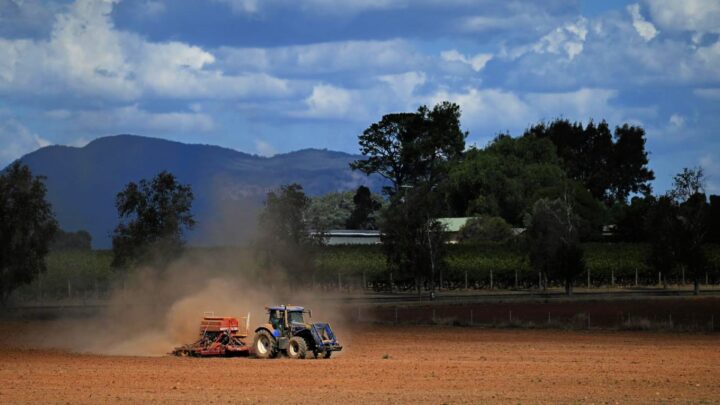
And exposure to pesticides in agricultural areas could be behind the rise in motor-neurone disease (MND), experts say, with the risk of developing the degenerative condition as much as 40 per cent higher in some parts of the nation. The number of cases of the disease, in which nerve cells progressively weaken and then die, has tripled since the 1980s and it now claims the lives of about 800 Australians a year, according to a study by Macquarie University.
Simon Downes was diagnosed with the disease in 2024 after running a dairy farm in NSW’s Hunter Valley for more than 30 years.
He now struggles with very limited mobility in his right arm and is unable to work.
The 68-year-old is seeking answers as he battles the slow onset of the disease, hoping to make the most of the time he has left.
“Sooner or later, everybody who has MND dies … it’s horrific,” Mr Downes said.
He doesn’t want to speculate on what might have caused his disease, noting others who contracted it within his community were not farmers.
More willing to point the finger is the study’s senior author, Macquarie Medical School neurology professor Dominic Rowe.
“Last year, Australian agriculture used half a billion dollars’ worth of insecticides,” Professor Rowe said.
“Insecticides are chemicals that are designed to kill motor neurons.”
The researchers’ epidemiological analysis of deaths from motor-neurone disease showed Tasmania had 1.4 times – and South Australia 1.2 times – as many deaths due to the condition as NSW between 2019 and 2023.
“Our hypothesis is that it’s to do with the co-location of the population and agriculture,” Prof Rowe said.
“If you look at South Australia, most of the population is tucked down into the southeast corner and that is exactly where all their intense viticulture is.
“Similarly, in Tasmania, it’s the orchard industry.”
He is calling for MND to be a notifiable disease, meaning cases must be reported to public health authorities by law.
“If you have a disease that kills 800 Australians a year and it’s likely to be environmental, don’t you think we should get better data on that?” Prof Rowe said.
“This week, I’ve seen four new patients, including a 19-year-old boy, a 50-year-old nurse, a 60-year-old man and a 73-year-old woman.
“If you recognise the size of the problem, you actually have to do something about it.”
If the causes of the disease could be identified, methods could be developed to help slow or stop its progression, or prevent it entirely, Prof Rowe said.
Mr Downes, who has three children and five grandchildren, said the disease had a heavy impact on his wife and other loved ones.
“All of my family know that they’re going to miss out on the long-term future with me and that’s a toll on them,” he said.





 Proudly Australian owned and operated
Comments 0
Join the conversation. Comments are reviewed before they appear.
Be the first to comment.
Join the conversation
Tell us who you are to post a comment. We'll remember you next time.