
Tea, Titles and Tiaras: Appearances and non-appearances


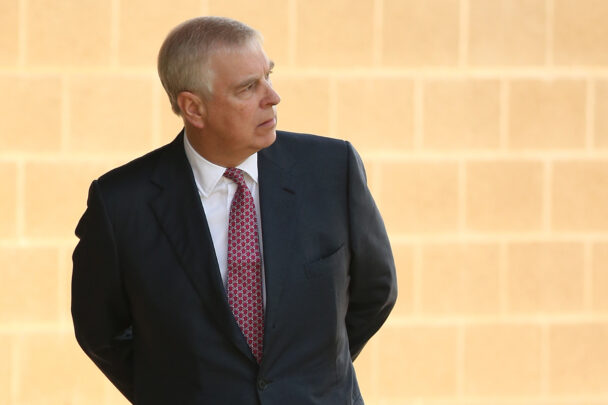
It has been another enormous week in the royal ecosystem, and not in the glittering tiara-and-trophy way.
Some commentators have described it as the most serious reputational moment for the monarchy in generations, with language being thrown around about the biggest crisis in almost 400 years, referencing the last time a senior royal was formally detained. Dramatic? Yes. But the fact that such comparisons are even being made tells you how destabilising this feels.
Arrests, emergency briefings, cancelled appearances and strategic red carpets have replaced garden parties and ribbon cuttings. And the question lingering underneath all of it is no longer just about one disgraced duke. It is about whether the institution itself is wobbling.
Does the Royal Family have a PR crisis?
In the hours following Andrew Mountbatten-Windsor’s arrest, I was chatting with another royal obsess and she said, watch this space, Charles will have to abdicate.
I laughed. Surely not. The King knew nothing, he is cooperating with investigations, and frankly the man has waited his entire adult life for the crown. The idea that his younger brother’s alleged behaviour could derail him felt theatrical. But as the details have continued to unfold, that early confidence feels less solid.
Andrew’s controversies have never been isolated. His association with Jeffrey Epstein, that catastrophic Newsnight interview, the civil case in the United States and the removal of his military titles were not minor missteps. They were significant institutional moments that required palace management over a number of years. The late Queen stripped him of official duties. Charles reportedly insisted on scaling back his office, funding and public presence. This was an ongoing containment exercise long before the current developments.
Which is why the public mood feels different now. It is not simply shock at new allegations. It is the cumulative weight of years of damage. Fairly or not, critics are asking how much senior members of the family knew about Andrew’s lifestyle and associations long before the headlines reached crisis point. Even if there was no knowledge of specific wrongdoing, there was awareness of reputational risk.
The monarchy trades heavily on moral authority. When one member repeatedly compromises that perception, the stain does not stay confined. There is also scrutiny around the King’s political and social relationships, including his longstanding friendship with Lord Mandelson.
There is no suggestion of impropriety in those relationships, but perception matters. At a time when the monarchy needs to project independence and stability, every connection is examined
more closely than it would be in calmer times. Abdication talk has surfaced in commentary circles, though historically British monarchs do not step aside unless forced by extraordinary circumstances.
Charles has consistently presented himself as a reformer intent on slimming down the monarchy rather than surrendering it. However, there is increasing speculation that a gradual transfer of visibility to the Prince and Princess of Wales could become the preferred route forward. If health provides a natural opportunity for Charles to reduce engagements and allow William to take on more leadership, it would offer transition without constitutional shock.
The Palace’s instinct has been to limit comment and emphasise cooperation with investigations. That approach has worked in previous storms, but the communications environment has changed dramatically. News cycles move faster, and public patience for “no comment” feels shorter. Whether the traditional model of stoicism will steady this moment or feel outdated remains the central test.
Something stirring with Sophie and Edward
Amid the Andrew fallout, attention has turned to the Duke and Duchess of Edinburgh. Sophie departed for overseas engagements at a time when domestic optics were tense, and Prince Edward withdrew from a planned appearance, citing health reasons, before reassurances were issued that he was recovering. On the surface, these are ordinary diary adjustments. In context, they carry more weight.
The Edinburgh’s have increasingly become the monarchy’s reliable middle managers. They do not attract tabloid frenzy, but they show up to the less glamorous work. Sophie’s diplomatic roles have expanded in recent years, particularly in areas of women’s rights and conflict prevention. Edward has stepped into responsibilities once associated with his father’s Duke of Edinburgh Award network. If senior roles need reinforcement during a reputational storm, this couple is often first in line.
Their movements this week have been interpreted by some as strategic positioning rather than coincidence. Whether that is fair or simply projection, it underscores how closely every royal schedule is now being analysed for meaning.
Camilla meets Gisèle Pelicot
Queen Camilla’s meeting with Gisèle Pelicot at Clarence House was staged very deliberately as an “over tea” audience and it carried more weight than a standard diary engagement. The two spoke for around half an hour with an interpreter, and Camilla reportedly told Pelicot she had read her memoir in two days because she “couldn’t put it down”, adding that it left her “speechless”.
The timing was impossible to ignore. Pelicot is in the UK promoting her book and appearing at major London events, but the royal household choosing to host her at this exact moment felt like a pointed piece of moral positioning. With the monarchy once again being pulled into difficult conversations about power, accountability and institutional response, the optics of the Queen meeting a woman associated with survivor advocacy was not accidental. It signalled where the Palace wants the public focus to sit.
William and Catherine at the BAFTAs
The Prince and Princess of Wales stepping out at the BAFTAs did not feel like a simple awards-night date. It felt like the sort of appearance that is carefully considered when the wider family narrative is under pressure. Behind-the-scenes, images released from the night showed them laughing together in an elevator, offering a glimpse of ease amid what has been an intense week.
Catherine re-wore a pink Gucci gown first seen in 2019, described as a raspberry-rose tone with a burgundy velvet tie at the waist. Re-wearing a gown was both environmentally on-message and subtly reassuring. This was not about new spectacle but about continuity. William coordinated in a burgundy velvet jacket that echoed the dress’s waist detail, creating a deliberate visual unity. The accessories carried their own quiet symbolism. Catherine paired the gown with the Greville chandelier earrings and Queen Mary’s Art Deco choker bracelet, alongside a burgundy velvet Prada clutch and platinum Oscar de la Renta pumps.
The choices reinforced her reputation for blending heirloom pieces with modern fashion in a way that signals both history and confidence.
Charles and Harry unlikely to meet in the US
Reports suggest King Charles is not expected to meet Prince Harry during upcoming US travel due to conflicting schedules. Whether logistical or intentional, the absence of a meeting will inevitably be read symbolically. Every opportunity for visible reconciliation now carries weight. The lack of one keeps the sense of distance alive. At a time when the wider institution is managing reputational strain, father-and-son optics matter more than ever. Even diary management becomes narrative.
Where are the Yorks?
While the spotlight has been trained on Andrew Mountbatten-Windsor’s arrest and the fallout it is causing across the monarchy, the York family dynamics have quietly become one of the more intriguing subplots. Sarah Ferguson has effectively vanished from British public view. Since being asked to vacate Royal Lodge alongside Andrew, Fergie has been reported to be travelling overseas and “moving around every few days” to avoid the press, including stays at retreats and hotels across Europe and beyond as she weighs her next move.
Her daughters have taken very different tactical routes. Princess Eugenie was spotted in London grabbing a coffee with her husband, Jack Brooksbank, just days after her father’s arrest, a casual appearance that nevertheless marked her first public sighting since the news broke. She had been in Switzerland earlier on what looked like a personal ski holiday, and reports suggest she has been “in a state” about the situation while focusing on everyday family life. Princess Beatrice, meanwhile, has also kept a low profile, with no public statements about her father’s situation. Both sisters are reported to have been in private discussions about how best to navigate this period for the sake of their own families rather than stepping forward in the glare of crisis coverage.
The royal tea tray has rarely been this crowded. Crisis management at the top, strategic red carpets in the middle, moral positioning from the Queen and careful retreat from the York wing. Every move feels weighted, every absence noted. The Windsors have survived scandal before by absorbing it and waiting for public attention to drift, but this moment feels sharper and more immediate.
For now, the Palace is betting that composure will outlast outrage. Whether that proves true is the question hanging in the steam.
Chat next week!





 Proudly Australian owned and operated
Comments 0
Join the conversation. Comments are reviewed before they appear.
Be the first to comment.
Join the conversation
Tell us who you are to post a comment. We'll remember you next time.