
States Push Back on Plan to Cut Higher Health Insurance Rebates for Over-65s


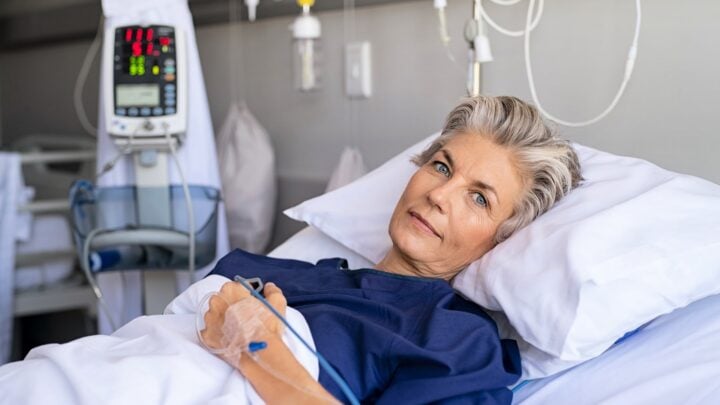
The federal government’s plan to scrap higher private health insurance rebates for Australians over 65 is facing growing resistance from state governments, according to a report in The Australian, with new polling suggesting far more seniors may abandon their private cover than the Commonwealth has predicted.
Australians aged 65 to 69 are set to see their rebate drop from 28 per cent to 24 per cent, while those 70 and over face a bigger cut, from 32 per cent down to 24 per cent, bringing older Australians into line with the standard rate everyone else receives.
State health ministers raise the alarm
According to The Australian, the health ministers of NSW, Queensland and Tasmania have all formally raised concerns about the policy, warning it will push more people into an already strained public hospital system.
NSW Health Minister Ryan Park said the state’s public hospitals were already under significant pressure, warning the change risked sending more people into that system without a corresponding plan to manage the extra demand. Queensland Health Minister Tim Nicholls described the decision as unexpected and inconsistent with recent hospital funding negotiations, while Tasmanian Health Minister Bridget Archer, whose state has the fastest-ageing population in the country, has written to federal Health Minister Mark Butler asking him to reconsider, describing it as a cost-shift from the Commonwealth onto the states.
The government’s own modelling reportedly flagged the risk
Perhaps the most striking element of The Australian’s report is a Freedom of Information document, obtained by the Coalition, reportedly showing the federal Health Department itself modelled how the change could affect individual pensioners before the policy was adopted – and reportedly confirmed there had been no consultation on the change beforehand, citing the sensitivity of the issue.
Two illustrative examples were reportedly included in that internal modelling: a retiree in her late 70s on a low income who would be unable to afford the out-of-pocket cost of a hip replacement in the private system and would rely on the public system instead, and a pensioner couple who would need to cut back on other household spending just to keep their existing cover after being hit with higher premiums.
Opposition health spokeswoman Anne Ruston said the department’s own scenarios showed pensioners would be seriously affected, arguing it wasn’t a fringe possibility but the government’s own evidence of the policy’s real-world impact.
How many people might actually drop their cover?
This is where the numbers diverge sharply. The federal government has estimated only around 44,000 people, or 0.4 per cent of the insured population, would drop their cover because of the change.
But polling commissioned by Private Healthcare Australia and conducted by RedBridge, involving more than 1,500 respondents, paints a considerably less reassuring picture: 15 per cent of over-65s said they’d be “much more likely” to drop their cover under the policy, and a further 24 per cent said they’d be “somewhat more likely” to do so – together suggesting nearly 40 per cent of seniors could reconsider their private cover, far above the government’s own projection.
The same polling found strong public support for exempting pensioners from the change altogether, including a notable majority among Labor’s own voter base, while separate research reportedly found the government’s “intergenerational fairness” justification for the policy performed poorly across every age group tested, including younger voters.
Private Healthcare Australia chief executive Rachel David said the organisation was already hearing from middle-aged Australians concerned they may need to help cover their ageing parents’ health insurance premiums directly, rather than see them lose cover altogether.
The government’s response
Minister Butler has defended the change, arguing that offering different rebate support based purely on age isn’t fair between generations, and that the money is better redirected toward the aged care system, where it’s needed most. The government says all revenue raised from the change, projected at $3 billion over four years, will go toward aged care, including funding for 5,000 additional beds a year and improvements to the Support at Home program covering services like assisted showering.
What this means if you’re affected
If you’re aged 65 or over and hold private health insurance, this remains a live political debate rather than a settled matter, and it’s worth watching closely between now and April 2027.
This story draws on reporting originally published in The Australian. Read the original report at theaustralian.com.au.





 Proudly Australian owned and operated
Comments 8
Join the conversation. Comments are reviewed before they appear.
Have to drop private cover = going on the public health system. = waiting months if not years for help = killing us off = getting our money...if any left via death duties (mmm methinks this is the long term goal). Pathetic and disgusting.
My plan which is already actioned, is to refuse to disclose private health cover when in public system.
So they will probably buckle and give pensioners a free pass, and kick self funded retirees up the backside as they will
Most likely never vote labor, I’m 73 and in good health, and I will cancel
My cover if the goes ahead, just stupid policy.
Isnt there are growing number of younger people and I am saying anywhere from 20s and upwards that are having health episodes, that traditionally in the past have been more related to the growing older generation?
I see no penalties to them. Nor do I see major discounts for those of us, who are no longer able to have children and pay for coverage relating to pregnancy.
I wont be keeping my health insurance upon retirement. It is too expensive.
This Labor Government is taking money from Self-funded retirees anyway it thinks of - Health, Increased taxes on CGT (min 30% tax even if you are on less than 15% taxrate). They need to go in the next election.
They are intending taking monies from people aged over 70 to help in having a shower if you need over 70 ,typical post shifting from a govt., who could not run a pub raffle without rigging result
This higher cost will put a considerable strain on finances . We have always had private insurance and fortunately rarely used it until our senior years when the comfort of choice and time for medical care is important for us. The claim that they are only trying to make it equitable for all ages is unjust the younger generation seems to always be getting assistance.
I feel for all of us I had to give up my phi when I had an operation that didn’t go as planned I lost my job as well I am now in the public system have been waiting for 3 years to see a sleep apnea clinic 15mth for an endoscopy I come from a high risk genetic family and I have 2 years or more to wait for just the appt for orthopaedics
Join the conversation
Tell us who you are to post a comment. We'll remember you next time.