


It was typical of the man and his humour but Struan Sutherland, on his death – and he died far earlier than was right – wanted no wailing or gnashing of teeth over his departure. His memorial service and wake was to be for no more than 50 people, with attendees to be served champagne and fruit cake. In the event, five times that number packed the church; I can find no record of how the caterers fared.
Born in Sydney on 17 June 1936, Struan Keith Sutherland, AO, FRCPA, FRACP, MD, DSc, was educated in Bendigo before studying medicine at Melbourne University. Through the years, he held a number of positions, all a mark of the man and his capacity for work: Joining the RAN, he served as Surgeon-Lieutenant 1962-65; then as Clinical Assistant, Royal Melbourne Hospital 1964-92; Head of Immunology Research, CSL Ltd, 1967-84 and Medical Consultant 1984-94; Associate Professor of Pharmacology and Toxicology, Department of Pharmacology, University of Melbourne, 1994-2001; Director, Australian Venom Research Unit 1994-2001; External Medical Consultant to CSL Ltd 1994-; Physician, Department of Medicine, Royal Melbourne Hospital 1992-.
He also won many an award: AMA Prize for Medical Research 1977; James Cook Medal, Royal Society of NSW 1984; Medal for Outstanding Contribution to Tropical Medicine, Australasian College of Tropical Medicine 1997; Distinguished Fellow Medal, Royal College of Pathologists of Australia 1999.
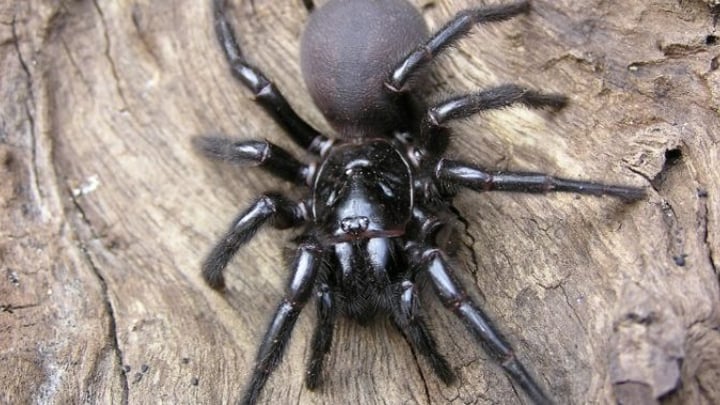
The raw details provide barely a hint of the importance of his life’s work. Most notable were his 28 years at Commonwealth Serum Laboratories, during which he established an anti-venom for the frequently deadly Sydney funnel web spider bite and, perhaps less universally known, his development in the 1970s of the pressure immobilisation technique for snake and spider bites. Until that time, other methods of treatment had been applied, including cutting and sucking the bite area and the application of tourniquets, both of which were potentially harmful to the patient. Beyond this came his venom detection kits, used by paramedics and hospital staff to determine appropriate bite treatment.
While at CSL, Sutherland, as Head of Immunology Research, led a team attempting to produce the funnel web anti-venom, something others had tried and failed to achieve. Their efforts doubled and redoubled with the loss of children in 1979 and 1980, the spider’s twelfth and thirteenth recorded victims. The team was successful in their endeavours and managed a breakthrough by the end of 1980. The first real-world test of the product came only a few months later, when successfully used to treat a middle-aged man bitten on 31 January 1981.
Since that time, there have been no deaths recorded from funnel web bites.
It was not all smooth sailing, with a highly publicised and acrimonious split from CSL. The government decided to divest its interest in the body, it being privatised in 1994. Sutherland left, going to the University of Melbourne to found the Australian Venom Research Unit. He worked there until his retirement due to ill health in 1999, later dying of Striatonigral Degeneration, a form of MSA.
As Melissa Sweet says in her recollections of the man, “In a country famous for its deadly snakes and spiders, Struan Sutherland became a household name for his expertise on venomous creatures. He was also well known as one of the great larrikins of Australian medicine and as a prolific author.” She continues, “It was typical of Sutherland, an enthusiastic cook and host, to put much thought into catering. His widely disseminated “rules of an amateur chef” included such advice as: “Never cook for or eat with anyone you loathe” and “Invite your guests early and try to kick them out by 10.30 pm before one or more of them become very boring, argumentative or critical of their host.”
The second edition of the textbook Australian Animal Toxins, which he co-wrote, was published several months before his death. In typical Sutherland style, he wrote asking colleagues to review chapters of the text, offering a multiple choice reply. Recipients could tick either “send me a copy asap” or “stuff off.”
All very well, but to end I’d like to use Sutherland’s ultimate humour: “Struan would like to inform his friends and acquaintances that he fell off his perch on Friday, 11 January 2002, and is to be privately cremated. No flowers please. Donations to Australian Venom Research Unit, Melbourne University.”
What a shame, in so many ways, that we must lose such special people, but that’s life. We come, we go. It would be nice to think that every one of us could put such an indelible patch on life as Struan Keith Sutherland.
Vale, great man.






 Proudly Australian owned and operated
Comments 0
Join the conversation. Comments are reviewed before they appear.
Be the first to comment.
Join the conversation
Tell us who you are to post a comment. We'll remember you next time.