


There’s nothing quite like winter in New England. The trees are stripped bare, the sky is a deep, ringing blue and the crisp air injects the vigour of life in your limbs. But if there is one thing better, it is to sit up in a warm bed, gaze through the undrawn curtains at that vast azure vault and sip your morning coffee.
I was doing just that when the first shaft of dawn fell upon the stacks of books directly opposite, before settling on one whose bold red-printed spine seemed to erupt in flame. British Sports Cars, I read, a large, thick, impressive volume that my family had given me a few Christmases before.
They wouldn’t have been geniuses to know that sports cars, especially the British ones, had been a particular fascination of mine going back decades. They only had to look at this particular bookcase to recognise all the other books acquired over the years extolling the virtues of this or that marque, even the hopeful purchases of a few maintenance manuals.
I extracted the book from the shelves and turned its pages lovingly, acutely aware of my age and the unrequited love I once had for this best of British. It had been some years since I last opened the book: we had been settling down to watch an episode of Antiques Roadshow, that revealing glimpse into the relationship between arts and crafts and social history, when I became fixated on the opening credits. Particularly on the red sports car ferrying a gilt-edged portrait with two very comfortable young blades upfront.
It was a car I was unable to recognise, looking a little like a Sunbeam Alpine, but only much glitzier. British Sports Cars soon revealed that it was a Daimler SP250, which explained two things — why the young blades seemed so comfortable, and why I had been unable to recognise it. (At the time of writing there was a 1960 Daimler SP250 currently for sale on the net for $55,000.)
As it happened, my first brush with British sports cars occurred in the early-1960s when I was sent to Melbourne to spend the long break between high school and university with my cousins. They, and their friends, I found, had a deep-seated animosity towards the private school types whose lives ran parallel to their own, comfortable lives which in their plebeian minds, were exemplified by their ownership of … British sports cars.
It was the first time I had ever heard of ‘MGAs’ and ‘Sprites’, being especially unaware of the venom that such status symbols could incite. Moving on to university, however, in those years before EG Whitlam opened up tertiary education to virtually everyone, I came into direct contact with the kind of students who so offended my cousins.
Funnily enough, they were young blokes not a lot different from me, on the surface — for my rugby playing had opened doors that six months before I would have thought impossible — but what they had that I didn’t was first the self-confidence that I later understood was the birthright of those for whom few crises were ever going to be irreversible, and second they actually owned a British sports car.
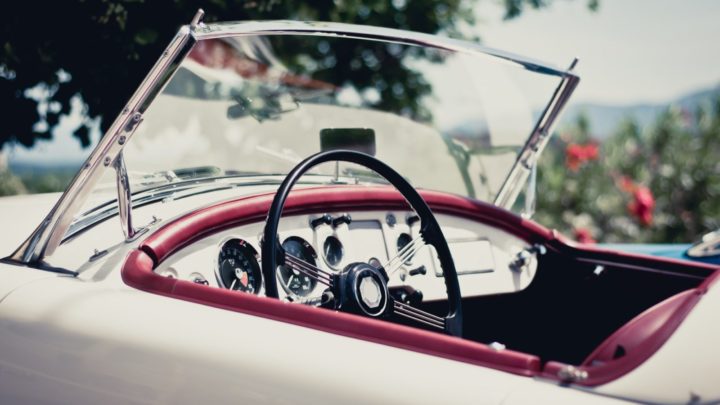
Like a true disciple, I soaked up the lore of the various marques, learning how to recognise the subtle individuality of each model — such as the single rear light of the MGA 1500, the vertical twin light of the MGA 1600 Mark I, and the horizontal twin light of the MGA 1600 Mark II.
I learned to sneer at the bug-eyed Austin Healey Sprite, hinting that one of the ‘big’ Healeys was more my style. While the utmost scorn was reserved for the poor old Triumph Herald, dismissed as ‘the poor man’s sports car’. I was not willing to endure the shame of admitting I couldn’t even afford such a statement of poverty — and tastelessness.
(As an indication of the powerful hold these vehicles had on our imaginations, there was even a United States pop song called Abigail Beecher, describing how a cool young history teacher drove a Jaguar E-type, truly the top of the range. “Hey, everybody, get out of the street now, I hear the roar of an XKE now …”, Freddy Cannon began.)
As the years went by and no acceptable British sports car ever graced my garage, so I sank deeper into a slough of day-dreaming. This reached its nadir in the early-’80s when, looking for ways to spend access weekends with two young boys, I had the bright idea of acquiring a Triumph Stag, the only British equivalent of the four-seater beasts (Corvettes, Firebirds, T-birds, Pony cars) that dominated the roads of North America.
At that time, I was working for the Australian Financial Review and there was a beautiful human being on the staff, the laconic, cigar-puffing Peter Burden, the paper’s motoring correspondent. I sought his advice, certain that he would endorse my shelling out the $14,000 needed to pick up a second-hand Stag. T’was not to be.
But I never gave up, becoming more and more infatuated with the idea of the Triumph TR3A, less obvious in Australia than the MG and Austin Healey stables, but a car with serious grunt. One Saturday afternoon, having read that a ‘concourse’ of Triumphs was to be held beside the Parramatta River in Sydney’s middle west, I took the boys along, assuring their glazing eyes that it was an occasion they should never miss.
Under that soft winter sky, they were all there, row after row of gleaming TR2s, TR3s, TR3A’s, TR4s, etc. Any one of them to die for.
Yet right out on the fringe, almost as though it had been kicked into posterity, was … a Triumph Herald. The whole front had been pulled back by the idiotic handle on the bonnet revealing its puny 850cc engine. But the engine head had been so polished that it was a virtual silver lode, fit for Francisco Pizarro to kill for.
I caught the eye of an Indian guy deep in thought nearby.
“I used to own one of these,” I admitted. “We called it the poor man’s sports car.”
“So did I, in New Delhi,” he replied. “And I was so ashamed I couldn’t wait to get rid of it.”
“Just look at it now.” My voice was a barely audible croak. But he was already weeping uncontrollably. Having learned on the hardest of roads that the meek never inherit the earth, they’re just driven into the ground.





 Proudly Australian owned and operated