
Why midlife women are questioning their drinking


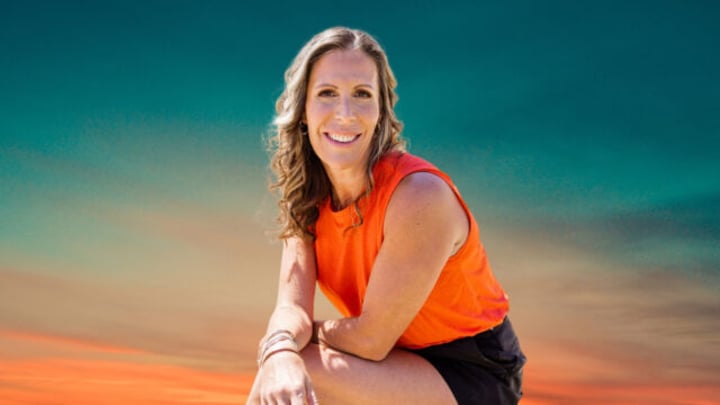
For almost three decades, Sarah Rusbatch’s relationship with alcohol looked perfectly ordinary.
She had a successful career, was raising a family, exercised, ate well and enjoyed a busy social life. She didn’t drink every day, she wasn’t reaching for alcohol in the morning and there was no dramatic rock bottom that forced those around her to intervene.
From the outside, few people would have suspected a problem. Sarah herself didn’t fit the picture many of us carry in our heads of someone struggling with alcohol.
But inside her head, something very different was happening.
“I would often make rules around my drinking – I don’t drink Monday to Wednesday, I don’t drink at home on my own, I don’t drink white wine on an empty stomach – but then I would find reasons to break them,” she told Starts at 60.
“There was a lot of ‘chatter’ about alcohol in my mind. I’d tell myself I was only going to have one or two and then regularly drink more than I’d intended.”
Increasingly, alcohol was becoming a tool to relax, reward herself, switch off and manage stress.
“Any time something difficult happened, my first thought was, ‘Oh, I need a drink.’
“That’s what grey area drinking can look like. Your life doesn’t have to be falling apart for alcohol to be taking something away from it.”
When wine becomes the punctuation mark
Sarah, now 50, is a Grey Area Drinking and Menopause Coach, author of Beyond Booze and has been alcohol-free for seven years. She says there wasn’t one defining moment when she realised her relationship with alcohol needed to change.
Instead, the signs accumulated.
“Wine became the punctuation mark at the end of my day,” she said. “Stressful day? Wine. Good day? Wine. Celebration? Wine. Difficult parenting day? Definitely wine.”
Around the same time, something else was changing.
In her early 40s, Sarah began experiencing increasing anxiety and poor sleep, including waking around 3am with her heart racing and her mind refusing to switch off.
She was entering the years when many women begin experiencing perimenopause, which can bring changes including anxiety, irritability, disrupted sleep, mood changes, hot flushes and night sweats.
For Sarah, it eventually prompted an uncomfortable question.
“If alcohol is supposed to help me cope with life, why is life feeling harder because of it?”
Australian research suggests hers is far from an isolated experience. An analysis of Australian women aged 45 to 60, reported by ABC News, found the proportion drinking at binge-drinking levels had risen from around 13 to 14 per cent in 2001 to about 21 per cent by 2019. Researchers identified stress as an important risk factor.
A perfect storm in midlife
Sarah believes the circumstances surrounding midlife drinking deserve far more attention.
“We can be juggling teenagers, ageing parents, careers, relationships, financial pressures and an enormous mental load – at exactly the same time that our hormones are changing,” she said.
“Many women have also spent decades being sold alcohol as the acceptable way to cope with all of that. Wine is the reward for getting through the day. It’s self-care. It’s how we relax. It’s how we connect with friends.”
The “wine o’clock” jokes, prosecco at brunch and the glass poured while making dinner can seem innocuous. Sarah isn’t suggesting every woman who enjoys them has a problem, but says the normalisation of alcohol can make it harder to notice when its role has quietly changed.
“When everybody around you is doing the same thing, it’s very hard to recognise when your own relationship with alcohol has shifted,” she said.
“One of the most powerful things a woman can ask herself is, ‘What job am I asking alcohol to do for me?'”
Is it relieving stress, loneliness, anxiety or boredom? Is it a reward? Or has it become the only reliable way to switch off?
“That question can tell you far more than simply counting drinks.”
Perimenopause, alcohol and sleep
Sarah is careful not to blame midlife drinking entirely on hormones. Alcohol use is complicated and influenced by a range of social, psychological and individual factors.
But there is a difficult intersection between alcohol and symptoms women may already be experiencing during perimenopause.
Disrupted sleep is common during the menopause transition, with changes in oestrogen and progesterone among the contributing factors, according to the Australasian Menopause Society. Hot flushes and night sweats can further disturb sleep.
Alcohol can initially make people feel sleepy, but that doesn’t necessarily translate into a better night’s rest. The US National Institute on Aging advises that even small amounts can make it harder to stay asleep, while Australian women’s health organisation Jean Hailes says drinking too much alcohol around menopause can disrupt sleep and trigger hot flushes and night sweats.
That can create precisely the cycle Sarah experienced.
“You drink because you’re stressed and exhausted, you sleep poorly, you wake feeling anxious and depleted, the day feels harder, and you want a drink that evening to switch off again,” she said.
“Removing alcohol doesn’t magically solve every symptom of perimenopause, but many women I work with are amazed at how different they feel once they remove one factor that may have been amplifying them.”
The grey area nobody talks about
The term “grey area drinking” has become important to Sarah because it describes women who may never identify with traditional labels around alcohol dependence.
Their careers may be flourishing. They exercise, raise families, maintain relationships and meet their responsibilities. Their drinking may appear completely socially acceptable.
Privately, however, they may regularly drink more than intended, make and break rules about alcohol, repeatedly take breaks before returning to old patterns, use alcohol to manage emotions or spend more time thinking about their next drink than they would like.
“These are often women who don’t identify with having an ‘alcohol problem’,” Sarah said. “Their drinking may look completely normal socially. But privately they’re questioning it.”
Australia’s current national guidelines offer a useful benchmark. To reduce the risk of alcohol-related disease or injury, the National Health and Medical Research Council recommends healthy adults drink no more than 10 standard drinks a week and no more than four on any one day, adding that the less someone drinks, the lower their risk.
Alcoholic beverages are also classified by the International Agency for Research on Cancer as Group 1 carcinogens, with established causal links to several cancers, including female breast, bowel and liver cancers. The classification describes the strength of evidence that alcohol can cause cancer; it is not a ranking of how dangerous alcohol is compared with other carcinogens.
For Sarah, however, the question that finally mattered wasn’t a label or even a number.
“Instead of asking, ‘Do I drink too much?’, ask, ‘Is alcohol taking more than it’s giving?’
“You don’t need a label or a rock bottom to decide that you’d like your relationship with alcohol to be different.”
What happened when she stopped
Sarah initially gave up alcohol because she wanted to feel better physically. What surprised her was how much changed beyond that.
“My anxiety reduced enormously. My sleep transformed. I had more energy and clarity. I became more confident and much more comfortable in my own skin,” she said.
“But perhaps the biggest surprise was freedom.”
The constant negotiation disappeared. There was no deciding whether she would drink that evening, wondering the next morning how much she’d consumed or promising herself she would “be good this week”.
“I hadn’t realised how much mental energy alcohol was consuming until it wasn’t there anymore.
“And I discovered something I genuinely hadn’t expected: I didn’t lose my fun when I stopped drinking. I got more of myself back.”
For women who recognise something of themselves in Sarah’s story, she doesn’t believe the starting point needs to be declaring themselves an alcoholic or vowing never to drink again.
Her suggestion is much simpler: get curious.
Try an intentional alcohol-free period and notice what happens to sleep, anxiety, mood and energy. Before automatically pouring a drink at the end of a difficult day, ask what you actually need at that moment. And rather than focusing only on what you’re giving up, pay attention to what you might be gaining.
Sometimes, Sarah says, one question is enough to begin.
“I wonder how I’d feel without this?”
Sarah Rusbatch is the author of Beyond Booze: How to Create a Life You Love Alcohol-Free, published by Murdoch Books. More information and resources are available through her website.
Also check out Alcohol Consumption Can Lead To Health Risks In The Elderly





 Proudly Australian owned and operated
Comments 0
Join the conversation. Comments are reviewed before they appear.
Be the first to comment.
Join the conversation
Tell us who you are to post a comment. We'll remember you next time.