
Step back in time: Follow Outback Queensland’s dinosaur trail


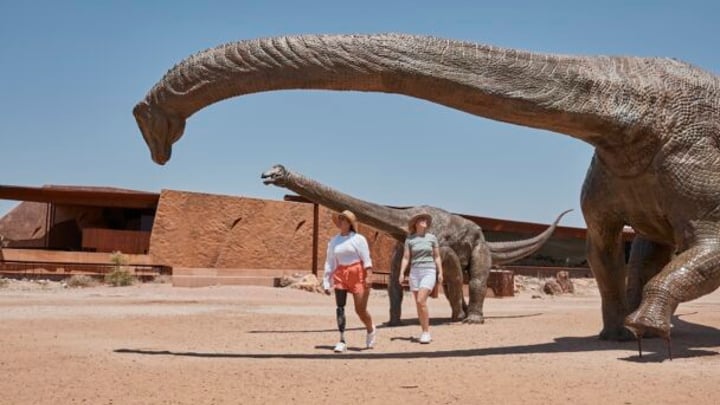
When most people think of places to check out dinosaur relics, Mongolia, China or America might spring to mind. But deep in Outback Queensland, an extraordinary trail of ancient footprints, giant skeletons and parts of prehistoric sea creatures brings Australia’s dinosaur history to life. And it’s the perfect excuse for a truly different road trip.
Around 100 million years ago, inland Queensland looked nothing like it does today. Dinosaurs roamed lush prehistoric landscapes, while enormous marine reptiles patrolled the waters of an inland sea.
Today, their remarkable remains are drawing travellers to one of Australia’s most unusual touring routes: the Australian Dinosaur Trail.
Linking the outback towns of Winton, Hughenden and Richmond (with plenty of other hot spots in driving reach), the trail offers a fascinating journey through prehistoric Australia, complete with genuine dinosaur fossils, ancient footprints and the opportunity to try your hand at fossil hunting.
You don’t need to be a dinosaur enthusiast to enjoy it. With welcoming country towns with character-filled pubs, beautiful landscapes and plenty of Australian history along the way, it’s the kind of adventure that rewards curiosity at every turn.
Winton: Where the (not so-gentle) giants once roamed
Winton might be better known as the birthplace of Waltzing Matilda, and it’s famous for its quirky festivals such as the Quilton Australian Dunny Derby (that’s another story for another day) but it has another unique claim to fame: it’s one of Australia’s most important dinosaur discovery sites.
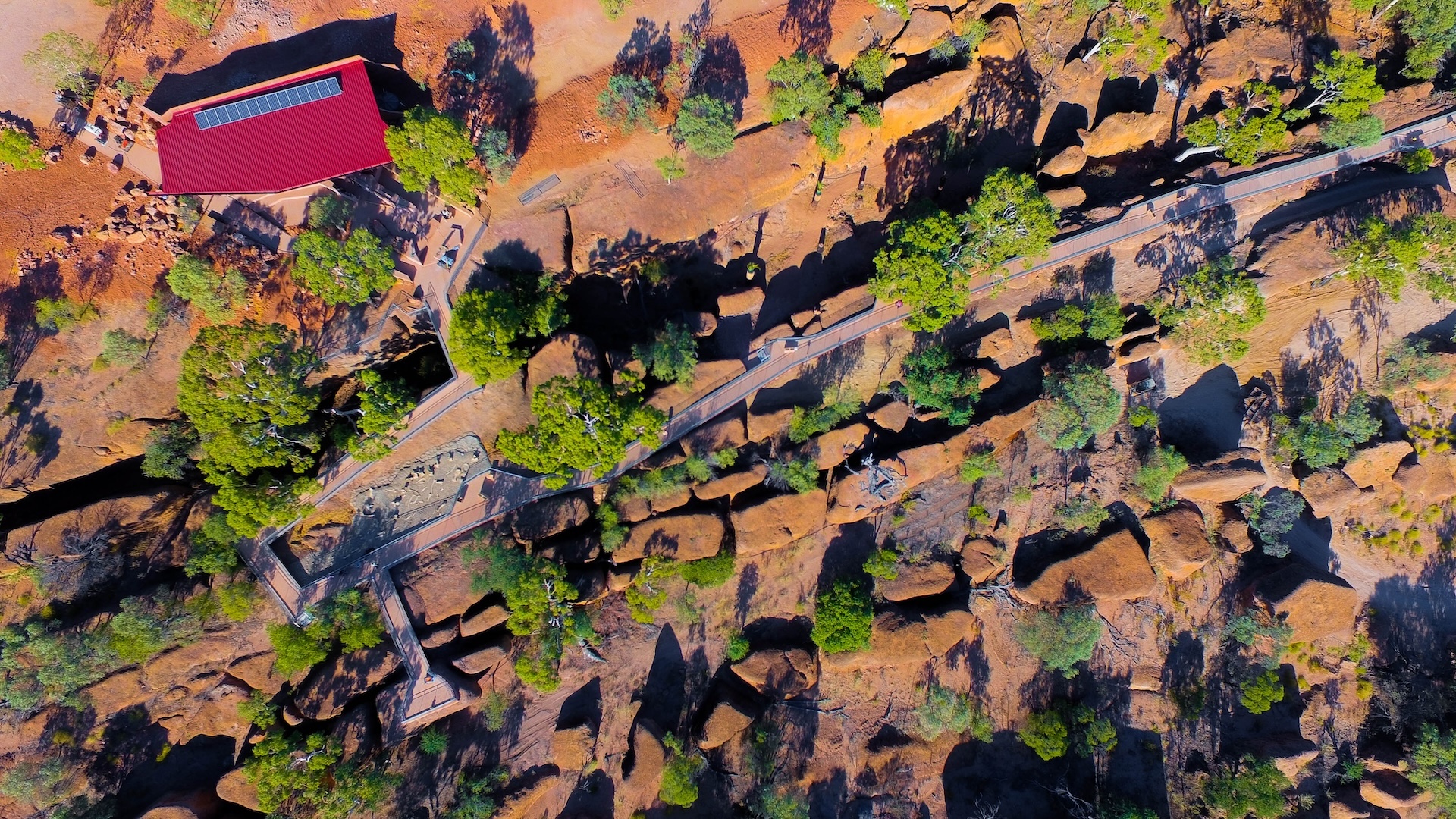
Just 24 kilometres south-east of this town with a population nudging 900, the Australian Age of Dinosaurs Museum sits high on a rocky mesa known as The Jump-Up, overlooking sweeping outback plains.
The museum houses the world’s largest collection of Australian dinosaur fossils, including two prehistoric celebrities affectionately known as Banjo and Matilda.
Banjo was a formidable meat-eating dinosaur, while Matilda was an enormous, long-necked plant-eater. Their fossilised remains offer an astonishing glimpse into a world that existed long before humans appeared.
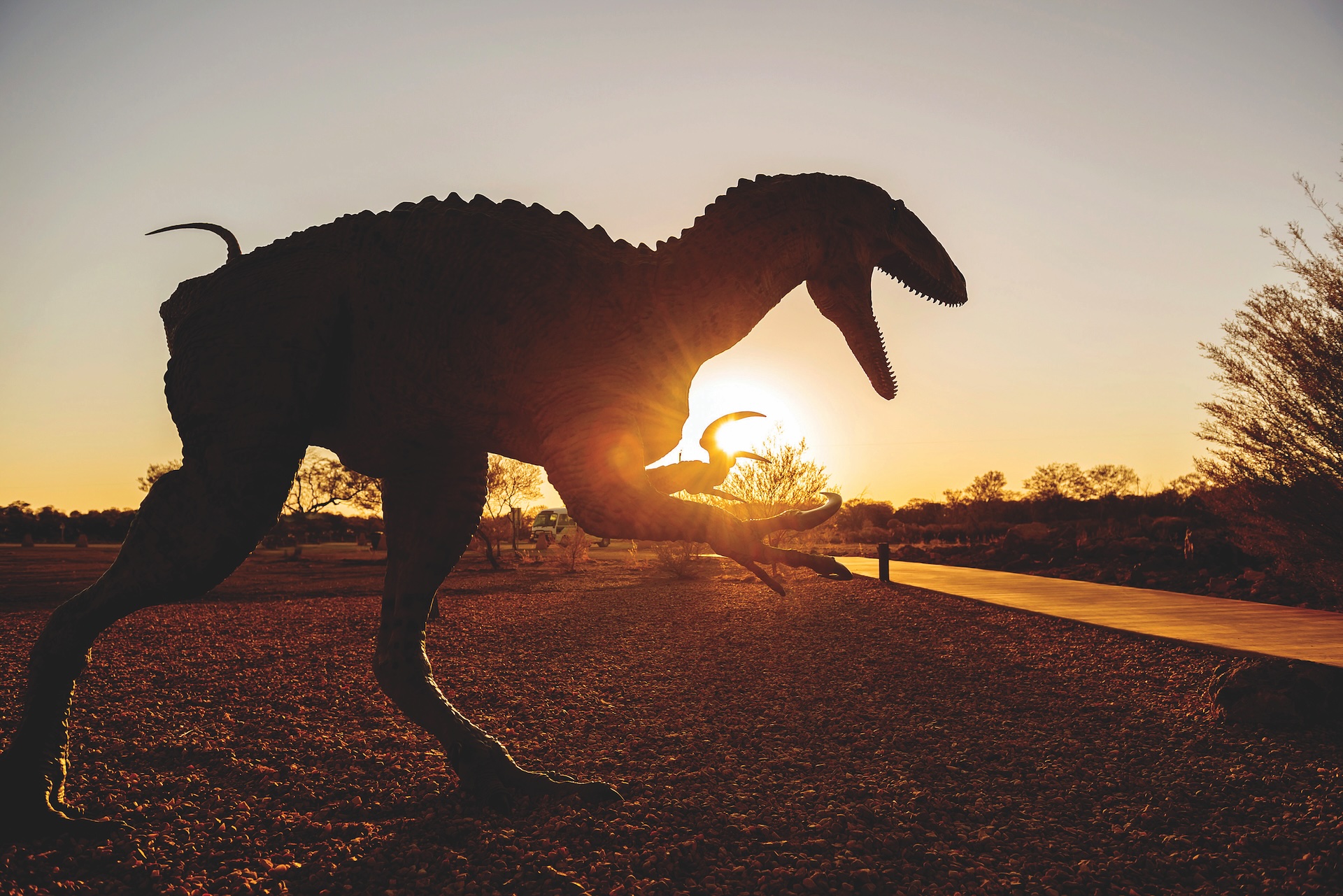
Visitors can tour the fossil preparation laboratory, where ancient bones are painstakingly cleaned and studied, before exploring Dinosaur Canyon, where life-sized prehistoric creatures stand against the dramatic outback landscape.
Another highlight is the March of the Titanosaurs exhibition, featuring an exceptionally well-preserved trackway left by enormous dinosaurs.
But perhaps Winton’s most extraordinary attraction lies further afield.
Around 110 kilometres south-west of town, at Lark Quarry Conservation Park, more than 3,000 dinosaur footprints have been preserved in stone for approximately 95 million years.
The site became famous as the world’s only known dinosaur stampede, with tracks originally interpreted as evidence of smaller dinosaurs fleeing a much larger predator. Scientists have since debated aspects of that interpretation, but the remarkable footprints remain an extraordinary record of prehistoric life.
Standing before those ancient tracks, it’s difficult not to imagine the creatures that once crossed this very ground.
Hughenden: Meet a prehistoric vegan giant
Travel 215 kilometres (just down the road!) north-east of Winton and you’ll come to Hughenden, a friendly outback town with a population of around 1,100 people, and a rather unusual local celebrity.
His name is Hughie, and he’s a seven-metre-long replica skeleton of a Muttaburrasaurus, one of Australia’s best-known dinosaurs.
You’ll find him at the Flinders Discovery Centre, alongside an impressive collection of fossils and exhibits revealing the region’s ancient history.
The Muttaburrasaurus was a large plant-eating dinosaur that lived during the Cretaceous period. Its remains were first discovered near the Queensland town of Muttaburra in 1963.
Hughenden also has a giant ammonite display, another reminder that this dry, dusty landscape was once connected to a vast prehistoric sea.
Beyond the fossils, there’s plenty to discover in the surrounding countryside. About 60 kilometres north of Hughenden, Porcupine Gorge National Park is often described as Australia’s Little Grand Canyon. Its towering sandstone cliffs, colourful rock formations and dramatic gorge scenery make it a wonderful detour, particularly for travellers who enjoy photography and Australia’s natural landscapes.
Richmond: Terrifying creatures from the ocean
Another 120 kilometres west will have you in Richmond, which has a population of only 578 people.
It’s almost impossible to imagine when looking across today’s dry plains, but around 110 million years ago, this region lay beneath the shallow waters of Australia’s ancient inland sea.
Those waters were home to some truly terrifying creatures.
At Kronosaurus Korner, visitors can come face to face with the fossilised remains of enormous marine reptiles, ancient fish and other creatures that inhabited this long-vanished underwater world.
One of the museum’s most remarkable exhibits is Penny the plesiosaur – an exceptionally well-preserved marine reptile fossil.
The museum’s collection includes more than 1,000 specimens discovered in the surrounding region, making it a fascinating destination for anyone interested in Australia’s natural history.
For something a little more adventurous, Richmond also offers designated fossil-hunting areas where visitors can search for their own prehistoric treasures. Imagine discovering a fossilised shell or fragment of ancient marine life that has remained buried for millions of years?
It’s the sort of experience that can make even the most seasoned traveller feel like an excited schoolchild again.
A dinosaur trail worth taking slowly
Part of the appeal of the Dinosaur Trail is that the journey itself is every bit as memorable as the unique attractions. Between the towns are vast grazing properties, striking landscapes, outback pubs with friendly locals, and plenty of places to swim, camp and enjoy local produce at cafes and bakeries.
Allow at least four or five days to explore the main attractions without rushing, and consider travelling during the cooler months when conditions are generally more comfortable.
Distances are considerable, some roads are unsealed, and it’s important to carry plenty of water, check road conditions and book popular guided tours ahead.
For travellers planning to visit all four major dinosaur attractions, the Australian Dinosaur Trail Pass is simple way to organise the experience.
Whether you’re travelling by caravan, campervan or car, this is a journey that combines the pleasure of exploring Australia while diving into its distant past.
It’s a remarkable reminder that sometimes Australia’s greatest treasures aren’t hidden in faraway lands, but rather waiting to be discovered in our own backyard.
If you enjoyed this feature on the dinosaur trail of Outback Queensland, you might like our feature on foraging for mushrooms in the wilds of Canada.





 Proudly Australian owned and operated
Comments 0
Join the conversation. Comments are reviewed before they appear.
Be the first to comment.
Join the conversation
Tell us who you are to post a comment. We'll remember you next time.