
Rugby league legend ‘Junior’ stays strong at 66


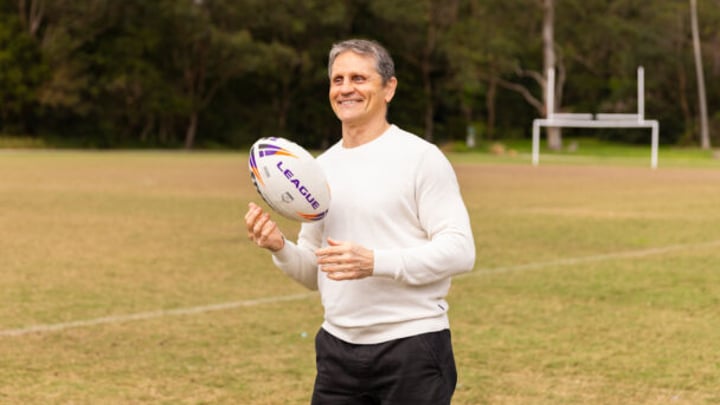
He began lifting weights as a teenager after losing his father at just 14. More than half a century later, Wayne “Junior” Pearce is still training hard and has learnt plenty about growing older without giving in to it.
At 66, Wayne Pearce still likes lifting heavy weights.
Not heavy for his age. Heavy.
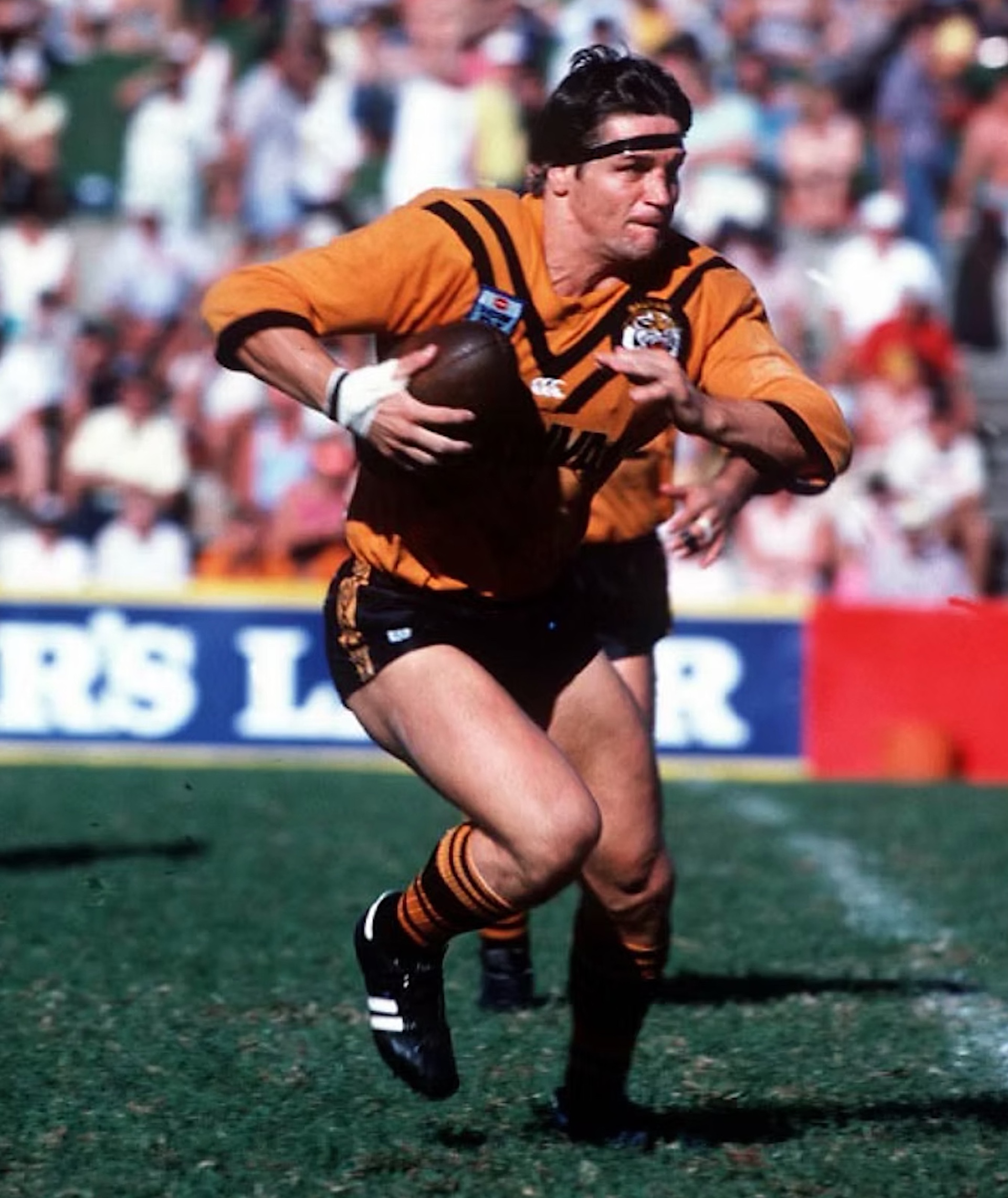
The Balmain Tigers legend, former NSW captain and Australian representative guesses he can still lift about 80 per cent of what he managed during his playing days.
Pearce, affectionately known throughout his rugby league career as “Junior”, has been training seriously since he was 15. That’s 51 years spent learning what his body can do, what works, what doesn’t, and how all of that changes as the years roll on.
“I used to do a lot of running when I played, but I stopped after retiring because my knees were getting worn,” Pearce tells Starts at 60.
“I still do cardiovascular exercise, including paddling on the harbour, and I do a lot of gym work.
“My strength is still pretty good. I believe in continuing to lift heavy weights because it helps maintain muscle, supports metabolism, and benefits posture and mobility.”
But the reason Pearce became so interested in his health in the first place had little to do with becoming a better footballer.
The loss that changed everything
Pearce was only 14 when his father died at 45.
Two of his father’s brothers also died from cardiovascular disease before turning 50.
“It was the main catalyst,” Pearce says.
“I became interested in health and fitness when I was about 14 or 15, after my father died. I wanted to understand more about it, but in the mid-1970s there wasn’t much information available.”
At the same time, a young Pearce was beginning to wonder how far rugby league might take him. There was a popular school of thought at the time that heavy weight training could slow a footballer down, but Pearce wasn’t buying it.
Olympic sprinters were muscular, powerful athletes. If strength made them faster, why wouldn’t it help him?
So he started experimenting.
“I was also hoping to make a career in rugby league, and I wanted to learn about weight training,” he says.
“I saved money from a part-time job selling hot dogs at Leichhardt Oval and bought weights, which I kept in the lounge room. That’s how I got started with strength training.”
Those lounge-room weights were the beginning of an experiment that is still running 51 years later.
Learning what worked
Pearce eventually found himself doing something unusual for a first-grade footballer of his era: combining rugby league with a science degree at the University of New South Wales, with psychology alongside it.
He wasn’t one of the biggest players on the field and knew he couldn’t do much about that. What he could control was how well prepared he was.
“I felt I had to be as well prepared as I could be,” he says.
“That included fitness, food, supplements and protein, although there wasn’t much in the way of supplements back then. I tried different things to see what worked for me.
“My main experimentation was with weight training. Squats and deadlifts helped build strength and power in my glutes, legs and lower back.”
And not everything he did then survived the test of time.
“When I was young, I did higher repetitions, 15 to 20,” Pearce says. “But I later learned that wasn’t necessarily best practice and refined my training as I learned more.”
That process of learning hasn’t stopped.
Neither have the weights.
‘It’s definitely not too late’
Pearce recently got talking to a man around his own age who told him his doctor had said people over 60 shouldn’t lift heavy weights. His reaction was immediate.
“That doesn’t make sense to me,” he says.
He is adamant that getting older shouldn’t automatically mean abandoning resistance training.
“It’s definitely not too late to start. Strength training can make a big difference to how strong you feel, as well as to posture and metabolism.”
Australian Government movement guidelines recommend people aged 65 and over undertake muscle-strengthening activities at least twice a week, alongside aerobic exercise and activities targeting mobility, balance and coordination.
But there’s an important distinction.
Wayne Pearce has been lifting weights for more than half a century. A 65-year-old who hasn’t exercised for 20 years is starting from a very different place.
Pearce himself stresses that point.
“The important qualification is technique,” he says.
“If you lift heavy weights with poor form, you can injure yourself. You need to be shown how to do the exercises correctly.
“I typically do six to eight repetitions at most.”
His four pillars after 60
Ask Pearce what matters most now and he boils more than half a century of experience down to four areas.
“I think there are four factors to be conscious of as we age: exercise, nutrition, sleep and stress,” he says.
The purpose of his training has changed. He no longer needs to prepare his body for elite rugby league, but many of the habits developed during those years have remained.
Flexibility and stretching are still part of his routine. So is paying attention to what he eats.
And then there are supplements.
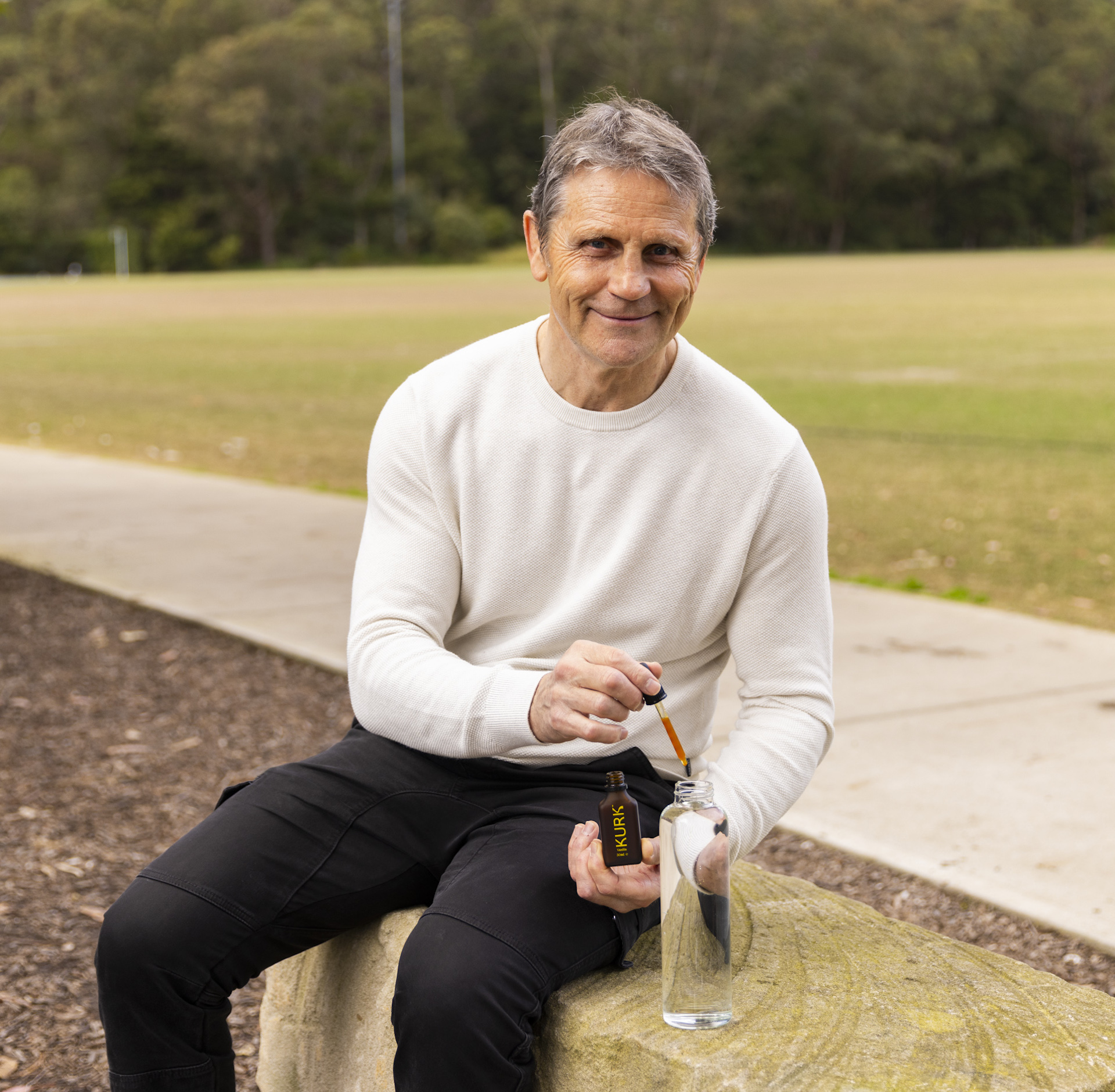
Pearce takes extra-virgin olive oil and ubiquinol and has recently become an ambassador for Australian biosciences company KURK.
It’s a notable partnership because Pearce says that, despite his decades-long interest in health and supplementation, he has repeatedly turned down opportunities to endorse health products.
KURK was different.
“I take KURK Sport straight after a workout,” he says.
“I train hard, and I find my energy comes back and I feel sharper within about 15 minutes.
“It’s the only health product I’ve endorsed, because I hadn’t found that other products I tried had the evidence or worked for me.”
Those are Pearce’s personal experiences rather than medical advice, and anyone considering supplements should discuss their individual circumstances with a doctor or pharmacist, particularly if taking prescription medication.
Sleep occupies another large part of Pearce’s thinking these days, as does managing stress.
“Sleep is critical,” he says.
And for stress, he has found an outlet that doesn’t involve a gym at all. Pearce paddles on Sydney Harbour and describes the experience as his form of meditation.
“Even when I paddle with colleagues, we’re usually not talking,” he says. “We’re in our own zones.”
There is, occasionally, something capable of destroying the serenity.
“Occasionally you see a shark, and then you paddle a bit faster,” he says, laughing.
One eye on Sunday’s Grand Final
There will be no escaping rugby league this weekend.
Pearce may have left the playing field decades ago, but as a member of the Australian Rugby League Commission he’ll be at Accor Stadium on Sunday night when the Sydney Roosters meet the Newcastle Knights in the NRL Grand Final.
And Junior isn’t prepared to call it.
“I think the Roosters will be hard to beat, although I also thought Penrith would be hard to beat,” he says.
“Newcastle could do it if they play as they did last week.”
Then there’s the crowd.
After collecting the wooden spoon last season, Newcastle’s charge into its first Grand Final since 2001 has produced the sort of underdog story neutral supporters tend to embrace.
Pearce thinks the imbalance in the stands could be enormous.
“The crowd will probably be about 95 per cent behind the Knights,” he says. “They’re a battling, non-Sydney club with a strong working-class, steel-city identity.”
And if Newcastle gets on a roll?
“The crowd could really lift the Knights,” he believes. “It’s going to be a great game.”
Why purpose matters more with age
For all the talk of weights, nutrition and football, our conversation changes when Pearce is asked to look 15 or 20 years into the future.
What does he still want to be capable of doing in his 80s? His answer isn’t really about physical fitness at all.
“I’m doing today what I was doing in my 40s, and I see no reason to change,” he says.
“I believe what you focus on affects how you live. I try to enjoy the present, stay focused on positive things, and practise gratitude. That helps me manage stress.”
Then Pearce hits on something that will sound familiar to plenty of Starts at 60 readers.
“I think purpose tends to rise up as you get older,” Pearce says
“When you’re younger, you’re often focused on paying bills, buying a house and looking after yourself. As that focus changes, you have more time for things you’re passionate about, and that can give you a new kind of energy.”
Pearce believes something else changes with age.
“You also gain wisdom over time,” he says.
“You may not notice it happening, but it can build your confidence and help you trust your intuition about what you want to do.”
Say hello to Bucket Land
There’s a name Pearce has given to the world we inherit as children.
“Bucket Land.”
“We all grew up in what I call ‘Bucket Land’: the world shaped by our childhood experiences,” he explains.
“But there’s a wider world of opportunity outside that bucket. If you never look beyond it, you may live a more limited life.”
Pearce’s own Bucket Land wasn’t always easy.
His childhood included poverty and alcohol-related problems, and the death of his father when Pearce was just 14 could easily have narrowed his view of what came next.
Instead, a family friend stepped in as a mentor.
“I was fortunate to have a family friend mentor me after my father died,” Pearce says. “He helped me see beyond the environment I grew up in, which included poverty and alcohol-related problems, and to imagine what was possible.
“That made a big difference to me.”
It’s likely why Pearce now thinks about what one generation can pass to the next.
“As you get older, you can look at the world differently and think about how to share that perspective with younger people,” he says.
And he has a question he likes to ask.
“If you could go back and give your 10-year-old self some advice, what would it be?”
After 51 years of training, perhaps Wayne Pearce’s most interesting lesson about ageing has little to do with how much weight remains on the bar.
Strength matters. So does looking after the body that carries you through the decades.
But there’s something else worth staying strong for.
“I think purpose tends to rise up as you get older.”





 Proudly Australian owned and operated
Comments 0
Join the conversation. Comments are reviewed before they appear.
Be the first to comment.
Join the conversation
Tell us who you are to post a comment. We'll remember you next time.