
How to pronounce the new royal baby’s name


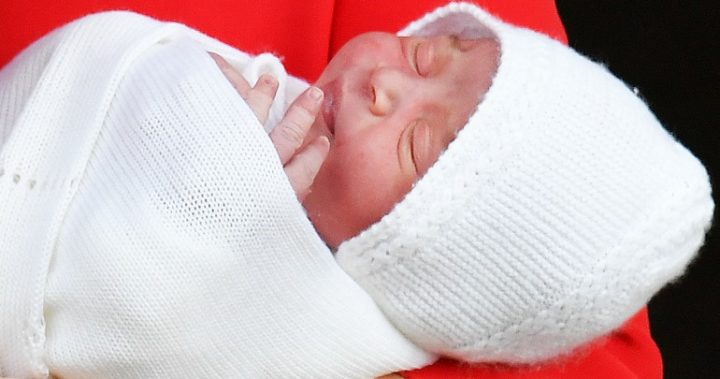
The royal family has finally revealed their newest addition’s name, but it’s caused a little confusion due to its somewhat tricky pronunciation.
The Palace said in an Instagram post on Friday that “the Duke and Duchess of Cambridge are delighted to announce that they have named their son Louis Arthur Charles”.
“The baby will be known as His Royal Highness Prince Louis of Cambridge,” the Instagram post added.
While there was much excitement from the public, having waited four days to hear the news, many people were caught out pronouncing the name incorrectly right off the bat.
https://www.instagram.com/p/BiEdt8tgxso/?taken-by=kensingtonroyal
The name Louis is of French origin and unlike the English version of the name, the ‘S’ is not pronounced at the end.
So how do you say it correctly? The right way is “Lu-ee”.
The confusion is understandable considering there are two common spellings of the name, one being Louis, and the other Lewis. Lewis is often used in America and Australia and always pronounces the ‘S’ at the end.
Prince Louis’ name takes its cue from decades of royal history, though much of it from the now-defunct French royal family rather than the English.
France had 17 King Louis (16 before the French Revolution, and one after) before the collapse of the empire. However, there’s still plenty of English royal ancestry associated with the name.
Louis is Prince William and Prince George’s middle name, and is also tacked onto the end of the Queen’s youngest son, Prince Edward’s name.
Most likely though, the little prince’s new moniker is a nod to Earl Louis Mountbatten, uncle to Prince Philip and great-uncle and beloved mentor to Prince Charles.
The Earl, fondly known as Dickie to his family and close friends, was credited with organising the visit of King George VI and then 13-year-old Princess Elizabeth to Dartmouth Royal Naval College on 22 July, 1939, where Lilibet met her future husband Prince Philip of Greece.
Mountbatten’s life was greatly publicised due to his standing as a naval officer in World War II and his stint as viceroy of India during the British withdrawal in 1947. But no event was more greatly publicised than that of his shocking death in 1979, when he was murdered by IRA terrorists while holidaying off the coast of County Sligo, Ireland, near his family holiday home at Classiebawn Castle.
Mountbatten’s boat was blown up in the attack, killing the Earl and his 14‐year‐old grandson and a 15-year‐old passenger. Four others were severely injured in the attack.
Prince Charles was devastated by Mountbatten’s death and when visiting the area in 2015, spoke of the personal loss he and his family experienced.
“At the time I could not imagine how we would come to terms with the anguish of such a deep loss… For me, Lord Mountbatten represented the grandfather I never had,” he said. “So – it seemed as if the foundations of all we held dear in life had been torn apart irreparably.”
Despite his namesake’s tragic end, Prince Louis will no doubt carry the family name with pride and lead a new generation of Louis in the royal family.





 Proudly Australian owned and operated