


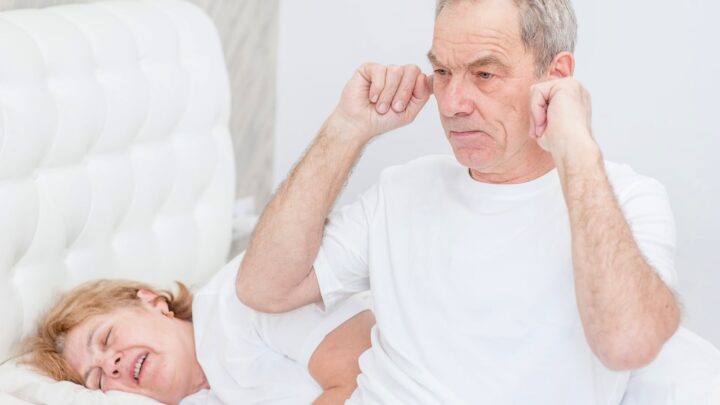
I always thought “sleeping next to your snoring wife” would mean a quiet snore now and then, the kind you could pretend is the wind, or the cat … not your neighbour practising bagpipes. My partner, although small in stature, snores like a chainsaw with attitude, and I find myself lying awake wondering if our bedroom is actually a forest harbouring wild boars. I’ve tried earplugs, reboots of Netflix (because louder movies mask the noise), and even considering sleeping outside under the stars. But here we are, still in the same bed, still listening to night-splitters.
Then I stumbled across a bunch of recent research and gadgets and realised maybe there are things beyond telling her to sleep in another room (which, frankly, defeats some romantic ideals). So, I started investigating what might actually help her – and us.
Why snoring happens (And why it’s more than just annoying)
They say snoring is when the muscles in your tongue, throat, soft palate relax in sleep, letting the airway narrow so air passing through causes vibration or collisions. If it narrows enough, we might be talking obstructive sleep apnoea (OSA), which is a bigger health risk: interrupted breathing, daytime fatigue, even cardiovascular risks. (Pretty serious, especially if the snoring is loud or frequent).
Certain positions (sleeping on back), alcohol, overweight or fat around the neck, loss of muscle tone (age, menopause etc.), nasal blockages, even alcohol or “just one wine” can make it worse. Also, if you have tongue collapsing backwards or throat walls that lose tone.
What Types of Solutions Are Out There
Here are the main routes people take. Some are low cost, others more involved. What works depends on why the snoring is happening, how bad it is, how bothered the snorer and the partner are, and whether there’s OSA.
Lifestyle / positional / behavioural fixes
Losing weight if overweight, reducing alcohol especially close to bedtime.
Sleeping on your side rather than your back. Sometimes special pillows or positional therapy (vibrating devices or belts) help train people to stay off their back.
Clearing nasal passages (if the nose is blocked): nasal sprays, allergy treatment, nasal dilators, nasal strips.
Oral appliances / mouthpieces
Mandibular Advancement Devices (MADs). These push the lower jaw forward a bit, which pulls the tongue forward, so it doesn’t flop back and block the throat.
Tongue stabilisation devices (that hold the tongue forward). These need a good fit; some people find them uncomfortable, or get jaw ache or drooling early on, but many adapt.
CPAP machines
If it’s OSA (especially moderate to severe), CPAP (Continuous Positive Airway Pressure) is the gold standard. You wear a mask covering nose or nose and mouth, air pressure holds airway open. Very effective, but many people dislike masks, feel claustrophobic, find cleaning/tubing/power inconvenient. Compliance can be low over time.
Novel / emerging tech
Devices that stimulate throat/tongue muscles via electrical impulses.
Smart pillows.
Non-contact sensors / feedback systems.
Chin straps or chin support.
Zeus: A New Kid in the Bed
One device I came across in my digging is Zeus: developed over 15 years by sleep and respiration researchers at Guy’s & St Thomas’ and King’s College London. It uses gentle transcutaneous electrical stimulation (through a padsticks under the chin) to stimulate the genioglossus muscle (the tongue-holding muscle) to keep it from collapsing backwards.
Some key points:
Trials so far: a few clinical trials show promise. In one, 82 per cent of participants said their snoring reduced. In another, people reported better sleep.
It’s non-invasive (sticky pad under the chin and device) rather than something in the mouth or a mask. That’s a big draw if you hate mouthpieces or masks.
It doesn’t yet appear to be universally approved or in full medical device status everywhere; so, if there’s real OSA, you should check with a GP or sleep specialist.
From what I gathered, it might help if her snoring is of the type caused by tongue collapse or throat walls floppiness rather than purely nasal blockage. Also, as with many devices, initial nights may be hit-and-miss: adhesion, correct positioning, getting used to the buzz or sensation.
What people in Australia are buying, and What devices are top rated
Because Zeus is newish (mostly UK) and might not yet be widely available here, I checked what Australian snoring device markets have as the usual best sellers, and what seems to work well based on reviews.
Here are several snoring devices or types that Australians are using/buying, often with good reviews. Some may not be directly comparable to Zeus, but they give ideas of trade-offs.
Some specific brands/devices that are often listed among the “best anti-snoring solutions Australia”:
VitalSleep – a mandibular advancement device.
Good Morning Snore Solution – which uses a distinctive design (tongue stabilisation style) rather than simply jaw forward.
Ripsnore – another MAD device, often made/delivered locally (so shipping etc easier).
Smart Nora – this is a “non-contact” device; a pillow insert or sensor system that reacts to snoring (vibration etc). It’s more premium.
Also, CHOICE (an independent consumer advice group in Australia) warns that many anti-snoring gadgets are oversold; some are more hype than help. It suggests looking for devices with clinical evidence, TGA or equivalent regulatory oversight, comfortable fit, and low risk.
What I’d try if I were you (with the snorer in the bed)
Given what I now know, and given her particular style of chainsaw impersonation, here’s a plan I’d test:
Get assessed – make sure it isn’t moderate/severe OSA. If it is, CPAP or doctor-supervised treatment is likely needed. If mild or positional or muscle collapse is dominant, then other devices might help.
Track snoring to get a pattern: nights she snores worst (after alcohol? on back? nasal congestion? etc.). This helps pick what type of device is likely to help.
Start with non-mouth, low barrier options
Nasal strips/dilators if there’s nasal congestion or blockage. Perhaps also ensure sleep environment is good (air humidified, allergies controlled).
Positional therapy: maybe a positional device or pillow that encourages side-sleeping.
Try a mouthpiece/MAD if jaw/tongue collapse seems big – find one with good fit, adjustable, ideally from a provider with complimentary reviews in Australia. Perhaps try VitalSleep, Ripsnore.
If those don’t help enough, consider newer tech like Zeus – since it doesn’t require a mask, and if the cause is tongue collapse, it might be a good candidate. But maybe try a trial period; see if you can get it (or equivalent) in Australia, check cost, shipping, pads, replacements.
Lifestyle tweaks – avoid alcohol before bed; ensure she doesn’t sleep on her back; weight management if needed; good rest schedule; reduce snoring triggers (smoking, nasal allergies).
So, is there hope that this snorer can become a quieter, gentler sleeper? I think yes – but not one silver bullet. It’s about matching the cause of her snoring, testing some of the good-evidence devices, being patient while adjusting, and having both of you committed (you for endurance, she perhaps for discomfort early on).
If this were a novel, I would say: in a week or two, maybe she wakes up one morning and the room is weirdly quiet. You think you’ve been transported back to your pre‐snoring days. And that, my friend, is romantic.





 Proudly Australian owned and operated