
Merv Hughes at 65: No longer bulletproof


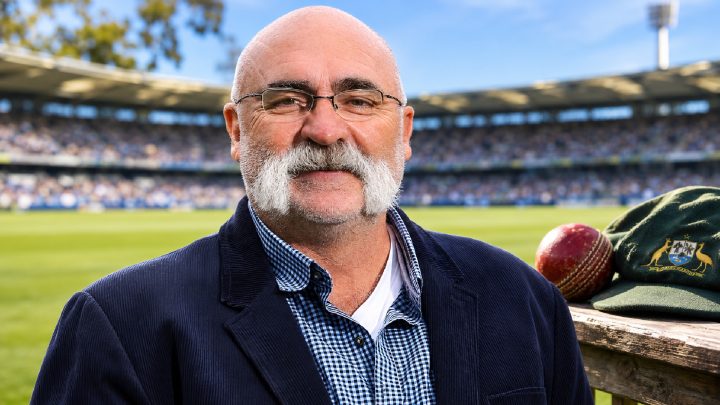
Australian cricket legend Merv Hughes talks to Starts at 60 about growing older, the stubbornness of Aussie blokes, a virus that floored him and his dream of landing the ultimate catch.
MERV Hughes has a theory about getting older.
“I’ve always said the definition of old age is when the mind is willing and the body is no longer capable,” he says.
And having celebrated his 65th birthday on Monday, the former Australian fast bowler has another theory about blokes his age.
“The old adage is that as we get older, we should get wiser. But some people get more stubborn,” he says.
It’s a lesson Hughes learnt the hard way last year when a respiratory virus left him struggling to muster enough energy to walk from his bed to the toilet.
When ‘she’ll be right’ doesn’t cut it
During his cricket career, Hughes never mucked around with injuries.
“If I had a crook ankle or a tight hamstring, I’d get it looked at straight away,” he tells Starts at 60.
“You didn’t want it to get any worse or lead to referred pain.”
Yet when he returned from the West Indies last year feeling rundown, he put it down to jet lag. A few sniffles developed into a cough and chest discomfort, but he figured a couple of days’ rest would sort him out.
But it didn’t.
“About day six or seven, I just couldn’t get out of bed,” he says.
“I had aches and pains all over, and I was coughing. It felt like I’d been thrown into a tumble dryer. My whole body ached.
“It took so much effort just to get out of bed and get to the toilet, and that’s not far from my bed. You think, ‘What is this?’”
A COVID test came back negative. Hughes subsequently discovered he had respiratory syncytial virus, better known as RSV – an illness he’d never heard of.
He recalls spending five days in bed, followed by a recovery that stretched over four to six weeks.
“It just lingered. If you did anything physical, it really drained you.”
Getting through our thick skulls
So why are so many Australian men reluctant to admit something is wrong? Hughes reckons it starts in childhood.
“How many times did you hear as a kid, ‘Toughen up’? When we played junior footy, if you got a cork thigh, you’d run it out.”
He reckons that attitude has stayed with many men well into adulthood.
“A big thing for blokes of our generation is feeling that if you talk to a mate about how you’re feeling, people take it as a sign of weakness,” he says.
“But now, if you’ve got someone to talk to, talk to them. If you’ve got a good mate you can rely on, talk to him.”
And if it’s a medical issue, he says, talk to a doctor.
“It’s pretty simple and easy to write down and think about, but it’s hard to get through our thick skulls at times, isn’t it?”
Hughes believes men have come a long way in their understanding of mental health, too, recalling the days when even a bad back was treated with suspicion.
“Back in the ’70s and ’80s, if someone said, ‘I’ve got a crook back,’ people would say, ‘Oh yeah, sure you have,’ he says. “That was the phase we went through with mental illness: ‘Get over it. It’s not that bad.’
“The more you learn about things, the more you realise you’ve got to get on the front foot and do something about them.”
As for the wives and partners constantly reminding their other halves to book a medical appointment, Hughes has a message.
“Just read this. Tell your husbands to read this!”
He jokes that women due for an annual check-up will have it done at nine months, while men might stretch theirs out to two years. These days, Hughes visits his doctor every six to eight months to keep tabs on his blood pressure and blood tests.
The virus grandparents need to know about
While RSV is often associated with babies and young children, Melbourne GP and honorary clinical associate professor Ralph Audehm says older Australians should be aware of their own vulnerability.
“As we age our immune system is less effective and RSV can cause serious illness especially if people already have conditions such as diabetes, heart disease and lung issues such as COPD and asthma,” he explains.
And with Christmas approaching, there’s a timely reminder for grandparents.
“The grandchildren can bring RSV to the grandparents and how often don’t they have a snotty nose.”
New YouGov research commissioned by GSK Australia, involving 1,174 Australians aged 65 and over, found 76 per cent recognised their age as a risk factor for serious RSV illness, yet only 36 per cent considered themselves personally at moderate or high risk.
Audehm says respiratory infections can also aggravate existing health problems, triggering asthma attacks, worsening chronic lung disease and raising blood sugar levels in people with diabetes.
RSV symptoms can include coughing, congestion, fatigue, headaches, wheezing and shortness of breath. Anyone experiencing severe breathing difficulties or persistent chest pain should call triple zero (000). RSV vaccination is available free under the National Immunisation Program for eligible adults aged 75 and over and Aboriginal and Torres Strait Islander adults aged 60 and over.
Vaccination is also recommended for people aged 60 and over with certain medical risk factors, while other adults aged 60 to 74 and those aged 50 to 59 with relevant medical conditions can consider vaccination. Those who don’t qualify for a funded vaccine should speak to their GP about their individual risk and the cost of private vaccination.
Slowing down, but not stopping
Hughes made a New Year’s resolution a few years ago to slow down. He’s largely stuck to it, although travel remains a big part of his life.
He still enjoys getting out for a four or five-kilometre walk and pays closer attention to his diet when he’s feeling sluggish, but he’s learnt that the exercise routines of his twenties aren’t necessarily suited to his sixties.
“Being more active for me now means going for a walk, not going for a 10-kilometre run,” he says.
“You’ve just got to ease into it.”
These days, his three adult children are his priority.
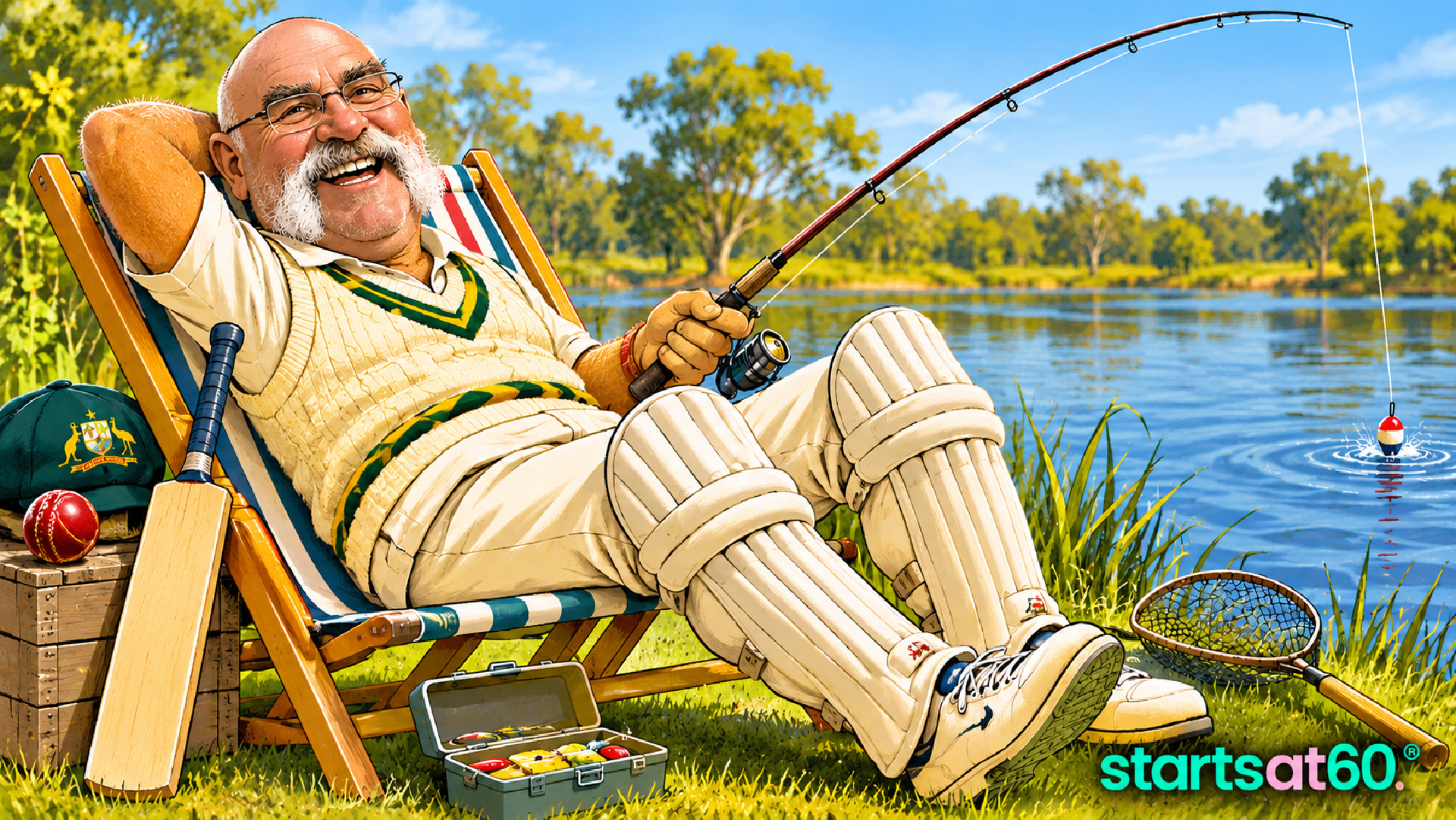
But there are two fish he desperately wants to catch.
“Probably what I want to achieve now is catching a metre cod and a metre barramundi,” he says.
“There’s all this fishing gear – all the gear, no idea – and the dream of catching that trophy fish. I’ve just got to spend more time on the water. I’ve been telling my wife that.”
Born in Euroa, Hughes has fond memories of fishing for redfin around Werribee and trying his luck for bream, mullet and flathead off the pier at Werribee South.
“My enthusiasm levels are still high, but my results are still pretty low,” he says, laughing.
He reckons fishing and Test cricket have more in common than people might think. Long periods of inactivity, patience, concentration and the need to be ready when something finally happens.
There’s one important difference, though, for the famously fiery former fast bowler.
“You can’t get abusive towards a fish.”





 Proudly Australian owned and operated
Comments 0
Join the conversation. Comments are reviewed before they appear.
Be the first to comment.
Join the conversation
Tell us who you are to post a comment. We'll remember you next time.