
Louvre heist: What we know about the Crown Jewel theft


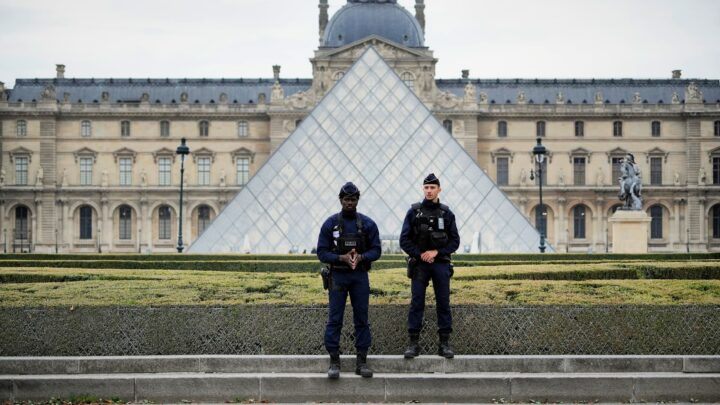
It took less than eight minutes to swipe centuries of French history – and leave a nation in shock. In a heist straight out of a Hollywood script (minus the jazz soundtrack), thieves scaled the Louvre, smashed their way into a jewel display, and made off with imperial bling once worn by actual empresses. The loot? An estimated $A157 million worth of tiaras, emeralds, sapphires and brooches – and that’s not even counting the historical value. French officials insist the museum’s security “worked,” though the jewels seem to have missed that memo. As the hunt for the high-end burglars continues, the real mystery remains: was this a meticulously planned art crime… or just an extremely well-timed elevator ride?
The Scene is Set
On the morning of Sunday 19 October 2025, at around 9:30 am, in the expansive and crowded Louvre Museum, four masked individuals launched what French authorities are calling a daring daylight robbery. Their target: the museum’s crown jewel collection housed in the Galerie d’Apollon.
The Galerie d’Apollon, a display area for the last remaining pieces of the French Crown Jewels, is rich in imperial and royal history.
The Break‑In
The thieves didn’t slip in quietly. They used a basket lift or crane to reach a first‑floor window facing the Seine, accessed from the façade of the Louvre. Once inside, they smashed through display cases in the Apollo Gallery – alarmed and within just minutes they were gone. The whole operation is reported to have lasted less than eight minutes, even under four minutes inside the gallery. They fled on scooters, leaving behind one of the crown jewels – the crown of Empress Eugénie – which was found damaged near the museum.
The Stolen Loot
Eight (possibly nine) pieces of extraordinary historic jewellery were taken. Among them:
A sapphire tiara, necklace and single earring from the set linked to Queens Marie‑Amélie and Hortense.
An emerald necklace and matching earrings from the set of Empress Marie‑Louise (the second wife of Napoleon Bonaparte) given in 1810.
A reliquary brooch, once linked to French monarchs and containing historic diamonds originally used by Louis XIV.
The diadem (tiara) of Empress Eugénie, which alone contains hundreds of diamonds and pearls.
The crown of Empress Eugénie (though left behind damaged).
Though a monetary value has been estimated at around €88 million (≈ $A157 million) by the Paris prosecutor’s office, the authorities emphasise that the historical, cultural and heritage value to France is far greater and essentially “inestimable”.
The Investigation and Security Questions
Laure Beccuau, the Paris prosecutor leading the case, has deployed about 100 investigators to hunt the suspects and locate the jewels. She warned the thieves that if they disassemble the jewels, they will forfeit the entire value and the historical importance will be lost.
Meanwhile, the French Culture Minister, Rachida Dati, defended the Louvre’s security apparatus, stating that it “did not fail” and that alarms triggered correctly. Yet critics say that the speed and audacity of the theft spotlight major vulnerabilities.
The Why and What Next
The gallery robbed was not just any display – it is the very symbol of imperial France, displaying jewels worn by royals, empresses and monarchs, artifacts that link back to French history, monarchy, empire and the identity of the nation.
Given that the thieves struck in broad daylight, used heavy equipment, and executed with precision suggests a professionally planned operation rather than a spur‑of‑the‑moment smash‑and‑grab. Some investigators suspect the jewels may be separated, recut and sold in pieces – destroying their historical value entirely.
In Summary
What happened: A rapid, expertly executed heist at the Louvre took eight historic pieces of French crown jewellery in under ten minutes.
Why it matters: These jewels are far more than precious gems – they carry centuries of French history and heritage.
Where things stand: Authorities are in full pursuit, but the possibility remains that the jewels may be dismantled, losing their identity forever.
The biggest question: Will the items be recovered? And if they are not intact, will their cultural and historic value survive?





 Proudly Australian owned and operated
Comments 0
Join the conversation. Comments are reviewed before they appear.
Be the first to comment.
Join the conversation
Tell us who you are to post a comment. We'll remember you next time.