
Hospital handbasins may be spreading dangerous superbugs


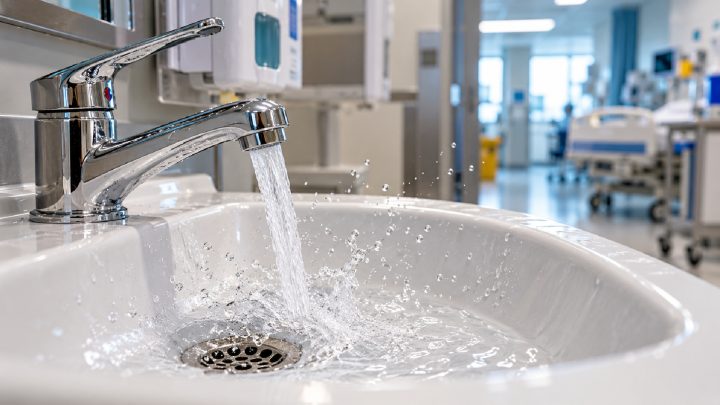
Handbasins are supposed to protect hospital patients from infection, but new Australian research warns that poorly designed sinks could help spread dangerous, drug-resistant bacteria, putting vulnerable patients at risk.
The humble handbasin is one of the most important tools in a hospital’s fight against infection but Australian researchers have discovered that the very sinks healthcare workers use to wash their hands could also help dangerous superbugs spread.
A new review by Flinders University has examined hospital handbasin design guidelines across 39 countries, uncovering significant inconsistencies and gaps in the scientific evidence used to prevent contamination.
The findings, published in the Journal of Hospital Infection, raise concerns for vulnerable patients, including older Australians, people with weakened immune systems and those recovering from surgery.
The problem can begin with something as simple as splashing water.
Microbes can accumulate in taps and drains, forming bacterial communities known as biofilms. When running water strikes contaminated surfaces, tiny droplets can carry harmful bacteria onto nearby equipment and surfaces.
Lead researcher Mikaela Todarello, a PhD candidate in Environmental Health at Flinders University, says handbasin design deserves greater attention.
“Handbasins need to support effective handwashing without creating avoidable opportunities for pathogens to spread.
“Microbes can build up in taps and drains. When water hits contaminated surfaces, splashing can carry them onto nearby equipment and surfaces.”

Four problems hiding in hospital sinks
The researchers identified several design features that may increase contamination risks:
- Flat surfaces: Allow water to pool, potentially encouraging bacterial growth and splashing.
- Shallow bowls: Can disperse tiny airborne droplets further beyond the sink.
- Poorly positioned drains: Water striking a drain directly beneath the tap can generate contaminated droplets.
- Water flow: Higher pressure and unsuitable basin slopes can increase splashing.
Of particular concern are drug-resistant bacteria such as carbapenemase-producing Enterobacterales (CPE), which can cause infections that are difficult to treat with commonly used antibiotics.
These infections can be especially serious for older patients and those already battling illness.
Better design could protect patients
Flinders University environmental health expert Professor Harriet Whiley says improved engineering could strengthen hospital infection prevention.
“We ask healthcare workers to wash their hands to protect patients. We should make sure the handbasins they use are designed with the same goal in mind,” she says.
“Better engineering could reduce splashing, limit biofilm buildup and prevent contamination from spreading.”
The researchers stress that more real-world studies are needed to determine which designs provide the greatest protection.
Importantly, the findings do not suggest handwashing is unsafe. Rather, they highlight how even ordinary hospital fixtures deserve scrutiny when protecting vulnerable patients.
The study was published in the Journal of Hospital Infection.





 Proudly Australian owned and operated
Comments 0
Join the conversation. Comments are reviewed before they appear.
Be the first to comment.
Join the conversation
Tell us who you are to post a comment. We'll remember you next time.