
Almost 5 million Aussies say they’ve lost money to a scam


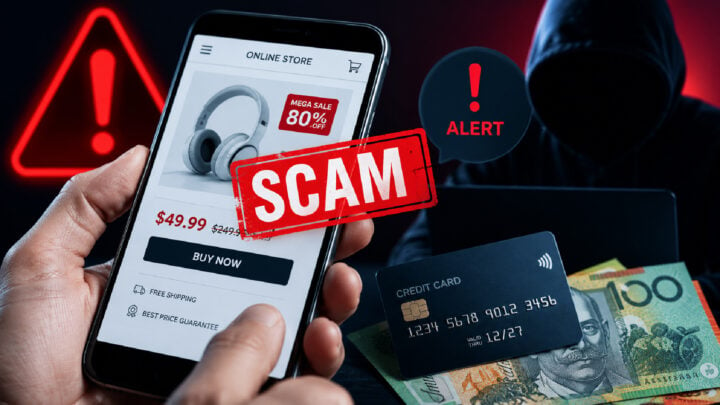
Almost five million Australians say they have lost money to scammers, with new research suggesting online shopping is one of the most common ways people are being caught, and if you think you’re too financially savvy to fall for one there’s another sobering warning: even the personal finance expert behind the research admits she’s been scammed.
Research from Finder found 23 per cent of Australians surveyed had lost money to a scam and Finder estimates that equates to about 4.9 million people nationally.
The survey of 1010 Australians, conducted in May, found online shopping scams were the most commonly reported, with 10 per cent of respondents saying they had lost money while shopping online.
Finder estimates that represents more than 2.1 million Australians caught by fake retailers, bogus products or fraudulent online sellers.
It’s getting harder to tell what’s real
Sarah Megginson, personal finance expert at Finder, said scammers were becoming increasingly convincing.
“Online shopping scams are even more dangerous because they often look exactly like legitimate stores,” Megginson said.
Scammers can create professional-looking websites, advertise heavily on social media and put seemingly legitimate products and special offers directly in front of consumers. Online shopping, however, is only part of the problem.
Finder’s research found 5 per cent of respondents said they had lost money to a cryptocurrency scam, while 4 per cent reported being caught by an investment or property-related scam.
Three per cent reported losing money through insurance scams, superannuation or SMSF scams, impersonation scams and romance scams.
The categories are not necessarily mutually exclusive, meaning some respondents may have experienced more than one type of scam.
The findings come during Scams Awareness Week, which runs from August 24 to 28.
Official figures underline just how much money is at stake. The National Anti-Scam Centre reported Australians made more than 481,000 scam reports across major reporting bodies during 2025, with combined reported losses of $2.18 billion.
Even a finance expert was caught
Perhaps one of the most telling parts of the Finder research is Megginson’s own admission that despite spending two decades working in finance, she has fallen victim herself.
“I’m a personal finance expert, I’ve worked in finance for two decades, and even I’ve been scammed before — no one is immune,” she said.
That admission also touches on another problem: embarrassment. People who have been conned can be reluctant to tell family or friends what happened, or even report the crime, because they feel they should have spotted it.
But many of today’s scams bear little resemblance to the badly written emails and obvious get-rich-quick schemes people might associate with fraud.
Scammers can impersonate trusted organisations or people, create convincing websites and use emotion, urgency and fear to push someone into acting before they have time to think.
“The reality is that scammers are professional criminals who exploit trust and emotion,” Megginson said.
“Anyone can fall victim if they catch you at the wrong moment.”
The simple rule: slow down
One of the most useful protections may also be one of the simplest: don’t let someone else dictate how quickly you make a financial decision.
Such things as a countdown timer is running, the bargain is about to disappear, your account supposedly needs immediate attention, or even a family member suddenly needs money.
That sense of urgency should be a reason to stop, not speed up.
Megginson recommends checking independent reviews and verifying an unfamiliar retailer before buying from it.
An expensive or luxury product being sold at a fraction of its usual price should also raise questions and, where possible, consumers should consider payment methods that provide a way to dispute a transaction if something goes wrong.
“Also be mindful of pressure tactics and countdowns — they’re designed to make you rush your purchase,” Megginson said.
Some banks also offer scam protection tools that can flag suspicious transactions or block potentially fraudulent payments, so it is worth checking what protections are available through your own accounts.
Stop before you click, buy or transfer
Scammers succeed when they can make people act before they think.
So if a message, phone call, website or supposed investment opportunity suddenly demands money, personal information or immediate action, give yourself permission to stop.
Don’t use the phone number or link supplied by the person contacting you. Find the organisation independently through its official website, app or a trusted phone number and check whether the request is genuine.
“Slow down, verify the details and don’t let anyone pressure you into sending money,” Megginson said.
With millions of Australians saying they have already been caught, the lesson isn’t that victims should have known better.
It’s that scammers have become very good at what they do.
And when somebody wants your money right now, taking another minute to check could be one of the most valuable things you do.
Also check out The Five Online Habits That Reduce Scam Risk





 Proudly Australian owned and operated
Comments 1
Join the conversation. Comments are reviewed before they appear.
It's easy to paste an unknown URL into AI and ask for an evaluation before committing to any transaction. AI is very good at doing this research in a matter of seconds.
Join the conversation
Tell us who you are to post a comment. We'll remember you next time.