
AI-powered travel scams are on the rise



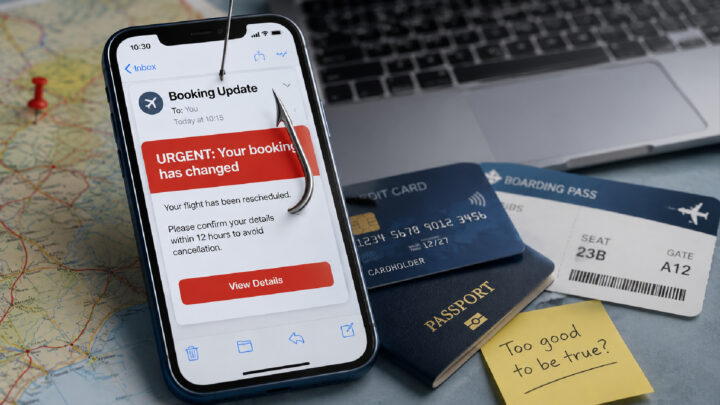
Australians are being warned to think twice before clicking that hotel confirmation email or airline update, as new research suggests travel scams are becoming more sophisticated — and harder to spot — thanks to artificial intelligence.
Nearly two in five travellers say they have encountered a travel-related scam, while more than four in 10 victims lost money, according to research commissioned by cybersecurity company McAfee.
The findings come as Australians prepare for the busy mid-year travel season and face rising holiday costs, creating what experts say is a perfect environment for scammers.
Of those who fell victim to a scam, 43 per cent lost money, with more than half reporting losses of more than $250.
AI is making scams harder to detect
Travel scams are no longer limited to poorly written emails riddled with spelling mistakes.
According to the research, 69 per cent of Australians believe artificial intelligence is making scams harder to identify, with criminals increasingly using AI tools to create convincing messages, fake websites and realistic customer service communications.
McAfee APJ Head Tyler McGee said scammers are becoming more sophisticated in the way they target travellers.
“The most common scams are fake booking confirmations and travel updates, fake travel deals or promotions, and manipulated or misleading accommodation listings,” McGee said.
“These scams work because they mimic legitimate communications from airlines or hotels and often arrive at exactly the moment travellers are expecting updates, making them especially difficult to spot.”
The research also found travel review platform Tripadvisor was the most frequently impersonated travel brand, followed by other major booking platforms including Expedia, Kayak and Booking.com.
Why travellers are ignoring warning signs
While many Australians are aware of scam risks, the pressure to secure a holiday bargain can cloud judgement.
About 92 per cent of travellers said they feel pressure to book quickly, while 39 per cent admitted they had ignored warning signs because they were worried about missing out on a deal.
At the same time, 81 per cent believe travel costs are higher than they were a year ago, increasing the temptation to jump on heavily discounted offers.
“Rising travel costs are motivating travellers to chase discounts or limited-time offers,” McGee said.
“This makes them more susceptible to scams that create a sense of urgency or exclusivity.”
Check out Scam Losses Drop But Aussies Still Lose 2Billion
Red flags every traveller should know
Travellers should be cautious of urgent emails or text messages claiming a booking has changed, been cancelled, or requires an immediate payment. Unsolicited links and QR codes should also raise suspicion.
Instead of clicking links in messages, people are advised to navigate directly to an airline, hotel or booking provider’s official website to verify information, while accommodation listings featuring unusually low prices, overly polished images or requests to transfer money outside official payment systems can also be warning signs.
If travellers discover they have been scammed, experts recommend contacting their bank or payment provider immediately, changing passwords and closely monitoring accounts for suspicious activity.
With scammers becoming increasingly sophisticated, taking a few extra minutes to verify a deal could save travellers hundreds of dollars — and prevent a dream holiday from turning into a costly nightmare.





 Proudly Australian owned and operated
Comments 1
Join the conversation. Comments are reviewed before they appear.
The legitimate travel operators should have fixed prices and fixed agendas . what is the point of sales and pop up agendas .this is the food and drink of scammers . But wait …the hotels are complicit , why are the prices this on one site and that if you go through another site .
Join the conversation
Tell us who you are to post a comment. We'll remember you next time.