
5 Warning Signs of a Blood Clot You Should Never Ignore After 60


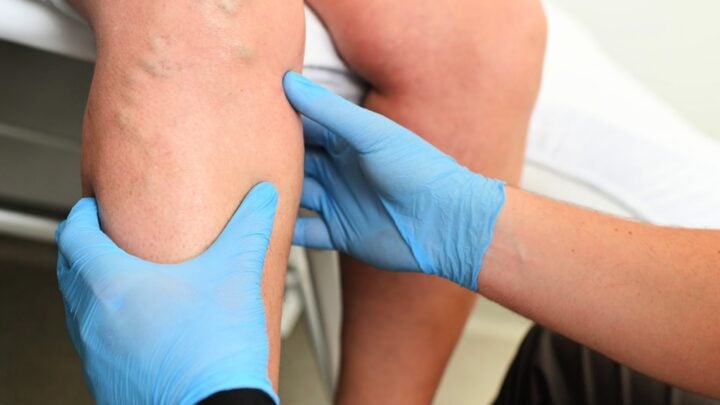
Sudden leg pain or swelling is easy to dismiss as a pulled muscle or simply a sign of getting older. But doctors warn that unexplained leg symptoms, particularly without any obvious injury, can sometimes signal deep vein thrombosis (DVT), a blood clot that requires prompt medical attention.
Why this matters more as we age
Research consistently shows that the risk of developing a blood clot rises sharply with age. International studies have found the incidence of pulmonary embolism climbs from roughly 0.1 cases per 1,000 people a year in your early 40s, to 5.5 cases per 1,000 a year by your early 80s, a nearly 20-fold increase. Closer to home, a community-based Australian study conducted in Perth identified 140 cases of venous thromboembolism, comprising both DVT and pulmonary embolism, within a single 13-month period in a population of just over 150,000 people, underlining that this is a genuine, ongoing health issue for Australians, not a rare occurrence.
What is DVT?
Deep vein thrombosis occurs when a blood clot forms in a deep vein, most commonly in the leg. Left untreated, part of that clot can break away and travel to the lungs, causing a pulmonary embolism (PE), a potentially life-threatening medical emergency.
The 5 warning signs of a blood clot
According to vascular specialists, the most common signs of DVT include:
Swelling in one leg — particularly when it affects only one side, rather than both
Unexplained pain or tenderness — often described as aching, cramping or soreness in the calf or thigh
Warmth in the affected area — the skin over the clot may feel noticeably warmer than the surrounding area
Redness or skin discolouration — the affected leg may appear red, or take on a bluish or purplish tinge
Sudden changes without an obvious explanation — symptoms appearing without any clear injury, strain or cause
It’s worth noting that these symptoms can feel remarkably similar to a simple pulled muscle, which is exactly why unexplained changes shouldn’t automatically be dismissed as nothing serious. It’s also important to know that some people with DVT experience few or no noticeable symptoms at all, so symptoms alone can’t confirm or rule out a clot. A healthcare professional needs to properly assess your symptoms and determine whether further testing, such as an ultrasound, is required.
When a blood clot becomes a medical emergency
If part of a blood clot travels to the lungs, it can cause a pulmonary embolism, and this requires immediate emergency medical attention. Warning signs of a PE can include:
Sudden difficulty breathing
Chest pain
A rapid or irregular heartbeat
Coughing up blood
Lightheadedness or fainting
If you or someone you’re with experiences any of these symptoms, call 000 immediately. Don’t wait to see if symptoms improve on their own.
What to do if you notice DVT symptoms
If one leg suddenly becomes swollen, painful, warm or discoloured without a clear reason, don’t wait it out. Book an appointment with your GP as soon as possible, or present to your nearest emergency department if symptoms are severe or worsening quickly. Early diagnosis and treatment genuinely make a difference to outcomes, and a simple ultrasound is often all that’s needed to confirm or rule out a clot.
Frequently Asked Questions
What does a blood clot in the leg actually feel like? A blood clot in the leg often feels like aching, cramping, soreness or tenderness in the calf or thigh, frequently in just one leg. It can feel very similar to a pulled muscle, which is why unexplained symptoms are worth having checked rather than assumed.
Can you have DVT with no symptoms at all? Yes. Some people with deep vein thrombosis experience minimal or no noticeable symptoms, which is one of the reasons doctors recommend seeking assessment for any unexplained, one-sided leg swelling or pain, rather than waiting for more obvious signs.
What’s the difference between DVT and a pulmonary embolism? DVT is a blood clot that forms in a deep vein, usually in the leg. A pulmonary embolism occurs when part of that clot breaks free and travels to the lungs, which is a medical emergency requiring immediate treatment.
Who is most at risk of developing DVT? Risk increases significantly with age, and is also higher for people who are less mobile for extended periods, such as after surgery or during long-haul travel, as well as those with certain underlying health conditions. Speak with your GP about your individual risk factors, particularly if you’re over 60.
This article is general in nature and isn’t personalised medical advice. If you’re experiencing symptoms of DVT or a suspected pulmonary embolism, seek medical attention promptly, or call 000 in an emergency.





 Proudly Australian owned and operated
Comments 0
Join the conversation. Comments are reviewed before they appear.
Be the first to comment.
Join the conversation
Tell us who you are to post a comment. We'll remember you next time.