
More men are taking up sewing in a cultural shift


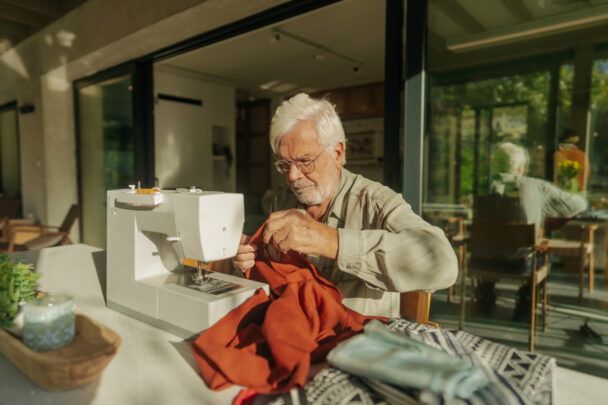
Traditional misnomers such as sewing being a ‘girl’s thing’ are being increasingly challenged, with researchers identifying a growing trend of men picking up the needle and thread and tackling long held and outdated perceptions.
The result, research reports show, is a broader cultural shift around masculinity, creativity and sustainability.
The trend gained momentum during the pandemic, when lockdowns prompted a resurgence in home-based skills such as sewing and knitting. While restrictions have ended, participation among men has continued to grow, including in regional and rural Australia where social expectations around masculinity can sometimes be more pronounced.
Researchers say the rise does not reflect what has been described as the “performative male” – in other words, men attempting to appear non-masculine for social or romantic approval. Instead, the evidence points to a genuine subculture of men interested in fashion, craftsmanship and self-expression.
Men’s sewing groups have emerged from the proverbial shadows around Australia and the world, many framed around community building and mental health support. Younger participants, particularly from Gen Z, are embracing the ability to personalise clothing, repair garments and customise wardrobes at low cost.
Rather than relying on traditional fashion hierarchies or runway trends, men of all ages are sharing techniques and finished pieces on platforms such as TikTok and Instagram, encouraging peer learning and wider participation. The movement has also been linked to growing awareness of sustainability, overconsumption and the environmental impact of fast fashion.
Sewing has also found its way onto television, with shows such as The Great British Sewing Bee now 11 seasons strong and counting, each featuring many of the country’s most talented male and female amateur sewers.
Tailoring influences
While change is being noticed, sewing remains commonly associated with women, even though tailoring and garment construction have long been accepted male professions in many cultures. In countries including Pakistan, South Korea, Italy and Hong Kong, men have historically dominated tailoring trades.
In Britain, London’s Savile Row has been home to men’s tailoring houses for almost two centuries, dressing royalty and public figures and launching the careers of designers such as Alexander McQueen.
Australia also has examples of men shaping clothing production. Rip Curl founders Doug Warbrick and Brian Singer turned to garment making through surf culture, while designers including Christopher Esber, Martin Grant and Toni Maticevski have drawn on complex tailoring traditions in their work.
How did sewing become “women’s work” anyway?
Australia’s fashion industry has been strongly shaped by women’s labour, with women today making up about 77% of the sector. From the late 19th century and into the early 20th century, manufacturers used a bundling system that sent garment pieces to home-based sewers, who were typically paid per item.
During World War II, clothing rations and labour shortages led many women to learn dressmaking, often producing clothes for their families. Sewing was framed as simple work suitable for women, a characterisation historians note drastically undervalued the skill and complexity involved.
Local manufacturing and home sewing declined from the 1970s to the 1990s following tariff reductions and increased competition from low-cost global fashion.
How to get started
Those interested in learning to sew do not need advanced equipment. A basic machine capable of sewing straight lines is sufficient, with beginners encouraged to start with simple up-cycling projects before attempting full garments.
In-person classes are available in some areas, but online platforms have become a major learning tool. Surveys indicate 48% of Gen Z have taught themselves a new skill through TikTok and 42% through YouTube. Check out accounts such as @CorneliusQuiring, @glory.allan and @zoehongteaches for beginner guidance.
While few will go on to emulate designers like Christian Dior, advocates say sewing offers practical benefits, creative satisfaction and a chance to rethink long-standing ideas about gender and work.





 Proudly Australian owned and operated
Comments 0
Join the conversation. Comments are reviewed before they appear.
Be the first to comment.
Join the conversation
Tell us who you are to post a comment. We'll remember you next time.