


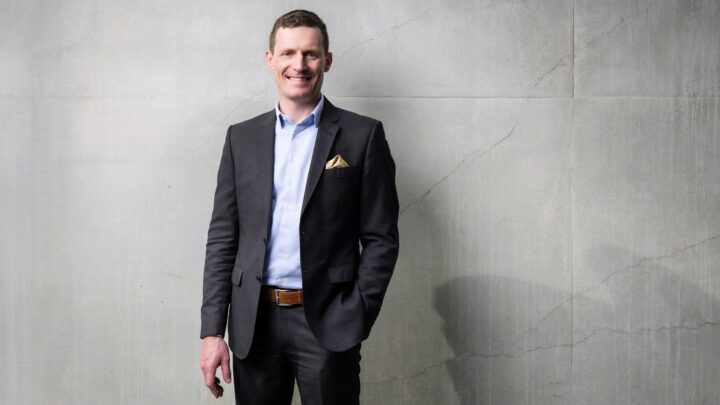
Meet Queensland Symphony Orchestra’s Energetic Arts Leader, Michael Sterzinger
Music has always been part of Sterzinger’s world. Growing up in the small Bavarian town of Mellrichstadt, Germany, his father played the trombone, his mother sang in the local choir and played piano and his siblings were all musically gifted.
While most children were captivated by the spotlight, Sterzinger was drawn to something a little less centre-stage: the tuba. He enjoyed playing an instrument that drove the ensemble from the bass line without stealing the spotlight.
That instinct to support, steady and lead from behind has carried through to his role today as Chief Executive Officer of Queensland Symphony Orchestra (QSO).
As QSO prepares to perform Shostakovich Ten, Sterzinger sat down with us to reflect on his journey, leadership style, and why Brisbane’s music scene is unlike anywhere else.
Q: What inspired your love of music?
My parents tell a story about when we went to a festival celebrating 150 years of music in our region. The local orchestra would play, and they’d drop me off and I’d just sit and watch for hours.
From then on, music was always part of my life. I started with recorder and singing, moved to German tenor horn at age eight, and by 15, I’d switched to tuba. I love the low sound and the role it plays in holding everything together.
Q: You also spent time in the military. How did that shape your career?
I served 10 months in the Air Force after successfully auditioning for the Air Force Band wind orchestra. It wasn’t a strenuous thing; we’d practice in the day and go and see concerts in the evening. I also had lessons from Bamberg Symphony Orchestra’s tuba player, one of Germany’s best. That got me through auditions for university.
Q: At what point did you pivot from musician to manager?
I always loved organising things. At school, I ran the student newspaper. On day one at university, I took a job as a stage manager moving music stands, and suddenly I was a colleague. I realised I loved managing orchestras and people. The variety of management was far more challenging and exciting than the routine of performing.
Q: What brought you to Australia and eventually back to QSO?
My husband, David, secured a permanent position at QSO in 2009, so we moved to Brisbane. It was a gamble, but this town is big enough for both our careers. I worked with Queensland Youth Orchestras for three years, then joined QSO in 2013. I stayed until 2021, working my way up to Director of Artistic Planning, before returning as CEO.
Q: How would you describe your leadership style?
During my first stint at QSO, I had five CEOs in seven years. It was a gift; I call them my ‘Chest of Drawers.’ I can ask myself: what would they do here? How would they have handled this? I learned the importance of decisiveness, calmness and stability. My goal is to bring that reliability and a long-term vision to QSO.
Q: How do you stay connected to the art form now that you’re leading from the top?
It’s super important to me. I play with the Brisbane Philharmonic Orchestra every Wednesday night, that’s sacred time. I also keep a rehearsal feed on in my office, and I spend at least 20 minutes in rehearsals for each major project. It’s critical I know the repertoire intimately so I can engage with conductors, sponsors, and donors in a meaningful way.
Q: What were your first impressions of Brisbane’s music scene?
I was blown away. I never felt lonely because I landed straight into an incredibly vibrant scene with community orchestras, law orchestras, doctors orchestras and festivals. There’s so much happening here, it’s remarkable.
Q: And what keeps you motivated in such a challenging role?
Leading an organisation of 130 people is challenging, of course. But it’s such a beautiful job. Creating beautiful experiences for audiences doesn’t feel like work. I haven’t faced a challenge that couldn’t be resolved with the team. They’re amazing and I’m in this for the long haul.
Queensland Symphony Orchestra performs Shostakovich Ten at Queensland Performing Art Centre’s Concert Hall from Friday 19 to Saturday 20 September.





 Proudly Australian owned and operated