
Is Ironing Dying Out? The Generational Divide Over the Household Chore We Grew Up With


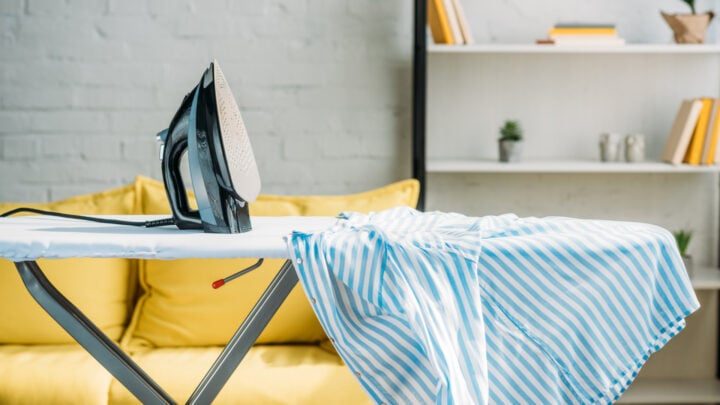
For many of us, ironing wasn’t optional. It was a weekly ritual – Sunday night, the board set up in front of the television, a basket of shirts and school uniforms waiting their turn, the particular smell of a hot iron on cotton. Looking presentable meant a pressed collar, and a wrinkled shirt heading out the door was, for a lot of households, simply not something that happened.
Ask a grandchild today whether they own an iron, and there’s a genuine chance the answer is no.
The numbers behind the shift
This isn’t just a feeling. Recent reporting suggests roughly 30 per cent of 18 to 34-year-olds don’t own an iron at all, and have never so much as touched one. It’s tempting to file this under “another thing the younger generation has done away with,” but the decline has actually been building for a lot longer than headlines about Gen Z might suggest. A US survey back in 2009 found that while the vast majority of households, 87 per cent, still owned or had access to an iron, only 9 per cent of people used it daily, and 41 per cent used it once a month or less. Even then, well before smart fabrics and remote work, the iron was already spending most of its life in a cupboard.
What actually changed
A few genuine shifts have combined to push ironing toward the margins of everyday life. Workplace dress codes have relaxed enormously over the past two decades, accelerated further by the rise of remote and hybrid work – “business casual” has quietly softened into something closer to “clean and comfortable.” Clothing manufacturing has changed too, with wrinkle-resistant and easy-care fabrics now standard in a huge share of everyday clothing, from dress shirts to school uniforms, in a way that simply wasn’t widely available a few decades ago. And there’s a broader cultural shift toward valuing “effortless” style over the pressed, formal look that used to signal you’d made an effort – a trade-off some see as simple practicality, and others see as a genuine, if minor, loss.
A different relationship with the chore
For many of us who grew up with ironing as a non-negotiable weekly task, there’s something worth reflecting on in how differently the next generation relates to the same piece of clothing. It’s not necessarily that younger people care less about looking put-together – plenty do – it’s that the tools and expectations around achieving that look have simply moved elsewhere: a wrinkle-release setting on the dryer, a quick spritz of water, or clothing designed from the outset not to need a hot iron pressed against it at all.
Whether you see that as progress, a small erosion of effort and care, or simply a practical response to busier, more casual modern life, probably depends a great deal on how many Sunday evenings you personally spent standing at an ironing board as a kid, watching a parent work through a basket that never seemed to get any smaller.
For those who still iron: keeping your equipment in good shape
If you’re firmly in the camp that still keeps an iron in regular rotation, it’s worth knowing that a neglected iron can do more harm than good – a build-up of mineral deposits or scorch marks on the soleplate is a fast way to ruin a freshly laundered shirt rather than press it. Professional organiser Jacqueline Stein shared a simple cleaning method worth bookmarking:
Mix 1/2 to 3/4 cup distilled water with 1/4 to 1/2 cup white vinegar and pour into the iron’s reservoir.
Turn the iron to a steam setting and hold the steam button until steam flows freely, loosening limescale and buildup inside.
Before switching off, use cotton swabs to clear any mineral deposits from the steam vents.
Unplug and let the iron cool completely before emptying the remaining solution.
For the soleplate itself, mix 2 tablespoons of baking soda with 1 tablespoon of water, spread over the plate, leave for a minute, then wipe clean with a damp cloth.
Cover the ironing board with a thick towel, refill the reservoir with distilled water only, and run the steam setting over the towel to flush out any remaining residue.
Switch off, unplug and allow to cool fully before emptying any leftover water.
And if you’d rather skip the iron altogether
For a quicker fix between full ironing sessions, a popular hack shared online involves simply keeping a spray bottle of water on hand. A light misting over lightly wrinkled clothing – particularly linen, which relaxes easily with a bit of moisture – while you’re wearing it can smooth out creases in a fraction of the time a full iron and board setup takes.
Tell us: where do you sit?
Do you still iron every single week without fail, or has the habit quietly faded from your own household too? We’d love to know whether this generational shift has reached your own washing basket – get in touch and let us know your ironing habits, and we may feature your response in an upcoming story.





 Proudly Australian owned and operated
Comments 3
Join the conversation. Comments are reviewed before they appear.
This isn't just a 'younger person' thing...I'm now 70 and am (un)lucky enough to only use the iron once every 3-4 months - and then, only IF I really have to! Love my dryer with the anti wrinkle cycle, and fabrics that take care of themselves. I discovered these joys 40 years ago!!
Still iron. No dryer, but doesn`t worry me. I actually don`t mind the ironing. Quite relaxing.
I am 89. I still iron occasionally but only a few times a year! My iron and ironig board have both seen better days but I'm resisting replacements at my age !!!!
Join the conversation
Tell us who you are to post a comment. We'll remember you next time.