
What Medicare covers after 60 and the five gaps that catch people out


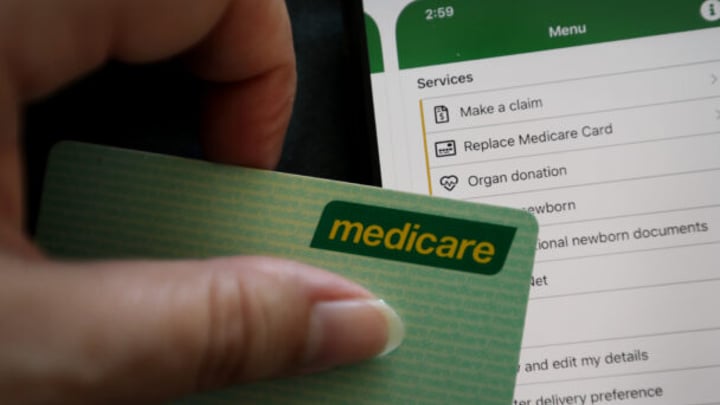
Medicare covers an enormous amount. But dental bills, glasses, physio, ambulances and specialist fees can still deliver an expensive surprise. Here’s where the gaps are.
Most of us have carried a Medicare card for our entire adult lives without ever sitting down to work out exactly what it covers.
Then something changes.
A specialist charges considerably more than the Medicare rebate. The optometrist tells you the eye test is covered but the new glasses are not. The dentist quotes thousands for major work and Medicare contributes nothing.
None of that necessarily means someone has overcharged you. It is often simply where Medicare stops.
After 60, knowing where those boundaries sit can save both money and a nasty surprise.
COMPARE YOUR HEALTH INSURANCE WITH STARTS AT 60 HERE
First, the good news on bulk billing
Bulk billing has changed significantly.
From November 1, 2025, the Federal Government expanded Medicare bulk-billing incentives to all Medicare-eligible patients. Practices can also receive an additional incentive if they bulk bill all eligible services.
Official Department of Health figures show 81.4 per cent of GP non-referred attendances were bulk billed nationally between November 2025 and January 2026, up 4.3 percentage points on the same period a year earlier.
But bulk billing is not universal. If your doctor bulk bills, they accept the Medicare benefit as full payment. If they don’t, they can charge above the Medicare Benefits Schedule fee and you pay the difference.
So if you haven’t asked your practice about its billing arrangements recently, ask again.
Gap one: dental
This remains one of Medicare’s biggest holes.
Medicare does not cover most routine adult dental treatment, including check-ups, fillings, crowns and dentures.
States and territories do operate public dental services for eligible people, although the rules and costs differ. In NSW and Queensland, eligible adults including certain concession card holders can access free public dental care. Victoria provides public dental care to eligible people including Pensioner Concession Card and Health Care Card holders, although fees can apply to some patients.
Waiting times for non-urgent treatment can also apply.
Otherwise, the options are generally extras cover or paying the dentist yourself.
Gap two: glasses
The dividing line here is simple.
Medicare covers the eye test. It does not cover the glasses or contact lenses.
For people aged 65 and over, Medicare covers an optometry eye test once a year. That does not mean every optometrist will bulk bill, so check first.
Some states also have subsidised spectacle programs for eligible residents. Otherwise, frames and lenses are generally paid for through extras cover or your own pocket.
Gap three: physio and allied health
This one causes plenty of confusion because Medicare can help — but only in particular circumstances.
People with a chronic or terminal medical condition may be eligible for a GP Chronic Condition Management Plan, or GPCCMP.
Eligible patients can receive up to five individual allied-health services per calendar year.
Importantly, that is five in total — not five physio visits plus five podiatry appointments.
The allocation is shared across eligible services, which can include physiotherapy, podiatry, dietetics and exercise physiology.
The provider may also charge more than the Medicare benefit, leaving you with an out-of-pocket cost.
If you live with a chronic condition and have never discussed a GPCCMP with your doctor, ask whether one might be appropriate.
Gap four: ambulance
Here’s one Medicare rule everyone should know: Medicare does not cover ambulance services.
What happens next depends on where you live.
State and territory arrangements vary considerably. Depending on your circumstances, ambulance costs may be covered by your state government, concession entitlement, ambulance subscription or private health insurance.
This is one to check before you ever need it.
Gap five: the specialist bill
This is perhaps the least understood gap because Medicare does cover specialist consultations.
It just may not cover the whole fee.
For an out-of-hospital specialist consultation listed on the Medicare Benefits Schedule, Medicare generally pays 85 per cent of the schedule fee.
But the specialist can charge more than that.
If they do, you pay the difference — and private health insurance cannot simply pick up an outpatient specialist gap where Medicare pays a benefit.
This is where the Medicare Safety Net becomes important.
For 2026, the Original Medicare Safety Net threshold is $594.40. Once your eligible gap costs reach it, Medicare pays 100 per cent of the MBS schedule fee for eligible out-of-hospital services for the remainder of the calendar year.
The Extended Medicare Safety Net has a $2,699.10 general threshold, reduced to $861.20 for eligible concession card holders and families receiving Family Tax Benefit Part A. Once reached, Medicare provides an additional benefit towards eligible out-of-hospital costs, subject to its rules and caps.
Individuals are tracked automatically. Families need to register so eligible costs can be combined.
Ask what it will cost before treatment
There is another phrase worth remembering: informed financial consent. Before private treatment, ask for a written estimate of your likely costs.
For hospital treatment, that may mean asking about the surgeon, anaesthetist, assistant surgeon and hospital charges rather than assuming there will be one bill.
The Australian Government’s Medical Costs Finder can also show typical costs for common specialist services and hospital procedures.
Asking what something will cost before treatment isn’t rude. It is sensible.
So where does private health cover fit?
This is where separating hospital cover from extras becomes important.
Private hospital insurance does not pay your ordinary GP bill or an outpatient specialist consultation. Nor does hospital cover buy your glasses or pay the dentist.
Hospital cover is principally about treatment when you are admitted as a private patient.
Once admitted, Medicare generally pays 75 per cent of the MBS fee for eligible medical services and your insurer can pay the remaining 25 per cent if the treatment is covered by your policy. Doctors can still charge above the MBS fee, potentially leaving another gap.
Extras cover is designed to contribute towards services outside hospital that Medicare generally doesn’t cover, such as dental, physio and glasses, subject to policy limits.
That brings us back to The Cover Check.
Instead of asking whether Medicare is “enough”, ask something more useful:
Which health costs am I actually trying to protect myself against — and who currently pays them?
Once you know whether the answer is Medicare, a concession scheme, hospital cover, extras or your own wallet, the gaps become much easier to see.
Worth knowing where you stand?
You can compare your health insurance with Starts at 60, or talk it through with an Australian adviser on 1800 31 23 60. There is no obligation and no pressure to switch – plenty of people call simply to find out whether their current cover still stacks up.
We’ll be following the legislation through to the Senate committee report in October and will come back to what it means from there. If you have a question about your own situation, leave it in the comments below. We read them, and they help shape what we cover next.
ALSO CHECK OUT IS YOUR EXTRAS COVER WORTH THE MONEY?
IMPORTANT LEGAL INFO This article is of a general nature and FYI only, because it doesn’t take into account your personal health requirements or existing medical conditions. That means it’s not personalised health advice and shouldn’t be relied upon as if it is. Before making a health-related decision, you should work out if the info is appropriate for your situation and get professional medical advice.





 Proudly Australian owned and operated
Comments 2
Join the conversation. Comments are reviewed before they appear.
Im questing for all the years I have contributed to private heath cover it has become less favorable. I think that the fund organisations have worked out ways to suppress rebates, especially at times in need when getter older / senior and find that having cover is now useless. Shameful and very businesslike when they need to support long-term contributors. I have seen better rewards for non-members joining the schemes, not available to members ie we members cover those gaps at our expense !!
recommend saving the fees and bank them for use when / as required
Angelo, my husband and I paid for top medical insurance coverage about 30 years ago, for one or two years before we realised that with two children the cost was more than our family could pay, and we've never had it since the, mid 1990's. Both in our late 60's now we have paid cash for hospital and specialist visits, treatment in hospital for elective surgery, dental work, cataract replacements and so on, as we needed to and it has worked out much cheaper than had we continued paying for private medical insurance for 30 years. At our ages now we are bulk billed for most medical expenses apart from the dentist which is very expensive but necessary. Luckily I have been stashing the equivalent of private heath insurance into my superannuation for about 30 years and it's really come in handy to cover our out of pocket expenses.
Join the conversation
Tell us who you are to post a comment. We'll remember you next time.