
Why it’s time to quiet your inner critic — before it defines your later years


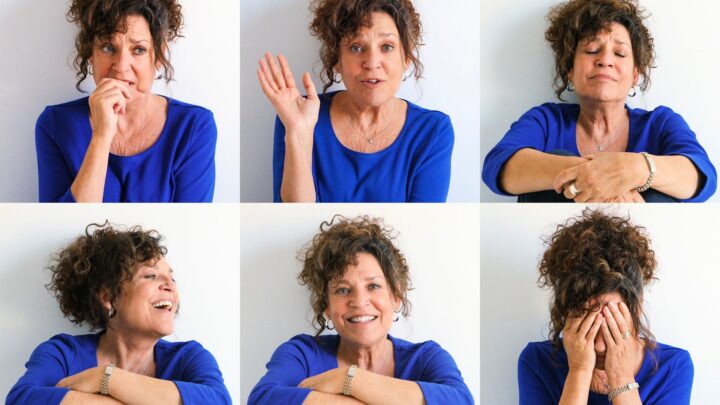
There’s a voice most of us carry around that gets louder as the years go by.
It comments on everything. It questions your decisions. It reminds you of past mistakes. And on a bad day, it can be downright cruel.
“You should have done better.”
“You’re not as sharp as you used to be.”
“What’s the point now?”
It’s what psychologists call the inner critic – and according to Ethan Kross, we all have one.
The problem isn’t that it exists. The problem is what happens when we start to believe it.
How the inner critic shapes us over time
Kross, author of Chatter: The Voice in Our Head, Why It Matters, and How to Harness It, has spent years studying the silent conversations we have with ourselves. His research shows that this inner voice isn’t just background noise – it actively shapes how we think, feel and behave.
And as we get older, that voice can become more entrenched.
Think about it. By the time we reach our 50s, 60s and beyond, we’ve had decades to rehearse certain thoughts:
regrets about things we didn’t do
frustrations about how life turned out
doubts about our abilities or worth
If those thoughts go unchallenged, they don’t just pass through – they settle in.
This is where the stereotype of the “grumpy older person” can quietly take hold. Not because ageing makes us negative, but because our inner dialogue becomes fixed.
It’s not ageing — it’s repetition
Kross is clear on one thing: your inner voice evolved to help you.
It helps you plan, reflect, problem-solve and make sense of the world. But it also has a bias towards spotting threats and problems – which means it can easily turn against you.
Left unchecked, it becomes what Kross calls “chatter” – a loop of repetitive, negative thinking that amplifies stress and chips away at your wellbeing.
Over time, that chatter can:
increase anxiety and low mood
make small problems feel overwhelming
affect relationships and how you respond to others
reinforce a negative sense of self
In other words, it doesn’t just stay in your head. It shapes how you experience your life.
Why it matters more as we age
Later life should be a time of perspective, not pressure. A time to enjoy relationships, reflect with clarity, and feel a sense of ease in your own skin.
But that becomes harder if your inner voice is constantly critical.
Instead of thinking:
“I’ve learned a lot over the years,”
you might hear:
“I should have done more.”
Instead of:
“I’m doing my best,”
you get:
“You’re not keeping up.”
Over time, that tone matters. It can make you more withdrawn, more reactive, and less open to new experiences – all things that quietly erode quality of life.
The good news: you can change the conversation
The most reassuring part of Kross’s research is this: your inner voice is not fixed.
You can train it.
And no, that doesn’t mean forcing yourself to “think positive” or ignoring real challenges. It means learning to respond to yourself in a more balanced, constructive way.
One of Kross’s simplest tools is distance.
Instead of saying, “I can’t handle this,” try asking, “What can I do here?” – or even using your own name. It might feel strange, but it creates space between you and the emotion, making it easier to think clearly.
Another powerful shift is to treat yourself like you would a friend.
If someone you cared about said, “I’ve made a mess of things,” you wouldn’t pile on. You’d reassure them, offer perspective, maybe even a bit of humour.
Yet many of us don’t extend that same kindness to ourselves.
Small shifts, big impact
Kross also points to simple ways to interrupt negative thinking:
stepping outside for a walk in nature
looking at photos that remind you of connection and meaning
creating small daily rituals that help reset your mind
These aren’t dramatic changes. But over time, they reshape the tone of your inner voice.
And that tone matters more than you might think.
The voice you live with every day
We often focus on how others speak to us – but the most important conversation we have is the one in our own head.
It’s there when you wake up.
It’s there when things go wrong.
It’s there when you reflect on your life.
So the question becomes: is that voice helping you – or holding you back?
Because as Kross’s work shows, it’s not just influencing your mood. It’s shaping the way you age.
A gentle reminder
You don’t have to silence your inner voice.
You just need to stop letting it be your harshest critic.
Because the way you speak to yourself today becomes the way you experience your life tomorrow — and there’s no reason those later years shouldn’t be kinder, calmer and far more forgiving.
IMPORTANT LEGAL INFO This article is of a general nature and FYI only, because it doesn’t take into account your personal health requirements or existing medical conditions. That means it’s not personalised health advice and shouldn’t be relied upon as if it is. Before making a health-related decision, you should work out if the info is appropriate for your situation and get professional medical advice.





 Proudly Australian owned and operated
Comments 0
Join the conversation. Comments are reviewed before they appear.
Be the first to comment.
Join the conversation
Tell us who you are to post a comment. We'll remember you next time.