
Why fans may not be enough to keep older Aussies cool this summer


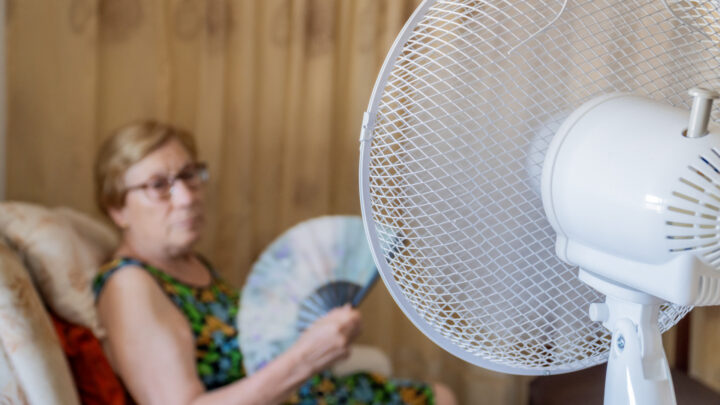
As the temperatures begin to rise, many of us may reach for our trusty fans instead of switching on the air conditioner — a simple way to stay cool while keeping electricity bills down.
While this method may save us some money, recent research from Griffith University has found that electric fans alone offer little cooling relief for older adults on scorching summer days.
These findings are important, given that as we age, our ability to sweat and regulate body temperature decreases — creating potentially dangerous conditions.
The study, published in the Journal of the American Medical Association, examined how fan use affected body temperature and heart rate in 18 participants aged 65 to 85. They were exposed to simulated heatwave conditions — 36°C and 45 per cent humidity — for eight hours.
Each participant was tested under three conditions: no fan, a standard-speed fan (two metres per second), and a high-speed fan (four metres per second).
The results were striking. Regardless of fan use, participants’ average core body temperature remained at 38.3°C and heart rates hovered around 100 beats per minute. While fans slightly improved perceived comfort, they made no meaningful difference to the body’s physiological strain.
Lead researcher Dr Fergus O’Connor, from Griffith University’s School of Health Sciences and Social Work, explained that older adults face a “double whammy” in extreme heat.
“As we age, we lose our ability to sweat, which limits the effectiveness of electric fans,” he said.
“This can start happening from our 30s or 40s, but by our 60s there’s a significant impairment.
“The double whammy is, older adults also have a decreased capacity to sense heat stress, which can lead to dire consequences.”
Dr O’Connor noted that while fans alone aren’t effective in conditions like a typical Queensland summer’s day — 36°C and 45 per cent humidity — they also don’t worsen heat strain. However, their benefit depends on the type of climate.
“As we face more frequent heat events, these findings highlight the need for sustainable, effective cooling interventions that specifically address the physiological needs of older adults,” Dr O’Connor said.
“Particularly in the southern states where we often see hot, dry days of around 42°C at only 10 to 15 per cent humidity, any sweat is rapidly evaporated by the environment anyway.
“Using a fan in these environments just blows hot air across dry skin, which creates a heat effect, whereas in more humid environments such as tropical Queensland, a fan can at least help with evaporating some of that moisture off the skin and provide cooling relief, provided the ambient temperature is not too high.”
While using an electric fan might seem like a budget-friendly solution, this research shows it’s not enough on its own to keep older adults cool and safe during heatwaves.
The good news is you can still use your air conditioner without burning a hole in your wallet. Starts at 60 spoke with Origin Energy, who reminded Aussies that small changes in how we cool our homes — from the temperature we set to the way we insulate — can make a noticeable difference when it comes to keeping costs under control.
-
Keep your aircon in top shape
If you’re relying on a reverse-cycle unit year-round, make sure it’s running efficiently. Clean filters and regular servicing will help keep energy use — and bills — under control.
-
Set the right temperature
Even on scorching days, it’s best to set your aircon to a minimum of 24°C. Each degree below that can use around 5 per cent more energy, adding up quickly across summer.
-
Cut back where you can
Reducing your aircon use by even one hour a day can add up to noticeable savings across the season.
-
Improve your home’s efficiency
Bigger changes can deliver long-term benefits:
-
Insulation can absorb or reflect up to 45 per cent of the heat entering your home.
-
Double-glazing windows and doors can reduce heat gain by up to 40 per cent compared to standard glass.
-
Shading with awnings, blinds, or trees can keep your home cooler by blocking harsh summer sun.
-
With warmer weather already on the way, it’s important to understand how to stay cool and protect your well-being in harsh conditions.
While fans may not always reduce body temperature effectively, there are still plenty of ways to use your air conditioner wisely — without sending your power bills soaring.
IMPORTANT LEGAL INFO This article is of a general nature and FYI only, because it doesn’t take into account your personal health requirements or existing medical conditions. That means it’s not personalised health advice and shouldn’t be relied upon as if it is. Before making a health-related decision, you should work out if the info is appropriate for your situation and get professional medical advice.





 Proudly Australian owned and operated
Comments 0
Join the conversation. Comments are reviewed before they appear.
Be the first to comment.
Join the conversation
Tell us who you are to post a comment. We'll remember you next time.