
I Tried Nuance Audio Glasses After Hearing Aids Failed Me – Here’s My Honest Review


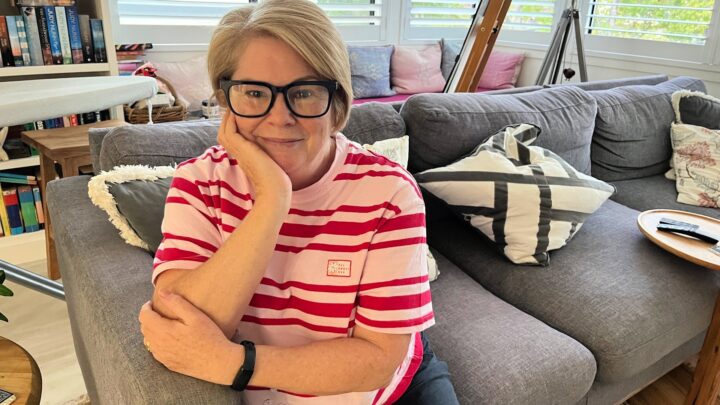
Five years ago, I suddenly lost the hearing in my left ear. To this day, I don’t know what caused it, but like many people my age, I’ve also lost much of my ability to hear the higher-pitched range of sounds.
Most of the time I manage quite well. If someone is sitting across the table from me in a quiet café or at home, I can hear the conversation without too much trouble.
But introduce the background noise of a busy restaurant, shopping centre or family gathering, and suddenly every voice seems to compete with every other sound.
Conversations become exhausting, and I find myself smiling and nodding while hoping I’ve heard correctly. At times it feels like my brain is struggling to keep up with the conversation – there’s almost a sense of your brain trying to translate a foreign language.
Television has become another challenge. I can follow the action, but dialogue is another story. If the actors decide to whisper dramatically, I have absolutely no chance of hearing what they’re saying. My poor husband has patiently endured the television volume creeping higher and higher until, at times, I suspect he feels as though he’s sitting in the front row of a rock concert. We have had to resort to subtitles but we both find it annoyingly distracting.
Like many people with hearing loss, I tried hearing aids. Unfortunately, they simply didn’t work well for me. After spending time trying different options, I couldn’t justify paying upwards of $5,000 for something that wasn’t making a meaningful difference.
In fact, my husband and I had been discussing buying a small Bluetooth speaker to sit behind the lounge so I could hear the television more clearly. Then I happened to see an advertisement for Nuance Audio glasses.
I’ll admit I was sceptical. My first thought was, “If hearing aids haven’t worked for me, why would a pair of glasses?”
I’m delighted to say I was wrong.
The Nuance Audio glasses have genuinely impressed me. They don’t restore natural hearing, nothing can truly replace that, but they have made hearing conversations and television so much easier. Voices sound clearer, and I no longer feel quite so overwhelmed when there’s background noise competing for my attention. And I have turned off the subtitles – hooray!
So, how do Nuance Audio glasses actually work? Think of them as a stylish pair of spectacles with a little bit of clever technology tucked discreetly inside. Tiny open-ear speakers are built into the arms of the glasses, directing sound towards your ears without blocking them, so you can still hear the world around you. Small microphones pick up the voices in front of you, helping to make conversations clearer while reducing some of the distracting background noise.
They connect easily to your smartphone via Bluetooth, allowing you to personalise the settings. There are four designated preset settings to choose from, it’s as easy as selecting A,B,C or D. If you are like me, and you hear the lower base frequencies but struggle with the higher (treble frequency), you would select B on the easy to-use app. If you find you are missing out on chunks of words in conversations, you may find C a better selection for you. It’s easy to flit back and forth across the four settings to see what works best for you – it’s very simple. In fact, the whole app is simple to use – thank goodness.
As for the look, there are two styles to choose from and they come in three different colours, black, burgundy and blue. If you already wear glasses, you can simply have your own prescription lenses fitted by participating optometrists (Nuance does recommend using transition lenses for the optimal experience in any light), meaning one pair of glasses can help both your vision and your hearing. That’s wonderfully practical.
What I particularly love is how discreet they are. They simply look like an attractive pair of glasses. Nobody assumes you’re wearing hearing technology, and there’s no stigma attached. It’s just a clever piece of everyday eyewear that quietly helps you hear better.
Watching television has become far more enjoyable. I don’t constantly reach for the remote to increase the volume, and my husband is equally grateful that our lounge room no longer sounds like a cinema. In restaurants and cafés, I find I can concentrate on the person I’m speaking with instead of being distracted by every clatter of plates and surrounding conversation.
The setup was straightforward, and once I became familiar with the controls, they quickly became part of my daily routine. Charging the glasses is easy to with a wireless charging pad and USB-C charging cable.
Would I recommend them? Absolutely, particularly for people like me who have mild to moderate hearing difficulties, struggle in noisy environments, or haven’t found traditional hearing aids to be the right solution.
Nothing will ever replace your own natural hearing, and I don’t pretend these are a miracle cure. But for me, they are the closest thing I’ve found. They have made everyday life easier, conversations more enjoyable and television far less frustrating. Current research shows that long term untreated hearing loss leads to social withdraw and depression, reduces quality of life and increases cognitive decline.
The Nuance Audio Glasses retail in Australia for around $1220 RRP. Which is a lot cheaper than hearing aids. Prescription lens will of course be an additional cost. Make sure you try them out in store before you buy just to make sure you are happy with the sound.
To learn more about Nuance Audio Glasses and where you can buy them visit https://www.nuanceaudio.com/en near you https://www.nuanceaudio.com/en-int/store-locator . You can buy them online, but its best to pop into a participating optometrist for a free demo.
IMPORTANT LEGAL INFO This article is of a general nature and FYI only, because it doesn’t take into account your personal health requirements or existing medical conditions. That means it’s not personalised health advice and shouldn’t be relied upon as if it is. Before making a health-related decision, you should work out if the info is appropriate for your situation and get professional medical advice.





 Proudly Australian owned and operated
Comments 2
Join the conversation. Comments are reviewed before they appear.
Shame there is no where on the north side of Brisbane. WHY
Seem like you have to live on the Gold coast or southside of Brisbane.
Join the conversation
Tell us who you are to post a comment. We'll remember you next time.