


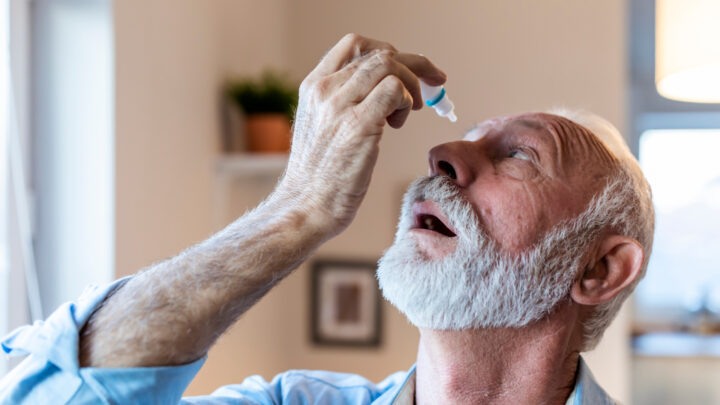
What if, instead of carrying reading glasses everywhere, you could reach for a bottle of eye drops to improve your sight?
This could soon be a reality with recent research suggesting that specially formulated eye drops can improve near vision in people with presbyopia, age-related difficulty focusing on close objects.
A study of 766 patients, presented at the 43rd Congress of the European Society of Cataract and Refractive Surgeons (ESCRS), found that specially formulated eye drops helped most people read two or more extra lines on a standard eye chart, with the benefits lasting up to two years.
Dr Giovanna Benozzi, director of the Center for Advanced Research for Presbyopia, in Buenos Aires, Argentina, said the research was conducted, “due to the significant unmet medical need in presbyopia management.”
“There is a group of presbyopia patients who have limited options besides spectacles, and who are not candidates for surgery; these are our primary focus of interest. We sought to provide robust clinical evidence supporting an innovative pharmacological solution to offer patients a non-invasive, convenient and effective alternative.”
The eye drops combined two ingredients: pilocarpine, which helps the eye adjust focus by constricting the pupils, and diclofenac, an anti-inflammatory that reduces the discomfort pilocarpine can cause.
Patients, averaging 55 years old, were asked to use the drops twice daily, with a third dose if needed. The 766 participants were split into three groups, each testing a different pilocarpine strength (1 per cent, 2 per cent or 3 per cent), alongside a fixed dose of diclofenac.
Researchers measured how well patients could read a standard eye chart without glasses an hour after the first dose and continued tracking results for two years.
“Impressively, 99% of 148 patients in the 1% pilocarpine group reached optimal near vision and were able to read two or more extra lines,” Dr Benozzi said.
“Approximately 83% of all patients maintained good functional near vision at 12 months. Importantly, no significant adverse events like increased intraocular pressure or retinal detachment were observed.”
In the 2 per cent group, 69 per cent of patients could read at least three extra lines on the eye chart, while in the 3 per cent group, the figure rose to 84 per cent. The vision boost lasted for up to two years, with a median duration of about 14 months.
While these findings offer hope for improving vision as we age, there are still plenty of things you can do today to look after your eye health.
From adopting healthy lifestyle habits and maintaining a balanced diet rich in eye-friendly nutrients to understanding the significance of regular eye exams, there are a number of simple measures you can adopt to nurture your eyes.
Optometrist David Shanahan explains that “vision is a precious gift, and with the right care, we should be able to enjoy good eye health throughout our lives.”
With that in mind, Starts at 60 picked Shanahan’s brain further for some tips and advice you can employ in your day-to-day life to protect and maintain optimal vision.
Regular Eye Exams: Schedule comprehensive eye exams with an optometrist at least once a year. These exams can detect age-related eye conditions like cataracts, glaucoma, and age-related macular degeneration (AMD) early when they are most treatable.
Healthy Diet: Maintain a balanced diet rich in antioxidants, vitamins, and minerals. Foods like leafy greens, fish, and colourful fruits can help protect your eyes from age-related conditions.
Manage Chronic Conditions: Conditions like diabetes and hypertension can affect your vision. Keep these conditions well-managed through medication, lifestyle changes, and regular check-ups.
Quit Smoking: Smoking is a significant risk factor for AMD and cataracts. Quitting smoking can lower your risk of these conditions and improve overall eye health.
Stay Active: Regular physical activity improves blood circulation, which is essential for eye health. It can also help manage conditions like diabetes that affect vision.
Computer Use: If you spend extended periods in front of a computer screen, take regular breaks to reduce eye strain. Adjust the screen’s brightness and position to minimise glare.
Hydration: Stay well-hydrated. Dehydration can lead to dry eye syndrome, which is more common and more detrimental to eye health in older adults.
Medication Review: Some medications can affect your vision. Consult with your healthcare provider and optometrist to understand any potential side effects and discuss alternatives if necessary.
Proper Lighting: Ensure your home and workplace are well-lit, especially in areas where you read, cook, look at screens or engage in close-up activities. Proper lighting reduces eye strain.
Limit Alcohol: Excessive alcohol consumption can contribute to eye conditions like cataracts. Moderation is key.
Follow Prescriptions: If you have glasses or contact lenses, wear them as prescribed by your optometrist. An up-to-date prescription ensures you’re seeing as clearly as possible. If you are experiencing headaches or eye strain it may be time to update your prescription.
IMPORTANT LEGAL INFO This article is of a general nature and FYI only, because it doesn’t take into account your personal health requirements or existing medical conditions. That means it’s not personalised health advice and shouldn’t be relied upon as if it is. Before making a health-related decision, you should work out if the info is appropriate for your situation and get professional medical advice.





 Proudly Australian owned and operated