
Diagnosis changed couple’s retirement plans


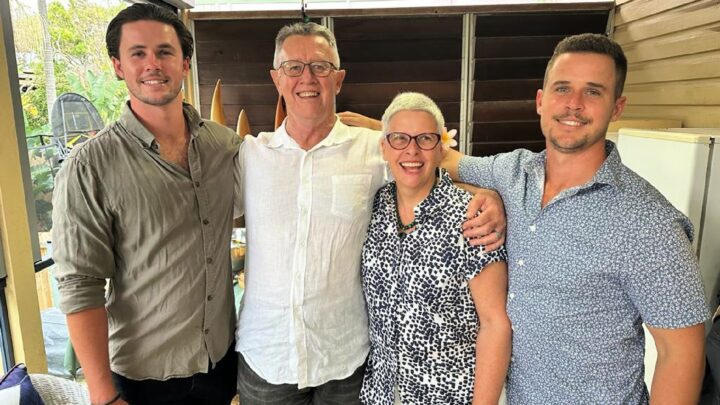
Kirsty (66) and Brian (72), from Sydney’s northern beaches, were looking forward to more travel when they finally retired. However, Brian’s diagnosis of Frontotemporal dementia (FTD) in 2020 changed all that.
The couple have enjoyed a deeply fulfilling life – Brian as deputy principal at a local primary school and a keen surfer; while Kirsty, a part-time teacher librarian, also trained in Bowen Technique Therapy. They’ve both been very engaged in their local community, where they raised their three sons.
Kirsty openly discusses the daily challenges they now face with Brian’s diagnosis, and how the Carer Conversations program has been instrumental in helping her cope.
Carer Conversations is a working partnership between Dementia Support Australia (DSA) and the Australian Frontotemporal Dementia Association (AFTDA) – a free group where carers meet monthly online, and offer a safe space to share, learn and develop a peer support network.
The first concerning signs appeared when Brian, usually very outgoing and sociable, became quiet and lost interest in his hobbies. Friends also noticed the change. Their GP referred them to a neurologist, who diagnosed Brian with Primary Progressive Aphasia, indicating he would eventually lose his ability to speak.
Kirsty describes this period as being “put into a deep dark hole with no shovel to get us out”.
The neurologist recommended the Frontier research program at the University of Sydney, specialising in FTD. This led to further diagnoses: Logopenic Aphasia, later changed to Non-fluent Aphasia, and eventually Corticobasal Syndrome, which affected Brian’s balance and caused frequent falls. Kirsty struggled to manage alone, as Brian is over 180 cm tall and weighs 100kg.
HammondCare’s Sarah Fox who is Project Lead of Carer Conversations, encouraged them to join the program. Kirsty found immense support there and is now part of a WhatsApp group where carers share advice and experiences in between the regular meetings. She appreciates the education and advice, and now more fully understands that Brian’s behaviours are symptoms of the disease, not personal actions.
Kirsty has also found personal rewards through the program. She continues to practice Bowen Technique Therapy from home, and supports a former colleague whose husband was recently diagnosed with a similar condition to Brian’s.
“It feels empowering to be able to do this,” she shares.
Looking ahead, Kirsty is realistic about Brian’s prognosis. He can no longer speak, communicating only with yes or no responses or gestures. Despite the challenges, Kirsty remains grateful for the support from HammondCare and Dementia Support Australia, which has helped her navigate the complexities of caring for Brian.
IMPORTANT LEGAL INFO This article is of a general nature and FYI only, because it doesn’t take into account your personal health requirements or existing medical conditions. That means it’s not personalised health advice and shouldn’t be relied upon as if it is. Before making a health-related decision, you should work out if the info is appropriate for your situation and get professional medical advice.





 Proudly Australian owned and operated
Comments 0
Join the conversation. Comments are reviewed before they appear.
Be the first to comment.
Join the conversation
Tell us who you are to post a comment. We'll remember you next time.