
Almost half of dementia cases are preventable – so why aren’t we changing our habits?


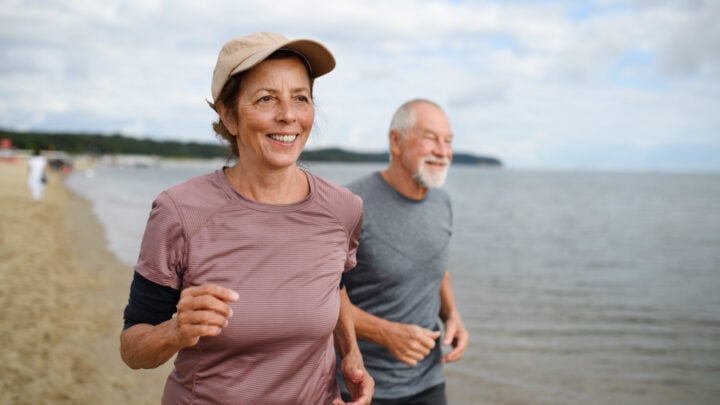
New research is delivering a message that’s both hopeful and frustrating: almost half of all dementia cases could be prevented, but the health campaigns designed to get us moving, connecting and quitting bad habits simply aren’t working hard enough.
A major international review led by Curtin University, published in The Lancet Healthy Longevity, looked at public health campaigns across eight countries and found that while broad awareness campaigns reach plenty of people, they tend to shift knowledge only slightly and do little to actually change behaviour.
Study author Professor Mario Siervo, from Curtin’s School of Population Health, says as much as 45 per cent of dementia cases are tied to factors we have some control over – things like how active we are, whether we smoke, our level of education, and how socially connected we stay. But he says knowing the risks isn’t the same as acting on them, and that awareness alone rarely translates into lasting change.
Muscle matters more than you might think
A second Curtin-led study, tracking close to 500,000 adults over more than a decade, adds an interesting twist: it’s not body weight alone that drives dementia risk, but the combination of low muscle strength and excess body fat, a condition researchers call sarcopenic obesity.
Encouragingly, the research found that carrying extra weight on its own wasn’t linked to a higher dementia risk if muscle strength was maintained. In other words, staying strong may matter just as much as staying slim – good news for anyone who’s found weight loss harder to achieve than they’d like, but who can still focus on building and preserving muscle through strength-based activity.
Why “just telling people” doesn’t work
Professor Blossom Stephan, Chair in Dementia at Curtin’s enAble Institute, says many people still assume dementia is simply an inevitable part of getting older. It isn’t – but even those who understand the risks often run into practical roadblocks like time, cost and motivation that stop them making changes.
The review found that people responded far better to interactive, personalised approaches than to passive information campaigns. The most effective strategies included:
- Online programs that walk people through practical, achievable steps to support brain health
- Personalised risk assessments that show individuals how their own lifestyle affects their dementia risk
- Community-based programs delivered by trusted local figures – peer educators, health workers or community leaders – rather than generic messaging from a distant health authority
Professor Siervo says people are far more likely to make meaningful, lasting changes when they understand their own personal risk and are given clear, achievable actions, particularly when that support comes through networks they already trust.
What this means for you
With dementia rates projected to climb significantly in coming decades, the researchers argue prevention is one of the most powerful tools available — but only if public health strategy moves beyond generic awareness campaigns toward genuine, ongoing support.
For those of us in the 60-plus bracket, the practical takeaway is a familiar but important one: staying physically active (with a particular focus on maintaining muscle strength, not just managing weight), staying socially connected, keeping the mind engaged, and avoiding smoking all appear to meaningfully lower dementia risk. The researchers’ broader point is that real change is more likely to stick when it’s personal, practical and supported by people you trust —-whether that’s a walking group, a local community program, or simply a friend keeping you accountable.
This article is general in nature and isn’t a substitute for personalised medical advice. If you have concerns about your own dementia risk, it’s worth raising them with your GP.
IMPORTANT LEGAL INFO This article is of a general nature and FYI only, because it doesn’t take into account your personal health requirements or existing medical conditions. That means it’s not personalised health advice and shouldn’t be relied upon as if it is. Before making a health-related decision, you should work out if the info is appropriate for your situation and get professional medical advice.





 Proudly Australian owned and operated
Comments 9
Join the conversation. Comments are reviewed before they appear.
My husband had dementia DESPITE going to the gym 3xweek and frequent walks. He was physically fit until his admission to hospital. He was a non-smoker and we socialised regularly. I believe his condition was not environmental but genetic. He was 1 of 8 children - his father & 1 brother had dementia while 2 other siblings developed MND - so 4 out of 8 children + their father had brain related diseases.
Same mother in law fit as a fiddle went hiking ate mainly fish, grew all their own produce daily crosswords heavily involved in community as has dementia
As far as I know we Don`t have Dementia in our Family, but Heart and Cancer is rife. My Greatgranddaughter, celebrated her 14th Birthday, hooked up to Chemo. My Daughter Thyroid. Doing Family tree, so far now mention on any thing on forgetting. Except just the usual, which one jokes about. A lot of more research needs to be done regarding Dementia. Maybe it is all the GM foods covered in chemicals. Who knows. Hopefully, probably not in our life time, but there will be a cure.
There are not enough community programs for the seniors it’s all geared to kids, playgrounds for kids very little set up for seniors, gyms don’t seem to have programs for older not so fits,
Interesting that drug and alcohol consumption are not mentioned as contributing factors.
There is now a proven link between Alzheimer's/Dementia and the taking of Statin drugs.
The potential benefits of taking Statins is quite debatable with many leading experts in the field of cardiology now not recommending them. Changes to health and lifestyle habits seem to be the key considerations to overall improved health and well being.
Yes agree. However, there is also familial hypercholesterolemia. High levels of LDL (bad) cholesterol from birth. Diet and exercise alone are rarely enough to manage the condition.
Sorry Peter, to finish off my previous comment about bad cholesterol and taking statins. Therefore some people have to take statins to help reduce their LDL cholesterol. Due to familial hypercholesterolemia.
Genetics play a huge role in getting dementia.
My husbands Mother died with it.
My husband had an absolute brilliant mind until quite recently when he started repeating the same story over and over and requiring prompting to do so.
Never have I seen a fitter or healthier man. He has never been to hospital. He is 98 and fading quickly
A Batchelor of Science and a 'hands on' Grazier afforded him all avenues for a fit healthy life..
Every individual is different.. One size does not fit all..
Join the conversation
Tell us who you are to post a comment. We'll remember you next time.