
Five Money lessons every Grandparent can teach their grandkids


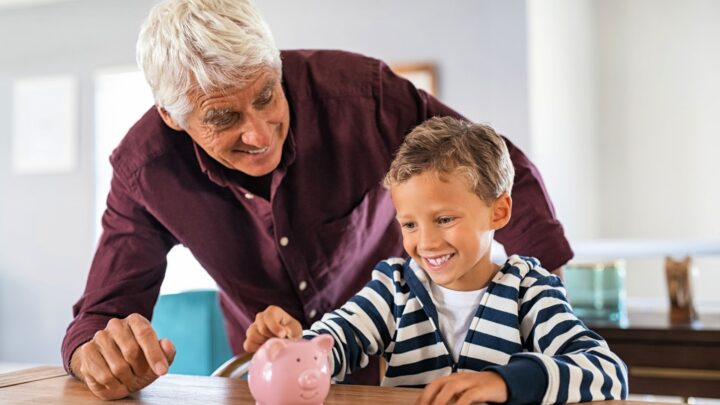
If there’s one thing grandparents know, it’s that money doesn’t grow on trees – even if the grandkids sometimes think it does.
There’s never been a better time for older Australians to lend a helping hand with some great financial advice. And you don’t need a classroom or a whiteboard – just a few tried-and-tested money lessons that stand the test of time.
Children as young as six can start learning about saving, spending and planning ahead, according to experts. And who better to guide them than grandparents – the generation that knows what it means to wait, work and save for what you want.
Here are five simple lessons you can share to help your grandkids build a healthy relationship with money.
Lesson 1: Pocket money doesn’t last forever
It might sound obvious, but the best way to teach budgeting is by giving kids a small amount of regular pocket money and letting them make their own choices – and mistakes.
You can even set a fun challenge: give them a set amount to plan a day out or buy their own treats. If they keep some left over, they can save it for something special. This turns every ice cream or toy decision into a mini-lesson about choices and trade-offs – skills that stay for life.
Pocket money apps such as GoHenry can help older grandkids track their spending, but a traditional piggy bank works just as well for little ones. The key lesson? Once it’s gone, it’s gone.
Lesson 2: Savings grow when you give them time
Show your grandkids the magic of compound interest – the way money earns money over time. If you put $100 in a bank account and it earns 4 per cent a year, in 18 years it’s doubled, even if you never add another cent.
That’s the power of patience – something grandparents have in spades. Explain that small, regular savings can become something big, and that the earlier they start, the easier it gets. You could even open a small savings account or investment fund in their name, then show them the growth every year.
Lesson 3: Some risk Is worth taking
You’ve probably seen family members shy away from investing because “it’s risky”. But kids can learn early that risk isn’t always bad – it’s part of life and of money.
Explain how saving money in a bank is safe but slow, while investing – like buying shares or superannuation funds – can grow faster but bounce around in value. Use examples they understand: “It’s like planting a fruit tree – you have to wait, and sometimes the weather’s rough, but in the end, you get a bigger harvest.”
Lesson 4: Borrowing costs more than you think
This is a good one for teenagers. If you borrow $1,000 and pay it back slowly, you’ll repay far more because of interest- the fee for using someone else’s money. Credit cards and loans can be useful, but they’re never free.
You might explain it using your own experiences – perhaps the time you paid off a car loan or a mortgage, or what you learned about using credit wisely. Kids should understand that debt can be helpful, but only if it’s managed carefully.
Lesson 5: If it sounds too good to be true …
Scams aren’t just for the gullible – they’re now aimed at kids, too.
Banks report that teenagers have lost thousands to fake online shopping deals and social media scams.
Teach them your generation’s golden rule: “If it sounds too good to be true, it probably is.” Help them recognise red flags like pressure to act fast, unrealistic prices, or offers from people they don’t know.
And don’t be afraid to tell them that even adults fall for scams sometimes – it’s a reminder that staying alert never stops.
How much should you share about your own finances?
Many grandparents wonder: how open should I be about my own money? There’s no one-size-fits-all answer, but experts say a little honesty goes a long way.
If you’re comfortable, show your grandkids the basics – your payslip (or pension statement), your household budget, or how you plan for bills. It teaches them that money has to be earned, managed and shared.
What you don’t need to share are the exact figures in your savings account or the value of your home – it’s the principles that matter most. Show them that money is a tool, not a measure of worth.
A 2024 survey by the Australian Financial Capability Centre found that only 1 in 10 young Australians feel “confident” about managing money. Yet children who talk about finances with family are twice as likely to budget and save later in life.
So, by having even simple money chats – over breakfast, in the car, or while baking a batch of Anzac biscuits – you’re giving your grandkids one of the most valuable gifts they’ll ever receive: financial confidence.
Final Thought
You don’t have to be an economist to teach good money habits. You just have to share what you’ve learned from a lifetime of saving, spending and making mistakes along the way.
Start small. Talk often. And remember – the best inheritance isn’t money at all. It’s the wisdom to use it wisely.





 Proudly Australian owned and operated