
Farming, family and the devastating cost of losing a business


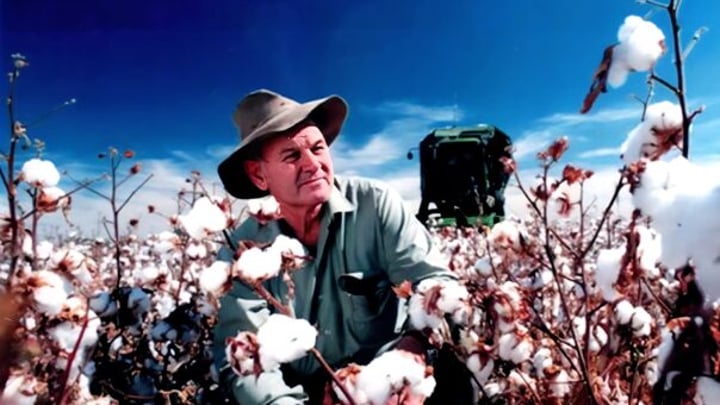
From bullock teams and life without electricity to GPS-guided tractors, author and former farmer Bob Yabsley has witnessed extraordinary changes in Australian farming. But behind that progress lies a deeply personal story of family hardship, loss and his concerns about the power of the banks. He shares his life and struggles in his book, Unfinished Business.
The changing face of farming and communities
For Bob Yabsley, farming has been a livelihood, a way of life, a source of pride and a connection to the land that he believes has weakened considerably over his lifetime.
Having spent decades working in agriculture, Bob has witnessed enormous changes in the way Australians live and work. He’s seen farming operations grow, technology transform the industry and rural communities change as fewer Australians maintain a direct connection to the land.
And looking back, Bob believes one of the biggest changes has been the growing distance between ordinary Australians and the people who produce their food.
“Population growth has reduced family connections to the land over my lifetime. As the population grew, farmers modernised and operations became larger, farming became a much smaller part of the country’s workforce. During my generation, most people had some connection to farming through family.
“During the war and for many years afterwards, food production was a government priority. Specialist banks supported farming communities, including the Rural Bank, the Primary Industries Bank, the Commonwealth Bank’s Development Bank and various state banks.
“We didn’t have supermarkets as we know them today. We had grocery stores, usually owned by local families and often supplied, in part, directly by nearby farms.”
For Bob, these changes represent more than the evolution of an industry. They reflect a broader shift in Australian life, where the connections between rural communities, local businesses and the wider population have become less direct.
He has also seen the remarkable advances that have transformed farming itself. The days of working long hours with bullock teams have given way to air-conditioned tractors that can steer themselves using GPS. Yet while he appreciates the benefits of modernisation, Bob believes it is important not to lose sight of the people and communities behind the progress.
The personal cost of losing a family business
The loss of Bob’s family business had consequences that extended well beyond financial hardship, affecting the wellbeing of those closest to him. He believes similar circumstances could still occur today, particularly when business owners find themselves struggling to obtain support during difficult periods.
“We still have a private banking system that, in my view, puts shareholder profit ahead of supporting customers and the wider community. For much of my generation, we had our own ‘people’s bank’: the Commonwealth Bank, which was government-owned from 1912 until 1996. Customers were, in effect, supported by a bank owned by all Australians, and people were encouraged to have a go.
“I believe ordinary Australians will struggle to prosper while private banks have such influence over what we try to do. It would take a brave person to borrow from a bank to start a business, putting themselves and their family at financial risk, if they feared they would not be supported through difficult times.”
For Bob, the financial consequences of losing the business were devastating, particularly when it came to his ability to support and protect his family.
“The financial hardship is horrific, but the emotional impact of not being able to protect and support your family is even worse,” he says. “I blame the bank’s actions for the death of my son, who died a few years after our business was taken. I cannot prove that the stress and uncertainty caused his cancer. What I can say is that we did not have the financial resources to take him to Germany, where we’d been advised that better medical help might be available.”
It is an intensely personal part of Bob’s story, and one he found particularly difficult to put into words when writing his book.
“Probably the hardest thing was writing about the impact the bank’s actions had on my son’s health and on his mother. It is personal, and it is very relevant to my story.”
Looking closely at the Australian banking system
Bob’s experiences have shaped his views on the Banking Royal Commission, which examined misconduct in Australia’s financial services sector, including the treatment of farmers. He believes the commission did not go far enough in holding financial institutions accountable.
“I believe the Royal Commission was constrained by its letters patent and terms of reference, which limited the ability of Commissioner Kenneth Hayne to fully investigate alleged wrongdoing by the banks and hold them accountable,” he says.
“Some bank executives appeared to treat the process as a joke, believing there would be few, if any, consequences. I attended a hearing in Brisbane but was not given the opportunity to be heard.”
Bob also points to journalist Adele Ferguson’s book Banking Bad, published in 2019, which examined problems within the banking sector and the events that led to the Royal Commission.
“Journalist Adele Ferguson, whose reporting helped prompt the Royal Commission, wrote Banking Bad, and it documents serious problems in private banking and the commission’s failure to hold banks to account. I think every Australian with a bank account should read it.”
His views on the industry are forceful, reflecting the depth of his frustration with what he sees as an imbalance between the power of financial institutions and the people who depend on them.
In his book, Bob compares the behaviour of private banks to organised crime, arguing that financial power can be used to coerce, threaten and bully people for profit, with devastating consequences. “Democracies are supposed to be governed by the people, for the people. At times, I feel we are governed by politicians for politicians,” he says.
‘Australians should consider whether the institutions that help finance businesses and communities are adequately serving the people who rely on them.”
The remarkable changes in Australian life
Despite the hardships he has endured, Bob also wants readers to appreciate just how far Australia has come. He hopes his book will provide a glimpse into a way of life that younger generations may know little about, while reminding older readers of the enormous changes they have witnessed themselves.
“I want readers to understand how different life was and how much has changed — from working long hours with bullock teams to driving an air-conditioned tractor that steers itself using GPS.
“We went from living without electricity to seeing electricity enhance almost everything we do. I recently spent time in hospital and couldn’t help marvelling at the enormous benefits electricity provides across every aspect of medical care.
“I also recently spoke to someone and, when I mentioned the old Commonwealth Bank, realised they weren’t even born when it existed in that form.”
It is this combination of personal memory and social history that Bob hopes will resonate with readers. His reflections capture the transformation of rural Australia, from the way farms operate to the technology that has changed almost every aspect of daily life.
Bob’s lifetime of achievements
“My greatest achievement is marrying my wife of 62 years and raising my family,” Bob says. “I’m proud of surviving the beef depression of the 1970s and adapting our operations to get through it.
“I also used helicopters to improve different aspects of farm management, formed and managed several unlisted public companies to fund the development and management of irrigated properties, and helped start the movement towards growing irrigated cotton and other crops in Queensland’s Gulf Country.
But for all his professional achievements, it is clear that family remains central to how Bob measures his life. His reflections on farming, business and the banking system are inseparable from the people he loves and the experiences that have shaped him.
His story is both a record of a changing Australia and an appeal for greater fairness in the systems that govern people’s working lives.
After a lifetime spent adapting to change, Bob hopes his book will encourage readers to look beyond the machinery, the money and the institutions, and consider the human lives affected by the decisions made along the way. “I hope my book contributes to a fairer, more equal society,” he says.
If you enjoyed reading this book review on Bob Yabsley’s Unfinished Business, here are lighter reads perfect for the beach.





 Proudly Australian owned and operated
Comments 0
Join the conversation. Comments are reviewed before they appear.
Be the first to comment.
Join the conversation
Tell us who you are to post a comment. We'll remember you next time.